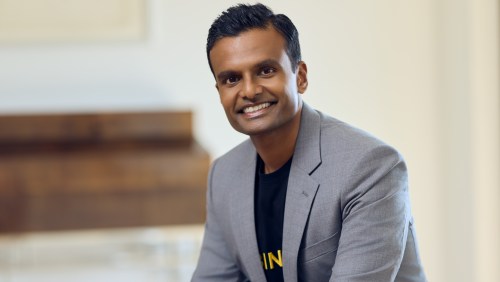
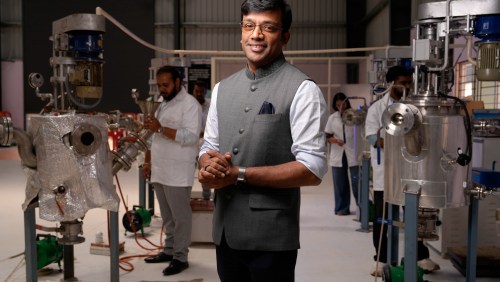
“We’ve all seen the massive impact anelephant has on a jungle. I’m building anelephant, something built to last, withfoundations that don’t shake," says Dr Somdutta Singh.
Speciality Restaurants appoints Avik Chatterjee as CEO to lead brand expansion, new restaurant formats and operational growth across India and international markets.
The Ambani family topped India’s most valuable family businesses in 2026, with the top 300 businesses collectively valued at USD 1.46 trillion, up 27.5% from 2024.
Sai Vamshi Batchu, a 24-year-old IIT Kharagpur graduate who spent three years in high-frequency trading, argues the limit on those agents is memory and not intelligence.
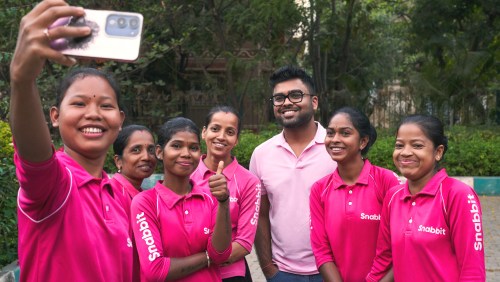
For Snabbit, the growth trajectory has been particularly sharp. The company crossed one million monthly jobs in March 2026 and has since grown to 1.5 million monthly jobs in June 2026, a 50% increase in just one quarter.
Through innovation, resilience, and long-term vision, they have contributed to employment generation, economic growth, and stronger commercial ties between the United Kingdom and India.
As AI becomes increasingly embedded within enterprise workflows, organizations will stop viewing it as a standalone tool and start treating it as a foundational layer of modern business operations.
Before the promotion, Biswas led engineering across multiple teams at PhonePe since joining the company in 2017. Previously, he has worked with Browserstack and Flipkart among others.
Suchindra Kanakanapalya, General Partner at Eagle10 Ventures, views this moment as a critical transition in India’s private markets, where the next phase of value creation will depend less on the volume of capital deployed and more on how effectively that capital is translated into long-term enterprise-building capacity.
Avendus has elevated Karan Sharma to Managing Director and Head of Investment Banking. The 15-year veteran succeeds Gaurav Deepak and will lead the firm's next phase of growth, client engagement, and strategic expansion.
Nearly 80 percent of sub-federation tournaments leave behind no digital trace—no verified results, no player history, no performance data. For millions of athletes, especially outside metros, this means talent without proof.
With an annual revenue run rate of roughly $200 million, the company is now EBITDA profitable and generating cash—a milestone many digital-first consumer startups struggle to reach.