TIS 2026: EdTech Innovation: Bridging Academia & Industry Through Technology
India’s education system doesn’t just need smarter tools, it needs better teachers, stronger industry alignment, and a fundamental shift from passive learning to active creation.
You're reading Entrepreneur India, an international franchise of Entrepreneur Media.
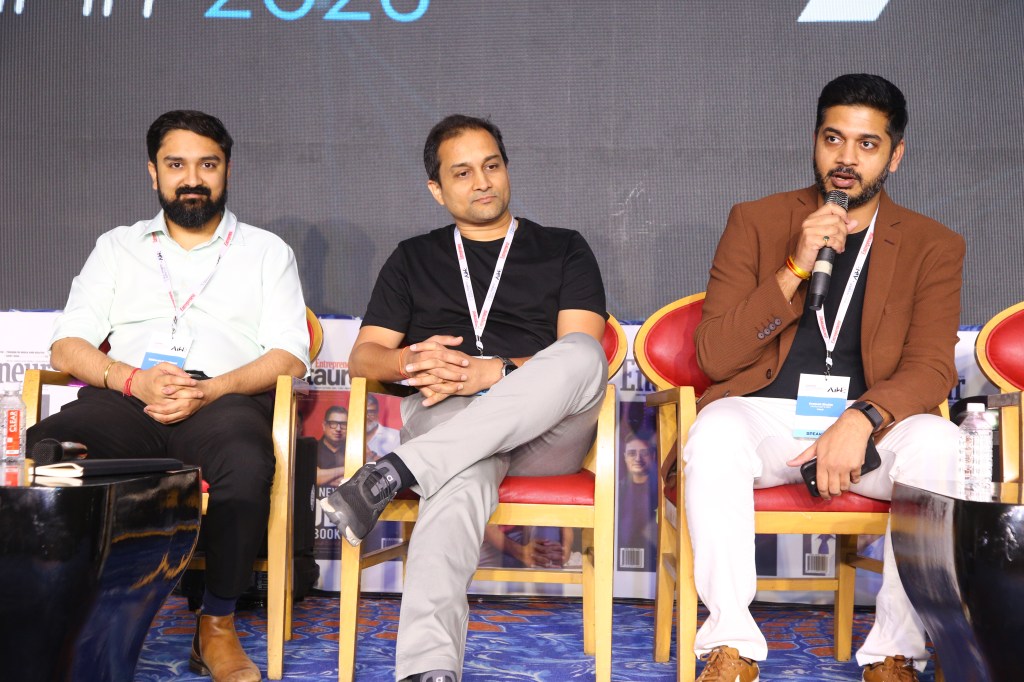
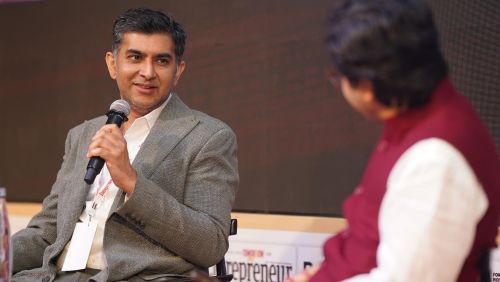
At a time when artificial intelligence is reshaping industries at breakneck speed, its role in education remains both transformative and contested. At Entrepreneur India’s Tech & Innovation Summit 2026, a panel featuring Prateek Shukla, Co-Founder & CEO, Masai, Siddharth Maheshwari, Co-Founder, Newton School, and Kashyap Dalal, Co-Founder & Coo, Simplilearn unpacked the reality behind the AI-in-education narrative.
Shukla opened with a fundamental question: Is AI truly changing education, or merely modernizing its appearance? Maheshwari said: “AI is changing education first of all because with any new technology, it’s the youngsters… who are adopting it first… assignment completion rates have gone up really well and… the quality of assignments have gone up really high.”
Beyond academics, AI is also boosting learner confidence. “We are definitely seeing students… being confident about themselves, learning using ChatGPT… there are both the cons and pros with any technology,” Maheshwari added.
Dalal, however, gave context to AI’s impact within professional skilling, where uncertainty around jobs is driving demand. “There’s this huge rush that professionals have… unless I master AI skills I don’t know what’s going to happen after five years—or maybe after six months.” According to him, nearly 50-60 percent of the volume in skilling programs is now AI-focused. Yet, despite this surge, he cautioned that core pedagogy remains largely unchanged: “The impact is around 20 per cent… it is still early.”
The conversation quickly shifted to India’s broken education-to-employment pipeline. With millions graduating annually and placement rates declining, Shukla pressed the panel on what needs fixing first.
Maheshwari pointed to a foundational gap: the disconnect between academia and industry. “We should be more practitioner-led and… more building-oriented from very early on… right now we have a very rote learning kind of system.” He emphasized experiential learning, “building things, breaking things, as critical to improving outcomes.
Dalal approached the problem from a systems perspective, arguing for a clear separation between degree education and skill acquisition. “Your degree curriculum… changes gradually. Industry applications change way faster.”
He suggested that formal education should focus on building cognitive frameworks, problem-solving, adaptability, and confidence, while specialized skills should be delivered through agile, short-term programs.
On the long-debated question of degrees versus skills, both panelists were unequivocal. “Degrees are the least relevant they have ever been… at the same time, skills have always continued to be relevant,” Maheshwari said, highlighting a shift already underway in hiring practices, particularly among startups and through government-backed apprenticeship programs.
Dalal added a global lens: “India is a country where a degree is extremely critical… but I don’t see the same pattern in the US.” The trend, he argued, is clearly moving toward skill-first hiring.
Despite these shifts, the industry continues to complain about a lack of job-ready talent. Asked what could create outsized impact at scale, Maheshwari emphasized two levers: “building a culture… of building” and early exposure to industry through apprenticeships. He shared a telling anecdote where a student’s early failure in an internship instilled professional discipline, something classrooms often fail to teach.
Dalal, in contrast, distilled the answer to one critical factor: teachers. “The most critical cog… is the teacher… how much of inspiration can that person provide… creates the biggest difference.” Alongside this, he stressed “learning by doing” through projects as non-negotiable for employability.
The discussion on teachers revealed another systemic bottleneck. Maheshwari advocated for better economics and structured training: “India has a severe lack of teacher training programs… even in an IIT… no formal training on how to talk to students.” Dalal added that even experienced professionals require training to manage diverse classrooms effectively.
On whether AI could bridge the teacher quality gap, the panel drew a nuanced distinction. Dalal noted that while AI can scale access, especially in primary education, human teachers remain indispensable in professional skilling due to their ability to provide context, mentorship, and inspiration. Maheshwari said, “Humans are still needed… education is much beyond skills… There are motivation issues… development issues.”
The takeaway was clear: while AI is an accelerant, it is not a panacea. India’s education system doesn’t just need smarter tools, it needs better teachers, stronger industry alignment, and a fundamental shift from passive learning to active creation.
At a time when artificial intelligence is reshaping industries at breakneck speed, its role in education remains both transformative and contested. At Entrepreneur India’s Tech & Innovation Summit 2026, a panel featuring Prateek Shukla, Co-Founder & CEO, Masai, Siddharth Maheshwari, Co-Founder, Newton School, and Kashyap Dalal, Co-Founder & Coo, Simplilearn unpacked the reality behind the AI-in-education narrative.
Shukla opened with a fundamental question: Is AI truly changing education, or merely modernizing its appearance? Maheshwari said: “AI is changing education first of all because with any new technology, it’s the youngsters… who are adopting it first… assignment completion rates have gone up really well and… the quality of assignments have gone up really high.”
Beyond academics, AI is also boosting learner confidence. “We are definitely seeing students… being confident about themselves, learning using ChatGPT… there are both the cons and pros with any technology,” Maheshwari added.

Entrepreneur Staff • Editor
Entrepreneur Staff
For more than 30 years, Entrepreneur has set the course for success for millions of... Read more