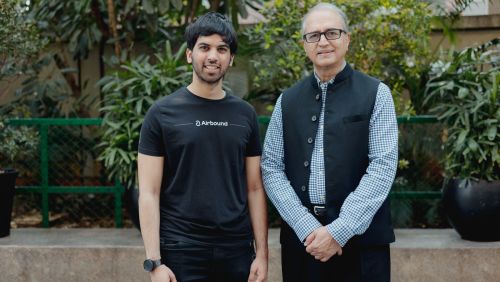

Now the Co-Founder of Scimplify, Sachin represents a new generation of founders tackling industrial and deep-tech challenges with scale, discipline, and global ambition.
This represents a near threefold increase in funding share in just five years, even as overall VC deployment remained broadly stable at around USD 10 billion annually in 2024 and 2025.
These transactions, arriving as India hosts industry convenings and promotes the IndiaAI Mission, reflect both investor conviction and strategic positioning in a capital-intensive segment historically dominated by global hyperscalers.
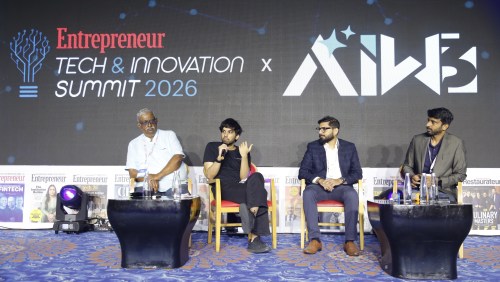
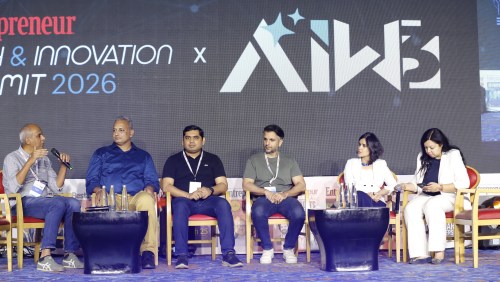
The India AI Impact Summit 2026 concluded another day of landmark announcements, important investment pledges, and strategic global collaborations that signal India’s accelerating rise as a strategic hub for artificial intelligence.
For Misbah Ashraf, co-founder of fintech platform Jar, becoming an entrepreneur was never about a fashionable career choice. It was a necessity born out of survival.
Today, a new set of companies, including hyper-local, kitchen-first platforms like Swish, are attracting large cheques, despite operating in what appears to be an already “solved” category. What exactly are investors seeing that others don’t?
India’s startup IPO surge has delivered mixed results, with many listings struggling post-debut, while traditional companies quietly generate steadier investor returns.
Among the wave of tech companies preparing to get listed in 2026, two standouts are InMobi, the country’s first unicorn, and Fractal Analytics, a deep-tech AI and analytics firm.
As capital becomes more selective, India’s fintech ecosystem appears to be entering a consolidation phase, one where fewer companies raise larger, more patient rounds.
The Union Budget 2026 marks a clear departure from reactive fiscal policymaking, prioritising long-term capability building across deep technology, manufacturing, MSMEs, and capital markets.
The proposal includes an exemption until the year 2045, with the Finance Minister clarifying that it applies to global companies operating through partnered entities from India.
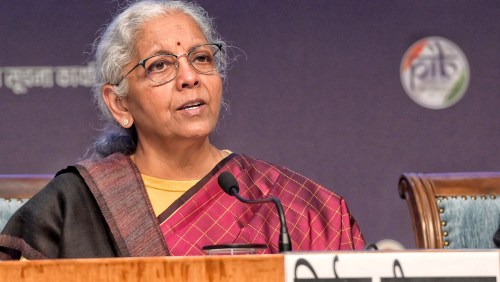
Finance Minister Nirmala Sitharaman used the Budget to sharpen the government’s push for India’s small businesses, announcing a mix of fresh funding, cluster revival, and tighter credit linkages aimed at strengthening the MSME backbone.
Total funding nearly doubled year-over-year, largely driven by Raphe mPhibr’s USD 100M Series B round led by global investments firm General Catalyst. The number of annual funding rounds increased from 5 in 2016 to 42 in 2024, before moderating in 2025 YTD.
India’s internet story is increasingly being shaped not by the metros but by what lies beyond. While the country has crossed an estimated 958 million internet users, according to Kantar’s Internet in India report 2025, penetration remains uneven across states.
As India heads into Union Budget 2026, expectations across markets and industry remain restrained. After several years of elevated pandemic-era spending, the government is firmly back on a fiscal consolidation path, narrowing the deficit from over 9 per cent of GDP in FY21 to 5.6 per cent in FY24, 5.1 per cent in FY25 (RE), and a budgeted 4.9 per cent in FY26.
As India gears up to sharpen its fiscal priorities ahead of the Union Budget 2026, the virtual digital assets (VDA) and web3 ecosystem finds itself at a strategic inflection point.
Budget 2025 reinforced a capital-led growth rulebook, prioritised public capex, manufacturing-linked incentives, and long-term innovation financing. This was supposed to act as a lever to rope in private investment rather than relying on broad fiscal stimulus.
As the Union Budget 2026 approaches, expectations are building across India’s financial services and startup ecosystem for policy signals that go beyond headline allocations.
India's VC market in 2025 was defined by selective capital, larger cheque sizes, and a clear shift toward profitability, execution depth, and exit visibility.
Globally, the capital reallocation toward technology-led fundamentals is already visible in hard numbers. To boost investments and stimulate growth in sectors such as the manufacturing sector, the government must consider reintroducing accelerated depreciation as a targeted fiscal incentive.
AI in Bharat's FinTech sector is becoming far more intuitive and deeply personal. The next phase of growth will be shaped by platforms that understand people in their own languages and reflect the rhythms of everyday financial life.
The investor conversation around it has matured, with the focus no longer on whether a startup uses AI, but on whether it shapes how the business operates.
Insights from early-stage venture firm Antler India and alternative credit platform BlackSoil illustrate how the year 2025 laid the groundwork, with 2026 shaping up to be a year of design rather than exuberance.
After an "enthusiastic" post-pandemic capital cycle, venture investors and founders alike have recalibrated expectations, shifting focus from rapid scale to resilient business models.
GST collections have remained robust, and the decline in the October Consumer Price Index is supposed to provide the Reserve Bank of India (RBI) with a bit of wiggle room for potential rate cuts - a move that could accelerate capex spending and consumption-led growth.
RBI supervisory disclosures and BIS working papers have highlighted the rising operational and fraud-related risks as fintechs continue to expand into credit, wealth, and banking-related services.