Rebuilding from Ground up: Nischal Shetty’s Roadmap for WazirX, Crypto in India
WazirX’s journey has seen strong user growth, brand recognition, and community support amid rising crypto adoption in India. However, it also had to deal with some difficult phases.
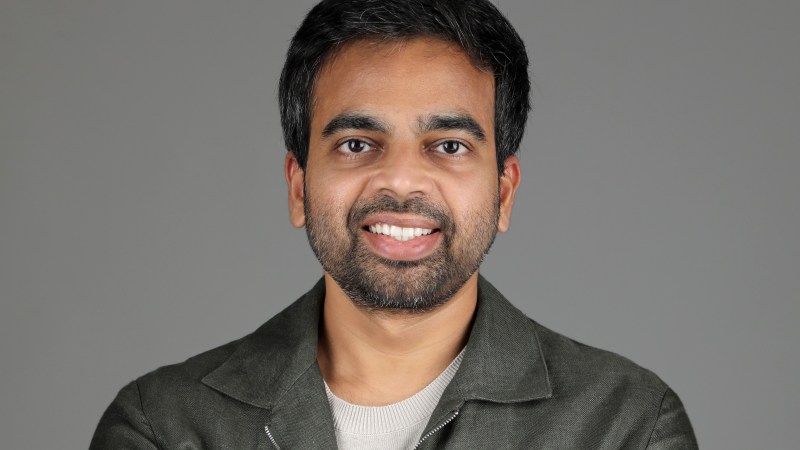
Nischal Shetty
You're reading Entrepreneur India, an international franchise of Entrepreneur Media.
“Startups are hard. Crypto makes them harder because everything moves faster.”
WazirX founder Nischal Shetty reflects on the highs and lows of his entrepreneurial journey.
Launched in 2018, the widely popular exchange has been a prominent player in the Indian crypto ecosystem. The journey has seen strong user growth, brand recognition, and community support amid rising crypto adoption in India. However, it also had to deal with some difficult phases, ranging from market cycles to regulatory uncertainty.
The strongest punch to the gut was the 2024 cyberattack perpetrated by North Korean hackers that resulted in the theft of USD 230 million in digital assets.
Shetty says that the cyberattack was one of the hardest moments of his entrepreneurial journey.
“The cyberattack was one of the hardest moments of my entrepreneurial journey. It tested the team, the systems and our relationship with users. The easy thing would have been to disappear or stay silent. We chose to stay, communicate, go through the restructuring process and restart operations. Under the court-approved scheme, eligible users received around 85% of rebalanced net liquid platform assets,” he told Entrepreneur India.
The founder said that the team is currently working on future recoveries, product improvements and new revenue opportunities through features such as WazirX Zero and Futures.
“The biggest lesson is simple. A company is tested when things go wrong. We are in that rebuild phase now, and the focus is trust, recovery and giving users a better product than before,” he added.
India’s crypto market, estimated to be worth USD 4 billion in 2025, has gone through a long spell of regulatory uncertainty, keeping several investors at bay. It is only in recent years that the crypto market has found some clarity from the government. Though things like high taxation don’t create a perfect scenario for crypto players.
Shetty, however, is not against the idea of regulations.
Noting India’s steps such as taxation, FIU registration and reporting requirements, he explains: “Globally too, every serious market is trying to work out how crypto should be treated. Our approach has been to stay compliant and keep engaging with the system. We follow FIU guidelines, work with industry bodies such as Bharat Web3 Association and support law-enforcement education around digital asset transactions. At the product level, we build with adaptability in mind.”
“In crypto, regulation, user behaviour and technology can all move quickly. The companies that survive will be the ones that can keep adapting without losing user trust,” he added.
This is probably why Shetty is also bullish on the growth of crypto in India. He noted that India’s crypto adoption has been strong despite the challenges.
“Users have had to deal with taxation, regulatory uncertainty and limited banking support at different points. Even then, interest has continued. India continues to rank among the world’s strongest markets for crypto adoption. The user base has also changed. Earlier, crypto was mostly seen as a young, tech-heavy user activity. Now we see participation from Tier 2 and Tier 3 cities, more women entering the market and users spending more time learning before investing,” he said.
Shetty further said that India has the right ingredients: a young internet population, strong developer talent, UPI-led digital behaviour and curiosity about global financial products. Regulation may slow the market at times; however, it does not remove the need for better digital financial rails. India can be one of the most important crypto markets in the world if policy, security and innovation move together.
Even as the crypto space has grown in India, it was not the case a few years ago. That is also the genesis of WazirX.
“WazirX started with one problem: buying crypto in India was too difficult. From there, we grew into one of India’s most recognised crypto platforms. During strong market cycles, we saw millions of users come in and large trading volumes on the platform. That growth showed the scale of India’s interest in crypto,” Shetty said.
A lot of it comes from his own personal journey: before WazirX, Shetty had set up Crowdfire which scaled to 20M+ users from around the world. He was drawn to the decentralized digital world early on.
“The idea of a decentralized ecosystem made sense to me, and I strongly believe Indians should be part of it. It had that same raw, early energy the internet once had. Hard to grasp at first, but clearly too important to ignore. ” he said.
“There was also a personal aspect to it. In 2017, I tried to buy Bitcoin in India and found the process painful. Though I came from a tech background, I struggled to use the products that existed for buying Bitcoin. That made the problem very clear to me. If a tech person finds it hard to buy crypto, a regular user has almost no chance,” he added.
That’s where WazirX started. The idea was simple: make crypto easy, safe and accessible for Indians.
“Over time, that vision has grown. Access is still important. Trust, security, education and long-term participation matter just as much now. Today, WazirX has served over 16 million Indians, and the focus is to keep helping users participate in this new financial system in a more informed way,” Shetty added.
After an eventful journey, WazirX is focused on rebuilding trust and making the product stronger for users in the near term. This essentially means there will be a better user experience, stronger security, clearer communication and continued work on recoveries.
“We’ve already launched WazirX Zero, which lets users trade without per-trade fees for a small fixed amount. That’s one way we’re trying to give users more value while increasing activity on the platform. We are also working on new products. Futures is launching, and staking is also in the pipeline. The idea is to give users more ways to participate in crypto, ” he said.
The long-term goal, however, is even grander. Shetty aims to position WazirX as the gateway for Indians to participate in the global crypto economy.
“Trading will remain one part of crypto. Over the next decade, users will also interact with staking, tokenised assets, on-chain applications and new forms of digital ownership. We want WazirX to be ready for that future,” he said.
In addition to WazirX, Shetty is also passionately building Shardeum, which aims to address a key gap in the blockchain space: If blockchains are expensive or slow, mass adoption becomes difficult. Users in India and other emerging markets need low fees, fast transactions and simple access. Developers need infrastructure that can support real usage. The goal is to keep transaction costs low while keeping the network decentralised.
On his journey with building Shardeum, Shetty says, “The journey has been community-led. Developers, validators and users from different countries have helped shape it. Mainnet was an important milestone, but the real work is adoption. The product, support, education, community and INR experience were built around how Indian users behave. We were never trying to copy a global exchange and bring it here. Sikka.fun comes from the same thinking. It gives anyone a simple way to create, discover and participate in coins on Shardeum. For many users, this may be their first on-chain activity. The first step into Web3 has to be simple enough that users can take it without learning about wallets, gas fees and communities all at once. From there, users can move into diverse on-chain use cases over time.”
“Startups are hard. Crypto makes them harder because everything moves faster.”
WazirX founder Nischal Shetty reflects on the highs and lows of his entrepreneurial journey.
Launched in 2018, the widely popular exchange has been a prominent player in the Indian crypto ecosystem. The journey has seen strong user growth, brand recognition, and community support amid rising crypto adoption in India. However, it also had to deal with some difficult phases, ranging from market cycles to regulatory uncertainty.

Entrepreneur Staff • Editor
Entrepreneur Staff
For more than 30 years, Entrepreneur has set the course for success for millions of... Read more