From Building at Scale to Rethinking Systems: A Founder’s Next Chapter
As distributed systems, collaborative platforms, and AI-driven environments continue to evolve, that question is likely to define the next wave of innovation.
Opinions expressed by Entrepreneur contributors are their own.
You're reading Entrepreneur India, an international franchise of Entrepreneur Media.
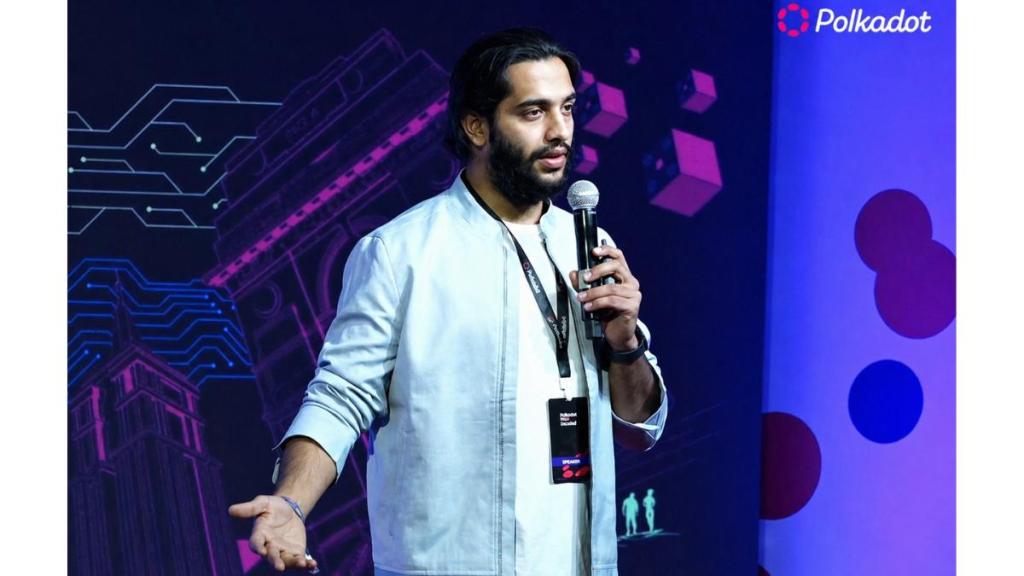
After spending six years building and operating one of the most widely used digital coordination platforms, a young founder is now stepping back with a sharper question: what actually improves outcomes in large, distributed systems?
As co-founder of Polkassembly, he worked at the center of a high-volume, real-time environment where thousands of users actively participated in discussions, proposals, and decision-making processes. Over time, the platform grew to host more than 5,000 proposals and 10,000 discussions, drawing participation from over 250,000 users who debated and voted on more than $250M in grants and payments through the Polkadot Treasury—making it one of the most extensive live experiments in online coordination at scale.
Polkassembly had also raised a strategic round backed by Gavin Wood, and the platform saw governance activity involving names such as Conor Daly, Raoul Pal, Inter Miami, and others.
What makes his journey notable is not just the scale he operated at, but the vantage point it offered. Unlike many founders working on early-stage products, his role involved observing how large groups behave over time—how they debate, align, disagree, and ultimately act.
“In the early days, the focus was on building infrastructure that could scale participation,” he has said in past interactions. “And that part worked. People showed up, engaged, and contributed.”
But as the system matured, a different layer of complexity became visible. High engagement didn’t always translate into better decisions. Conversations were often detailed and analytical, yet outcomes didn’t consistently reflect the depth of those discussions.
For him, this wasn’t a failure of users or activity—it was a signal about how systems themselves are designed. When participation scales faster than alignment, gaps begin to appear between what people know and what ultimately happens.
This realization marks a turning point in his journey as a builder.
Rather than continuing to optimize for scale alone, he is now shifting focus toward understanding coordination itself—how humans interact within complex systems, and what it takes to align inputs, incentives, and outcomes more effectively.
His new lab is building at the interface between humans and AI systems, extending the same focus on how complex systems coordinate human input, incentives, and outcomes. The move reflects a broader shift among a new generation of founders who are looking beyond traditional product-building to tackle deeper systemic challenges.
The transition also mirrors a wider trend in the startup ecosystem: founders moving from building tools to questioning the assumptions those tools are built on.
For this founder, the takeaway from six years at scale is clear—getting more people involved is only one part of the equation. The harder problem, and perhaps the more important one, is ensuring that participation leads somewhere meaningful.
As distributed systems, collaborative platforms, and AI-driven environments continue to evolve, that question is likely to define the next wave of innovation.
After spending six years building and operating one of the most widely used digital coordination platforms, a young founder is now stepping back with a sharper question: what actually improves outcomes in large, distributed systems?
As co-founder of Polkassembly, he worked at the center of a high-volume, real-time environment where thousands of users actively participated in discussions, proposals, and decision-making processes. Over time, the platform grew to host more than 5,000 proposals and 10,000 discussions, drawing participation from over 250,000 users who debated and voted on more than $250M in grants and payments through the Polkadot Treasury—making it one of the most extensive live experiments in online coordination at scale.
Polkassembly had also raised a strategic round backed by Gavin Wood, and the platform saw governance activity involving names such as Conor Daly, Raoul Pal, Inter Miami, and others.
Covers consumer behavior, retail evolution, and brand storytelling in a digital-first economy.