Solving Agentic AI’s Connection Debt Through Multi-Agent Orchestration
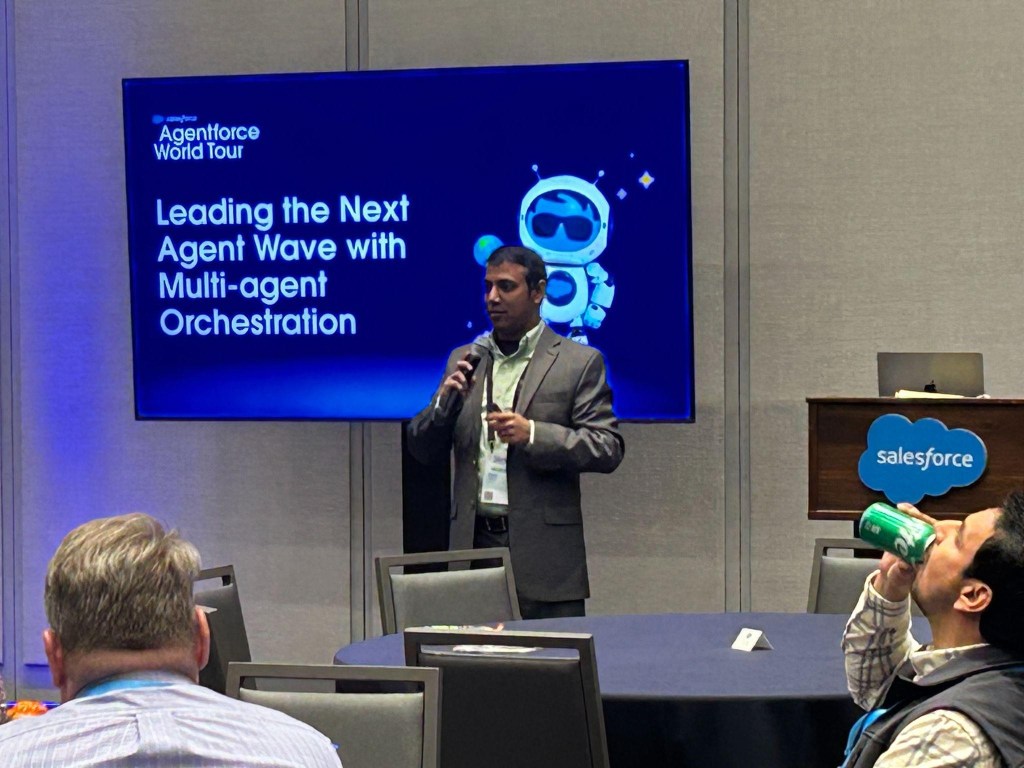
Vara Imandi, an engineering leader shaped by a core belief: the agentic enterprise isn’t built by adding technology, but by orchestrating it.
Opinions expressed by Entrepreneur contributors are their own.
You're reading Entrepreneur India, an international franchise of Entrepreneur Media.
It began with a spreadsheet—so unwieldy it bordered on unusable. In 2018, a New England healthcare insurer with 900,000 members struggled across 47 fragmented claims systems, where no agent held a complete view, and errors compounded into cost.
Enter Vara Imandi, an engineering leader shaped by a core belief: the agentic enterprise isn’t built by adding technology, but by orchestrating it.
Over six months, Imandi replaced a fragmented insurer stack with an API-driven architecture that routed decisions, surfaced context, and coordinated network-wide action. Errors dropped 82%, saving $12 million annually.
“What we built was a nervous system,” he says, “Every node sensing, reasoning, acting. That’s where the agentic enterprise begins.”
Now Director of Partner Product Success at MuleSoft and Salesforce, he leads efforts to design orchestration fabrics enabling governed, trusted multi-agent systems.
The Agentic Era Is Here, and It’s Complex
Global spending on agentic AI is projected to reach $752.7 billion by 2029, adding $15.7 trillion to the global economy by 2030. Yet deployment is outpacing governance.“Everyone’s excited about agents that can act,” he says. “The harder question is: how do agents act together – reliably, transparently, and within the boundaries that enterprises actually trust?”
Imandi’s Fortune 50 clients are no longer asking whether to deploy agents, but how to discover, reuse, and orchestrate them.
Orchestration as a Design Philosophy
At IBM Think, Imandi demonstrated a live connection between Salesforce Data Cloud and IBM’s Granite LLM, with an Agentforce agent ingesting real-time patient data, reasoning across clinical models, and surfacing recommendations.
“The agent isn’t the product,” he told the audience. “The orchestration layer is. Anyone can deploy an agent. The real work is defining how agents perceive context, share state, negotiate constraints, and escalate gracefully when they hit the edge of their authority.”
MuleSoft partners have since compressed EHR integrations, while firms report 360-degree views developing 67% faster.
Governing the Multi-Agent World
In Imandi’s workshops, empathy maps frame multi-agent orchestration, where competing AI systems collaborate in real time without compromising compliance or advantage. At Salesforce’s World Tour New York, an Agentforce agent negotiated API contracts between healthcare rivals, reconciling data schemas and flagging edge cases.“Imagine a supply chain where AI agents from competing manufacturers are dynamically haggling… Without a shared constitutional layer… you get digital anarchy.”
His team’s solution translates legal agreements, compliance policies, and business rules into machine-readable agent constraints, reducing disputes by 41%. “Governance isn’t a constraint on innovation,” Imandi says. “It’s the condition that makes innovation trustworthy at scale.”
The Empathy Algorithm: Trust as an Agentic Requirement
Imandi often repeats: “You can’t automate trust.” In 2025, a major insurer blocked AI agents from accessing hospital data over HIPAA risks and fears of algorithmic overreach. He redesigned the orchestration layer with real-time audit trails, clinician override protocols, and transparent decision rationales at every step. Adoption tripled in eight weeks.
“When an agent makes a decision, every stakeholder in the chain needs to understand why?, not just the outcome, but the reasoning,” he says. “Explainability isn’t a nice-to-have in multi-agent systems. It’s the load-bearing wall.”
Redefining “Connection Debt” in the Age of Agents
The agentic era gives “connection debt” new urgency. Once tied to fragmented automation, it now reflects a deeper risk: agentic connection debt, the gap between what AI agents can execute and what they can safely handle without unified governance.
“An agent without orchestration context is like a brilliant surgeon who’s never seen the patient’s chart,” he says. “The capability is there. The connective tissue isn’t.” At a U.S. bank, Imandi redirected $2.3 million in automation savings into a “Human + Agent” program.
“The agents aren’t replacing your judgment,” he told staff. “They’re doing the retrieval, the pattern-matching, the synthesis… That’s not a demotion – that’s a superpower.” Gartner warns over 40% of AI investments risk abandonment due to failed operationalization.
The Quiet Orchestration Change
Imandi’s impact shows in practice. At a hospital summit, an orchestrated agent network halved medication reconciliation errors by surfacing the right information at the right moment. “That,” he says, “is what well-orchestrated intelligence looks like. Not a machine making decisions. A machine making humans better at making decisions.”
“We’re past the age of selling software”, he adds, “We’re in the age of orchestration… building the infrastructure of trust that lets autonomous systems work together without losing the human judgement at the center.”
It began with a spreadsheet—so unwieldy it bordered on unusable. In 2018, a New England healthcare insurer with 900,000 members struggled across 47 fragmented claims systems, where no agent held a complete view, and errors compounded into cost.
Enter Vara Imandi, an engineering leader shaped by a core belief: the agentic enterprise isn’t built by adding technology, but by orchestrating it.
Over six months, Imandi replaced a fragmented insurer stack with an API-driven architecture that routed decisions, surfaced context, and coordinated network-wide action. Errors dropped 82%, saving $12 million annually.
Writes on private capital, deal structures, and the strategic thinking behind mid-market investments.