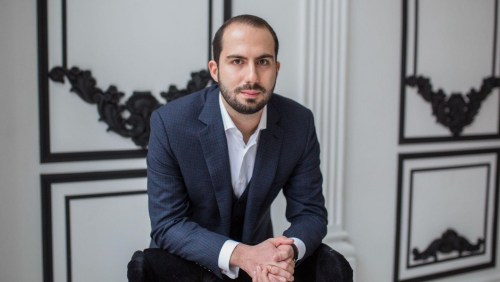
Now the Co-Founder of Scimplify, Sachin represents a new generation of founders tackling industrial and deep-tech challenges with scale, discipline, and global ambition.
According to the firm, it has enabled over USD 1.6 billion in credit across nearly 200 portfolio companies, including 20 unicorns, while evaluating more than 15,000 companies globally.
Jeremy Tang is globally recognized for bringing technical depth to modern marketing, building scalable systems with a founder’s instinct for speed and scale.
This represents a near threefold increase in funding share in just five years, even as overall VC deployment remained broadly stable at around USD 10 billion annually in 2024 and 2025.
These transactions, arriving as India hosts industry convenings and promotes the IndiaAI Mission, reflect both investor conviction and strategic positioning in a capital-intensive segment historically dominated by global hyperscalers.
The capital will back AI, defence tech, healthcare, industrials, and fintech, reinforcing the firm’s deepening India presence, marking one of the largest VC bets in the country.
For Misbah Ashraf, co-founder of fintech platform Jar, becoming an entrepreneur was never about a fashionable career choice. It was a necessity born out of survival.
Late-stage funding recorded a slight decline compared to 2024, but remained significantly higher than 2023 levels, as seed and early-stage investments declined compared to previous years.
The PMS, which is branded as ‘InvestValue India Winners’, will invest across market capitalisations, with a focus on companies expected to benefit from structural shifts in the economy, such as formalisation, rising consumption, manufacturing growth, and digital transformation.
Today, a new set of companies, including hyper-local, kitchen-first platforms like Swish, are attracting large cheques, despite operating in what appears to be an already “solved” category. What exactly are investors seeing that others don’t?
India’s startup IPO surge has delivered mixed results, with many listings struggling post-debut, while traditional companies quietly generate steadier investor returns.
Among the wave of tech companies preparing to get listed in 2026, two standouts are InMobi, the country’s first unicorn, and Fractal Analytics, a deep-tech AI and analytics firm.
As capital becomes more selective, India’s fintech ecosystem appears to be entering a consolidation phase, one where fewer companies raise larger, more patient rounds.
With a record push towards AI-driven skilling and the ‘Education to Employment’ framework, but no GST relief for online learning, edtech leaders call Budget 2026 a structural shift towards outcome-led growth
The Union Budget 2026 marks a clear departure from reactive fiscal policymaking, prioritising long-term capability building across deep technology, manufacturing, MSMEs, and capital markets.
Finance Minister Nirmala Sitharaman used the Budget to sharpen the government’s push for India’s small businesses, announcing a mix of fresh funding, cluster revival, and tighter credit linkages aimed at strengthening the MSME backbone.
Under the deal, Perplexity will be able to run a range of frontier AI models through Microsoft’s Foundry program, including systems developed by OpenAI, Anthropic, and xAI, according to the report.