India to See Over $200 Billion in AI Investments: Ashwini Vaishnaw
This figure is not a single cheque being signed today; rather, it is an expectation of capital inflows across multiple layers of the AI ecosystem
Opinions expressed by Entrepreneur contributors are their own.
You're reading Entrepreneur India, an international franchise of Entrepreneur Media.
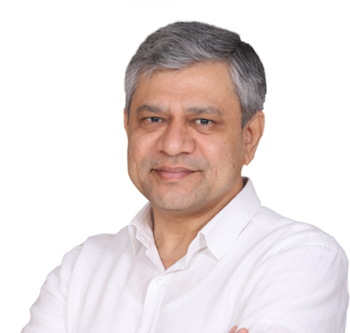
At the India AI Impact Summit 2026 in New Delhi, the world’s largest AI gathering to date, Ashwini Vaishnaw, Union Minister for Electronics & Information Technology (MeitY), said that India is poised to attract more than USD 200 billion in AI-related investments over the next two years.
This figure is not a single cheque being signed today; rather, it is an expectation of capital inflows across multiple layers of the AI ecosystem, including AI infrastructure, data centers, hardware, the energy ecosystem, and software application development.
He said, “(We see) lots of interest in venture capital towards deeptech investments. Bharat’s innovative prowess and its existing digital public are the reasons there is already an adequate framework.”
Vaishnaw has emphasized that India has already seen significant committed capital, including around USD 70 billion committed and another approximate USD 90 billion announced, and that this momentum is expected to push the total past the USD 200 billion mark as global companies continue to formalize deployment plans here.
On this backdrop, the government has also announced a fresh USD 1.1 billion state-backed fund, aimed at AI and advanced manufacturing startups.
The event has pulled in AI heavyweights such as OpenAI, Anthropic, Nvidia, Microsoft, Google, and Cloudflare, with personalities like Sundar Pichai, Sam Altman, Dario Amodei, and Mukesh Ambani. Notably, Sam Altman reaffirmed India’s growth in AI-usage by revealing that ChatGPT has more than 100 million weekly users, second only to the US, and tops the charts for student usage.
According to reports, many new announcements were made, such as AMD working with TCS to build a rack-scale AI infrastructure using AMD’s Helios platform, Anthropic’s first office in India, stationed in Bengaluru.
New partnerships also surfaced. AMD is working with Tata Consultancy Services to build rack-scale AI infrastructure using AMD’s Helios platform. Anthropic revealed it is opening its first office in India, in Bengaluru, and noted that the country ranks as its second-largest market for Claude after the US.
Google CEO Sundar Pichai announced the launch of a new America-India Connect subsea cable route, building on its USD 15 billion investment in India’s infrastructure, including a full-stack AI Hub in Vizag.
“We believe India is going to have an extraordinary trajectory with AI, and we want to be a partner,” said Pichai.
What This Means
One of the core themes of the summit is to showcase India’s ambition to evolve from being primarily a services-led tech economy to a global AI infrastructure hub. Vaishnaw and other leaders repeatedly noted that the projected capital isn’t just about AI software; it is about building data centre capacity, compute grids, and energy systems that can support next-generation AI workloads.
India’s existing AI compute base, which is roughly numbered at 38,000 GPUs, will be expanded with an additional 20,000 units to strengthen national AI infrastructure, and this move is widely seen as a step to hosting global AI workloads domestically rather than relying on overseas facilities.
This mirrors similar infrastructure commitments unveiled by global players. Microsoft has announced plans to invest ~USD 50 billion in AI and digital infrastructure in emerging markets, with a significant portion to India’s growing digital economy.
“The integration of AI into the startup ecosystem is driving improved lean operating models, greater operating focus, and driving tangible returns on investments in product and regulatory-related operating initiatives, rather than relying on narrative-driven business model growth trends. Alongside this, Government compliance has emerged as a key strategic focus, with startups emphasizing more on statutory compliance, data governance norms, financial reporting, and industry-specific regulations to establish credibility and continue uninterrupted operations,” said Ankit Chadha, Managing Director, TRC Consulting
Deep Tech to Applications
Investment interest isn’t limited to hardware. Vaishnaw highlighted that venture capital commitments of approximately USD 17 billion are already on the table for deep tech startups, foundational models, and application developers.
At the Summit’s Impact AI PitchFest, for instance, VC firms such as Peak XV publicly backed early-stage AI startups with INR 160 crore funding across five companies, underscoring investor confidence in India’s AI startup ecosystem.
The increased investor could mean different things to allied sectors. Notably, billionaire entrepreneur Vinod Khosla (Khosla Ventures) said, “IT and BPO jobs are going to disappear in five years because of AI. India’s 250 million young people have to export AI-based services now.”
Strategic Policy Support
Vaishnaw reiterated that India sees strong interest across all five layers of the AI stack, from core hardware and energy infrastructure to models, services, and applications, and that policy and public infrastructure initiatives are designed to anchor these investments domestically rather than seeing them deployed offshore.
A forthcoming phase of the national AI strategy, termed IndiaAI Mission 2.0, is expected to further accelerate research and innovation funding, and expand access to AI technologies across sectors such as healthcare, agriculture, and governance
At the India AI Impact Summit 2026 in New Delhi, the world’s largest AI gathering to date, Ashwini Vaishnaw, Union Minister for Electronics & Information Technology (MeitY), said that India is poised to attract more than USD 200 billion in AI-related investments over the next two years.
This figure is not a single cheque being signed today; rather, it is an expectation of capital inflows across multiple layers of the AI ecosystem, including AI infrastructure, data centers, hardware, the energy ecosystem, and software application development.
He said, “(We see) lots of interest in venture capital towards deeptech investments. Bharat’s innovative prowess and its existing digital public are the reasons there is already an adequate framework.”

Prince Kariappa • Features Content Writer
Entrepreneur Staff