TIS 2026: Inside the Unicorn Playbook: Scaling Innovation, Technology, and Global Impact
The advice to founders was consistent and unsentimental: commit for a decade, don’t chase crowded ideas, go deep, choose co-founders carefully, and stay relentlessly customer-obsessed.
Opinions expressed by Entrepreneur contributors are their own.
You're reading Entrepreneur India, an international franchise of Entrepreneur Media.
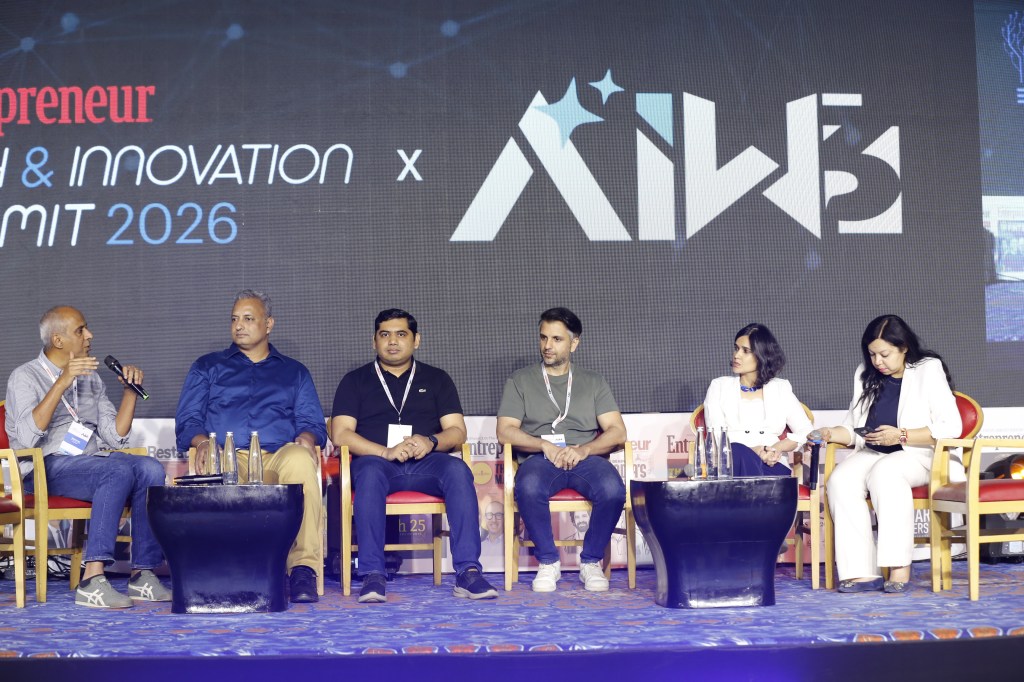
At Entrepreneur India Tech & Innovation Summit 2026, a panel of founders and investors unpacked what building and scaling tech startups really looks like in India today, beyond the clichés of “unicorn playbooks.”
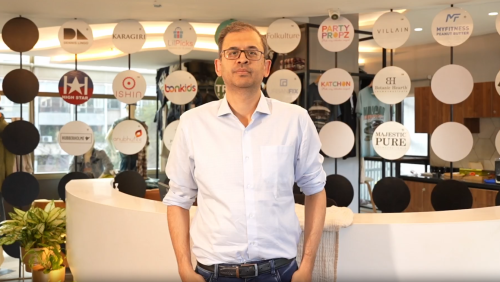
For Srikanth Iyer, Co-founder and CEO of HomeLane, technology is only half the equation. The real edge lies in how it’s applied to customer psychology.
Describing HomeLane’s design platform, Iyer said, “We wanted the journey to become very, very transparent, so the customer can see their house being built. And most importantly… see the price, like a taxi meter going up or down. We’d get it done in 90 seconds, but… give it to them after one day… It’s a question of understanding customer psychology.”
That balance between tech and behavior echoed in Karthik Venkateswaran’s view. The co-founder of Jumbotail argued that AI is not just about efficiency.
“The first instinctive word… is automation… [but] the other lens is, what were the things that originally were not possible?” he said. Through its AI co-pilot Aira, Jumbotail is enabling kirana stores to make decisions on pricing, inventory, and credit, areas previously driven by instinct.
“It is much more than automation… it is a co-pilot… bringing this technology to millions of retailers,” said Venkateswaran.
For logistics, the stakes are even more unforgiving. Vaibhav Khandelwal, Co-Founder & CTO, Shadowfax, said: “People remember the logistics operator only when things go bad.”
His focus is on predictive accuracy over speed promises. “Customers are more comfortable if I upfront tell them that it’ll come in 45 minutes rather than telling them 30 minutes and delivering it in 45 minutes,” said Khandelwal.
From decoding vague Indian addresses to real-time AI-powered quality checks at the doorstep, Kahndelwal emphasized that resilience, not just scale, is what builds a sustainable logistics business.
From an investor’s lens, Madhav Tandan, Senior Partner, Orios Venture Partners, made it clear there is no universal formula. “I wish there were a playbook,” he said, but highlighted constants like founder ambition and differentiation.
What has changed, however, is discipline: “We pay a lot of attention now to how quickly a startup scales up, and more importantly, how much money it takes, capital efficiency, and the path to exit, has become extremely rigorous,” said Tandan.
Meanwhile, Mansi Jain, COO of Glance, pointed to a fundamental shift in how AI is reshaping consumer experiences. “The world has moved from personalized to personal; it is no longer about finding what’s the right content for you, but generating content for you.” In commerce, this translates into AI-driven experiences tailored to individuals in real time, moving toward “agents making decisions on behalf of consumers.”
The unifying takeaway from the panel was that while AI is redefining capabilities across sectors, the enduring challenge remains human, whether it’s customer trust, founder conviction, or capital discipline.
The focus shifted from playbooks to the harder, less glamorous realities of building startups.
For Srikanth Iyer of HomeLane, the biggest challenge isn’t technology or capital, it’s talent and timing. “The hardest thing would probably be to find and hire the right team… and have the ability to figure when you need to switch tracks,” he said, emphasizing that startups constantly evolve. “When it’s 0 to 1, 1 to 10, 10 to 100… the kind of people that you will need will most probably change.”
That complexity is amplified in India’s demanding market, according to Karthik Venkateswaran of Jumbotail. “The starting point is never the technology… the starting point is the customer,” he said, pointing to the country’s “hyper value-seeking customer with very thin margins.” Balancing customer expectations with investor pressure and internal ambitions, he added, requires building a culture of doing the right thing consistently: “How do you keep doing the right thing every single day… and still deliver value?”
Even for scaled companies, the grind doesn’t ease. Vaibhav Khandelwal of Shadowfax pointed to fundraising as an ongoing burden: “We like running our business… but the entire journey of a fundraise… I personally felt is hard.”
From the investor side, Madhav Tandan of Orios Venture Partners reinforced that survival is often the only real metric: “There are situations where people have… almost died, come back up… and then eventually sold… survival is winning.” His broader guidance: financial prudence, planning for both growth and downturns, and recognizing when to spend aggressively versus conserve.
Trust, meanwhile, is emerging as a foundational constraint in the AI era. Mansi Jain of Glance was unequivocal: “Consumer trust is existential… what is real, what is not, there is a thin line.” Her emphasis was on building privacy and consent into system design itself, not as an afterthought.
In closing, the advice to founders was consistent and unsentimental: commit for a decade, don’t chase crowded ideas, go deep, choose co-founders carefully, and stay relentlessly customer-obsessed.
At Entrepreneur India Tech & Innovation Summit 2026, a panel of founders and investors unpacked what building and scaling tech startups really looks like in India today, beyond the clichés of “unicorn playbooks.”
For Srikanth Iyer, Co-founder and CEO of HomeLane, technology is only half the equation. The real edge lies in how it’s applied to customer psychology.
Describing HomeLane’s design platform, Iyer said, “We wanted the journey to become very, very transparent, so the customer can see their house being built. And most importantly… see the price, like a taxi meter going up or down. We’d get it done in 90 seconds, but… give it to them after one day… It’s a question of understanding customer psychology.”

Prince Kariappa • Features Content Writer
Entrepreneur Staff