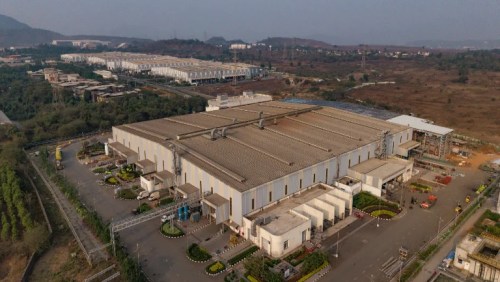
Lam Research is positioning itself at the intersection of workforce skilling and ecosystem building to ensure India plays a pivotal role in the semiconductor value chain worldwide, says Rangesh Raghavan, MD
The company’s proposal to amend the alteration of Articles of Association of the Company received 72.36% of votes, falling short of the required threshold by 2.65%, according to the company’s filing.
The changing sentiment is now visible across the ecosystem. According to reports, Citigroup bankers are projecting a rebound in IPO activity despite the current slowdown.
Charge driven by rising pressure to reduce fossil fuel dependence, localize energy infrastructure, and build resilience against global supply chain disruptions.
Bengaluru continued to overwhelmingly dominate Karnataka’s startup funding landscape, accounting for 98 per cent of total capital raised during the quarter at USD 848 million.
Large firms are becoming more selective. Emerging managers are spinning out to build focused strategies. And policymakers are increasingly treating alternative capital not merely as startup funding, but as a strategic pillar of India’s long-term economic growth architecture.
The developments underline how India’s capital markets are becoming central not only for growth financing, but also for governance compliance, real estate monetisation, and investor liquidity.
The next phase of innovation will likely belong not to companies chasing scale at any cost, but to those building technology that is commercially durable, operationally responsible, and capable of expanding human potential at scale.
As India strengthens its position in the global technology ecosystem, industry leaders believe the next chapter of growth will depend on balancing innovation with trust, governance, and accessibility.
For many organizations, the decision is shifting from isolated tools toward integrated platforms like Minimus, which aim to deliver both security and operational efficiency at scale.
She is best known as the founder of Fashion Week, Incorporated (FWI). As an adolescent, Ms. Paravas created her first entrepreneurial startup by developing a textile company and successfully exited by selling to a major competitor.
The discussion ultimately underscored a larger reality about Indian agritech: innovation succeeds only when technology adapts to the farmer, not the other way around.
Applications of AI across Indian industries have been varied and diverse, speaking to the sheer resourcefulness and creativity of Indian professionals in sustainably integrating and adopting artificial intelligence as a staple of their daily workflows.
The opportunity lies less in backing pure-play AI startups and more in enabling the broader ecosystem, tools, infrastructure, and applied use cases that will define India’s AI trajectory.
India’s education system doesn’t just need smarter tools, it needs better teachers, stronger industry alignment, and a fundamental shift from passive learning to active creation.
India’s rise offers a counter-narrative: a bottom-up, mobile-first, youth-powered ecosystem that could redefine what inclusive esports looks like globally.
At the Entrepreneur India Tech & Innovation Summit 2026, Umakant Soni delivered a keynote that offered a reality check surrounding artificial intelligence and an expansive vision for the future of AI-led societies.
As distributed systems, collaborative platforms, and AI-driven environments continue to evolve, that question is likely to define the next wave of innovation.
The conversation around “Fintech 3.0” quickly moved past buzzwords into something more grounded: how AI is actually reshaping financial services in real time, and where it still falls short.
With global supply chains actively seeking alternatives to China, Indian startups have a strategic opening to dominate critical subsystems, from sensors to autopilots.