Global Capability Centres (GCCs), Indian enterprises, and mature startups are now collectively driving a new phase of AI consumption, with a greater focus on operational outcomes than on experimentation.
Touted as the 'Mother of all Deals', India-EU Free Trade Agreement also deepens technological cooperation, including joint initiatives, and investment in critical emerging technologies.
As unverified AI-generated content threatens to degrade future large language models, enterprises are scrambling to build a zero-trust data governance framework.
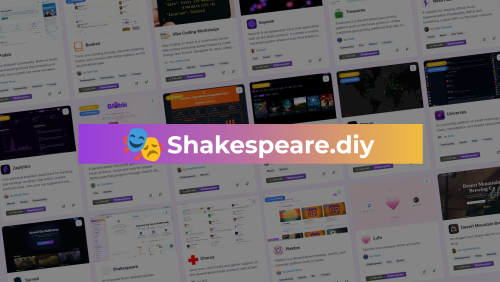
Shakespeare AI, turns that vision into reality: an open-source AI web builder that lets anyone design their own websites and online communities freely.
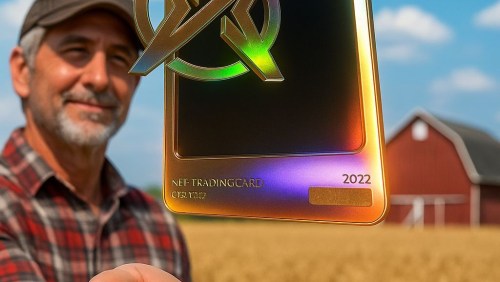
Leading this transformation is World TradeX, an emerging force in agri-tech and financial innovation, whose mission is to empower farmers, create local micro-economies, and help feed the world.
The company said that the funds will be utilized towards enhancing AI capabilities, boosting its India presence, and supporting expansion internationally.
AI in Bharat's FinTech sector is becoming far more intuitive and deeply personal. The next phase of growth will be shaped by platforms that understand people in their own languages and reflect the rhythms of everyday financial life.
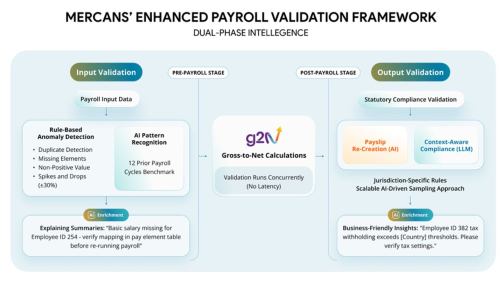
Instead of generating generic error flags, the platform delves deeply into payroll data, examining past cycles to identify missing information, duplicate entries, or unexpected variances.
The investor conversation around it has matured, with the focus no longer on whether a startup uses AI, but on whether it shapes how the business operates.
Short, low-ticket courses are helping edtech platforms reduce entry friction, test willingness to pay early, and move learners more efficiently towards higher-value programmes
Across engineering, product, and leadership roles, he noticed something that rarely makes it into boardroom conversations: companies do not lack effort or intelligence. What they lack is a way to understand themselves while they are operating.
Tighter capital, outcome-conscious learners, and deeper scrutiny around credibility are pushing platforms to redesign learning around AI-driven systems, measurable outcomes, and long-term trust
According to Samsung, the proposed integration will allow users to explore curated memories on their TVs, organized by people, places, and meaningful moments.
She operates at the intersection of deep technology and global-scale commercialization, a space where only a rare subset of technical product marketing leaders can simultaneously decipher complex engineering and architect the commercial strategies that make them viable.
The predictive analytics market alone reached a valuation of $12.4 billion in 2024, with forecasts projecting expansion to $38.1 billion by 2030. Vangalapat's contributions sit squarely within this transformation, bridging the gap between academic research and deployed industrial systems that generate measurable economic impact.
In an exclusive conversation, Fireside Ventures' Vinay Singh outlines why Gen Z, AI and emerging India will dominate consumer trends in 2026, as the firm closes its INR 2,265 crore Fund IV
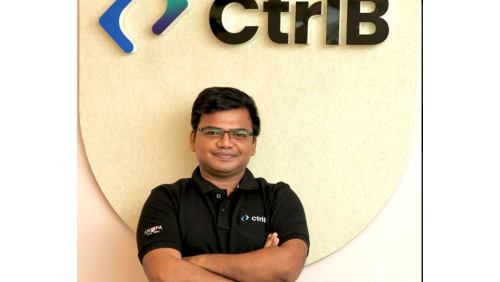
CtrlB said that the funding will help accelerate engineering, R&D, and patent filings for its core indexing and compression technology while pursuing enterprise certifications, including SOC 2 and ISO 27001.
Dioptra will build on the Icertis platform's operations capabilities, powered by Vera, with pre-signature agents that automate playbook creation based on existing contracts and handle the first line of review on every new agreement.
HyperVault will be funded through a combination of equity from TCS and TPG, as well as debt. With both parties combined, the total commitment will be up to INR 18,000 crore over the next few years.