The Future of Food Is Here — And It Runs on AI and Crypto
Leading this transformation is World TradeX, an emerging force in agri-tech and financial innovation, whose mission is to empower farmers, create local micro-economies, and help feed the world.
Opinions expressed by Entrepreneur contributors are their own.
You're reading Entrepreneur India, an international franchise of Entrepreneur Media.
The global food system is entering a new era, one defined as much by data and digital assets as by soil and seed. Leading this transformation is World TradeX, an emerging force in agri-tech and financial innovation, whose mission is to empower farmers, create local micro-economies, and help feed the world.
A Digital Framework for the Global Food Economy
World TradeX merges artificial intelligence (AI) and blockchain finance to streamline how food is grown, traded, and paid for. Its AI platform offers real-time insights on soil conditions, weather patterns, and demand forecasts, allowing farmers to optimize yields while reducing waste. These data flows connect directly into a blockchain-based marketplace that enables instant, transparent transactions across borders.
Supporters see it as a potential game-changer for the world’s most essential industry. By giving small farmers access to global buyers and decentralized financing tools, World TradeX aims to reduce reliance on traditional intermediaries and inject efficiency into supply chains that have long struggled with opacity and inequality.
Empowering Farmers and Building Micro-Economies
At the center of the company’s mission is the goal of transforming agriculture from a subsistence-based livelihood into a digitally integrated economic network. Through World TradeX’s ecosystem, farmers can not only sell their products but also access capital, data, and financial services directly from their phones.
Each farm becomes part of a micro-economy, a localized digital marketplace that plugs into the global food network. These interconnected economies allow producers in developing regions to trade more freely, borrow against their crops, and participate in a more inclusive global market.
“Every farmer deserves a seat at the global table,” a company statement reads. “Our role is to make that possible — fairly, transparently, and sustainably.”
Digital Sellable Receipts: A Bridge Between Food and Finance
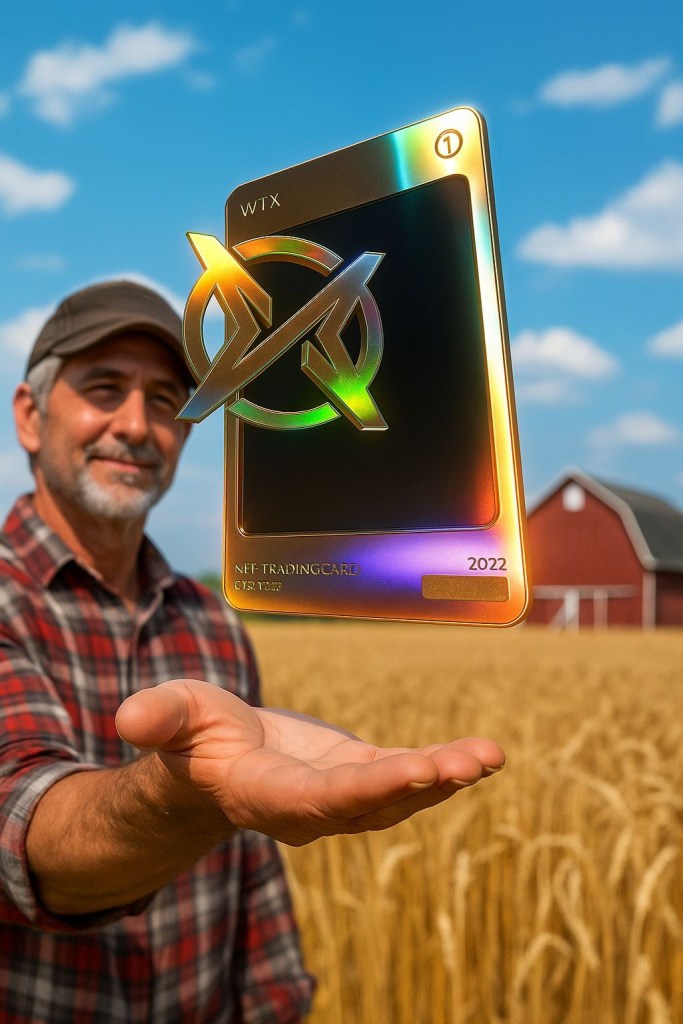
One of the company’s most talked-about innovations is the Digital Sellable Receipt (DSR) — a blockchain-based digital token that represents ownership of real-world agricultural goods.
Each DSR looks like an NFT card but carries intrinsic value tied to physical commodities or future harvests. A single receipt might correspond to a batch of coffee beans in transit or a crop of corn yet to be harvested.
Farmers can sell these receipts to investors, use them as collateral, or trade them on secondary markets. For consumers and institutions, DSRs offer a transparent and traceable way to invest in food production directly, effectively turning the world’s crops into digital financial instruments.
Still, experts note that the success of such systems will depend on regulatory clarity, supply chain verification, and the stability of digital asset markets. Without standardized oversight, the fusion of agriculture and crypto could face hurdles in global adoption.
The Payment Backbone: Traditional Meets Digital
Beyond the farms and marketplaces, World TradeX’s PayX platform serves as the financial backbone of the ecosystem. The system supports traditional banking, stablecoin settlements, and cryptocurrency payments, allowing transactions in both fiat and digital currencies.
With this infrastructure, a farmer in Argentina could receive immediate payment from a buyer in Germany, in euros, dollars, or stablecoins — all within a compliant, blockchain-verified framework.
The blending of traditional finance and decentralized technology reflects a growing global trend: the pursuit of interoperable financial systems that can serve the unbanked while maintaining trust and regulatory safeguards.
Yet, as global regulators grapple with defining the boundaries of crypto in mainstream banking, platforms like World TradeX face the challenge of balancing innovation with compliance. Data privacy, cross-border taxation, and currency volatility remain key areas of concern.
Challenges on the Horizon
Despite its promise, World TradeX operates in a complex environment. The global agriculture sector faces mounting pressures — from climate change and geopolitical tensions to supply chain disruptions and inflation. Meanwhile, crypto markets continue to evolve under the weight of regulation and skepticism, with questions around stability and security lingering.
Some analysts caution that bridging physical commodities with digital assets will require meticulous governance and robust transparency standards to maintain trust. Others see the company’s integrated model — combining AI, blockchain, and sustainability — as precisely what the future demands.
Hopeful Anticipation for a Connected Future
Even with challenges ahead, the sense of optimism surrounding World TradeX is palpable. The company represents a growing belief that technology can address food insecurity not through charity, but through empowerment and access.
If successful, World TradeX could set a precedent for how global agriculture transitions into the digital era, where farmers, not financiers, stand at the center of economic growth.
For now, the world will be watching with hopeful anticipation as this fusion of AI, crypto, and human ingenuity seeks to redefine how the planet grows and shares its food.
The global food system is entering a new era, one defined as much by data and digital assets as by soil and seed. Leading this transformation is World TradeX, an emerging force in agri-tech and financial innovation, whose mission is to empower farmers, create local micro-economies, and help feed the world.
A Digital Framework for the Global Food Economy
World TradeX merges artificial intelligence (AI) and blockchain finance to streamline how food is grown, traded, and paid for. Its AI platform offers real-time insights on soil conditions, weather patterns, and demand forecasts, allowing farmers to optimize yields while reducing waste. These data flows connect directly into a blockchain-based marketplace that enables instant, transparent transactions across borders.
Reports on emerging technologies, data-led enterprises, and the intersection of innovation and regulation.