Inside ShareChat’s Financial Turnaround & the Next Big Bet on Microdrama
Sharechat is planning a USD 400 million IPO early next year. The conviction comes from the fact that it turned cash flow positive last year and turned EBITDA positive last quarter.
ShareChat
Opinions expressed by Entrepreneur contributors are their own.
You're reading Entrepreneur India, an international franchise of Entrepreneur Media.
Social media is hard.
In the last decade or so, many desi challengers to the likes of Meta (Facebook, Instagram, WhatsApp), Twitter, and TikTok have come and gone. Do names like Josh, Koo, Kimbho, Arratai, Chingari and MX Takatak ring a bell?
ShareChat, however, is among the last ones standing.
The 11-year-old ShareChat (plus Moj and Quick TV – operated by parent Mohalla Tech) is now more ambitious – it’s planning a USD 400 million IPO early next year. The conviction comes from the fact that it turned cash flow positive last year and turned EBITDA positive last quarter.
This is significant because Indian social networking platforms have historically struggled with generating long-term revenue, eventually collapsing after burning through venture capital. Achieving profitability shows local platforms can sustain.
Banking on Indian-ness
Back in 2015, when ShareChat made its debut, the Indian internet landscape was quite different from what it is today. Though the likes of Facebook dominated the social media space, ShareChat founders wanted to build something that thrives on local languages as English almost ruled the entire internet interface.
“When the company started back in 2015 on IIT Kanpur campus, at that point, there was no intent or no view to be India’s X or India’s this or that. The thought process was that when you look at the landscape, before Jio, the internet was limited to 150 or 200 million users all across… print was 90% consumed in non-English, TV was consumed 90% in non-English. But the internet was all in English, 100% in English. It was not as if Indians wanted to consume English only on the internet, but it was a supply side challenge. We had imported all the internet, social media, everything from the West…” ShareChat cofounder and CFO Manohar Charan told Entrepreneur India.
The early iteration of Sharechat allowed people to consume content in their languages (such as Hindi, Telugu and Marathi). Even though it may seem a bit primitive now, the format worked for the company to quickly acquire millions of users.
The booster dose, however, came from Reliance Jio, which further democratised 4G mobile connectivity in India with ultra low-cost tariffs. This helped a lot of existing companies quickly leapfrog in terms of user base and scale while paving the way for a new era of internet-driven tech startups.
ShareChat benefited from it too. But it needed to make the platform more dynamic. It turned to user-generated content, a format that worked Instagram, YouTube, and Facebook. But it’s easier said than done. The Western incumbents had early mover advantage, large captive use bases and and deep pockets. For most of those products, the content serving algorithms depended on something called “social graph”, essentially showing what your friends post and likelihood of you being interested in them. Of course, these have undergone radical changes over the years. ShareChat at the time built an “interest graph” on those lines.
Drawing parallels with conventional matchmaking, Sharechat’s interest graph was built from ground up. In 2018, it built its own recommendation system, long before the modern versions of AI make it look like a child’s play.
Moj, Covid, and TikTok
By 2019, ShareChat had become a sizable company with several marquee investors such as Xiaomi, Lightspeed and Twitter. ShareChat’s Series D round in 2019 saw the company raising USD 100 million led by global giant Twitter, and at valuation USD 600 million. According to Charan, the company had nearly 10 million daily active users at the time.
Even as ShareChat competed with the global social networking giants, China’s TikTok (ByteDance) had become insanely popular in the country. The platform pioneered the short-vertical video format, which was eventually picked up by the likes of YouTube (Shorts) and Instagram (Reels).
Post India-China border clashes in 2020, TikTok was banned in India. The platform is said to have nearly 200 million+ users in India at the time. And these users needed a quick alternative. Several new platforms like Mitron and Chingari, Josh and Roposo emerged to capture the vacuum. ShareChat eyed the gap too.
“The day TikTok got banned, there were 200 million users using the platform in India… And overnight, the platform was aken away… So, the next morning of the ban being announced, our traffic went from 10 million to 18 million. We literally doubled overnight, because users were looking for an alternative. And that is when we said, ‘We will build India’s own answer to TikTok.’ So, that was our second platform – Moj…” Charan added.
Moj surpassed 50 million downloads within 45 days of launch and at one point it was among the top three homegrown short-video apps alongside MX TakaTak and Dailyhunt’s Josh.
ShareChat soon joined the list of unicorns with a USD 502 million Series E round led by Tiger Global with participation from Snap and existing investors including Twitter and Lightspeed Venture Partners. The round valued the firm at a whopping USD 2.1 billion. Thereafter in 2021, the organization emerged as a leader among the newly minted Unicorns of 2021, raising $913 million in the year and reaching $5 billion valuation. The company started the year 2021, valued at $650mn and ended at a valuation of $5nm. That was an incredible leap in a single year
In the coming years, most of the homegrown TikTok alternatives collapsed. MX Takatak later merged with ShareChat, creating a combined entity of more than 100 million creators and 300 million+ Monthly Active Users (MAU).
Even as Moj continued to exist, the short-video space was taken over by Instagram Reels and YouTube Shorts. Both the Western platforms launched the vertical video as a feature, enabling an instant uptake by millions of already existing Indian users.
Cash guzzling
It’s widely accepted that Indian social networking platforms failed to sustain long-term because of not being able to figure out a sustainable monetisation model.
Here’s what Koo Co-founders Aprameya Radhakrishna and Mayank Bidawatka had said on the shutdown of their Twitter-alternative: “We explored partnerships with multiple larger internet companies, conglomerates and media houses but these talks didn’t yield the outcome we wanted,” Koo founders Aprameya Radhakrishna and Mayank Bidawatka wrote in a LinkedIn post. “Most of them didn’t want to deal with user generated content and the wild nature of a social media company.”
Charan of ShareChat further explains that content consumption, like content distribution platforms, is a three-way marketplace. There is demand, there is supply, and then there is matchmaking… “in any recommendation system-driven or or any content distribution platform, server and content distribution cost will be a large cost, that is one. The second cost is, when you want to try driving trials or when you want to invite users to your platform, you will have to spend money to get them to download it, right?”
He also disclosed that the first few years of the company saw massive cash burn. In the first four years, the company got INR 10 back from every INR 80 spent.
“The first four years, I was spending 80 rupees, I was making 10 rupees, so for the first 4 years, I had to fund it from somewhere. That is why these businesses are like cash guzzlers. Um, but the good thing also is there is a very strong, uh, what do you call, operating leverage. So, once you cross the profitability barrier… each user even if each user generates you 2 rupees, you will start generating cash from the large userbase and make a lot of money… with my current employee headcount, I can service 3x the traffic,” Charan added.
In FY25, ShareChat reported a moderate growth to post INR 723 crore revenue, registering a marginal year-on-year increase as compared to INR 718 crore in FY24. Its adjusted EBITDA losses reduced 72 percent to INR 219 crore.
The Financial Turnaround
Around 2022, ShareChat kicked off a strategic shift toward unit economics and other austerity measures including a freeze on user acquisition spending and optimizing ad infrastructure.
“Until the time our revenue from a user is more than the cost to serve a user, I will not spend money to acquire more users. Because first you spend money to acquire users, then you lose money on servicing that user. So, for 3 years our user acquisition cost was zero. And that would mean you will shrink some user base, but you will save a lot of marketing money. So, from spending like 120 crore plus per month on marketing, we brought it to zero per month, and we stayed at that for almost 2 to 3 years,” Charan recalled the strategyboard.
Another efficiency came from building ad-matching technology. It prices each user each ad impression one at a time and very, very differently.
“… we managed to take our ad revenue per user per year from 25 rupees in 2022 to now 100 rupees plus. Parallely, we used to spend 150 rupees per user per year on server costs, we’ve optimized our server infrastructure and brought it down to 60 rupees, less than 60 now,” he added.
According to ShareChat CFO, the company has done nearly INR 1,000 crore revenue in FY26, and is now at the run rate of INR 1,400 Crore to INR 1,500 crore this year.
“So, for two consecutive years, we are growing at ~40%, and we see a very strong tailwind of continuing to grow at a good pace at this rate…” he added.
The Next Big Bet: Micro Drama
Microdramas, snackable short-form videos, is an increasingly popular mobile entertainment category.
According to a Lumikai report, published in April 2026, India’s microdrama sector is worth USD 300 million. This jump is phenomenal given the category barely existed one year ago.
“That single data point reflects a broader shift playing out across the ecosystem, as a new generation of users moves beyond passive consumption toward formats designed for how they actually use their phones,” the report said.
ALSO READ: India’s USD 300 Mn Microdrama Market is Just Taking Off
In the last one year or so, the space has seen nearly 450 million downloads, 100 million monthly active users, and is projected to be worth USD 4.5 billion by 2030, the report added.
In the last couple of years, a bunch of microdrama-focused platforms have emerged in India.
ShareChat sees a new opportunity here, and it’s a big hit.
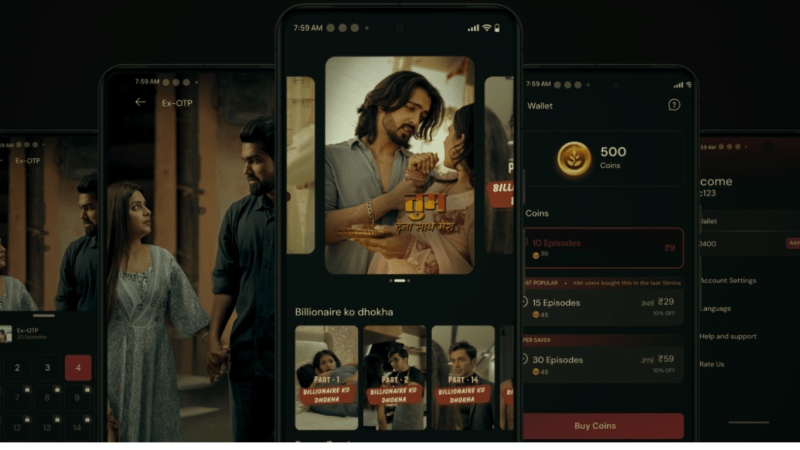
It has already launched Quick TV for microdrama, which is now cross-platformed to Moj and Sharechat.
On Tuesday, the company officially announced that it has committed INR 100 crore to scale AI-generated micro dramas. The move coincides with the platforms reaching a significant milestone – recording 850 million daily episodic video plays – equivalent to over 680 million minutes, or approximately 1,300+ years of content consumed in a single day.
ShareChat says this volume has more than doubled in the last six months, and the company anticipates daily episodic plays crossing a billion in the upcoming quarter, reflecting the rapid mainstreaming of the micro-drama format in India.
Quick TV, the company’s subscription only platform, introduced the format in 2025, before it was later integrated with an ad-supported model on Moj and ShareChat. Vertical drama has doubled daily time spent per user on Moj and increased it by 35% on ShareChat, according to the company.
“The exposure-to-engagement ratio has improved from approximately 45% to over 74% in the same period, while average episodes watched per user per day has grown from 20 to 80+, which is nearly 300% increase, signalling deepening audience investment in serialised vertical content,” the company added.
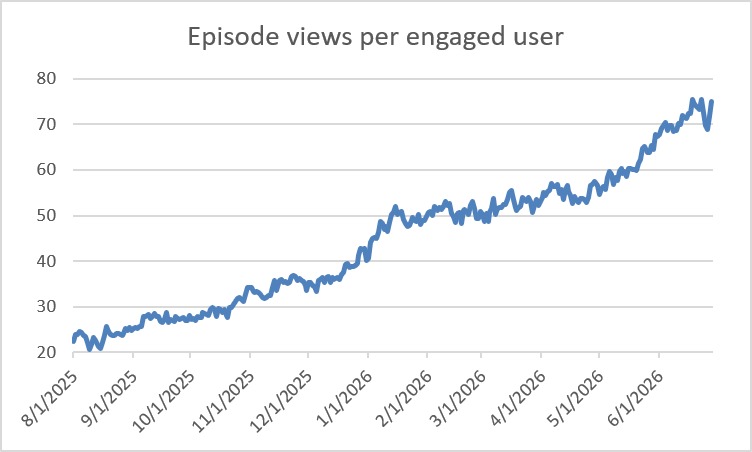
Interestingly the ShareChat ecosystem now serves approximately 70 million monthly active users of the format.
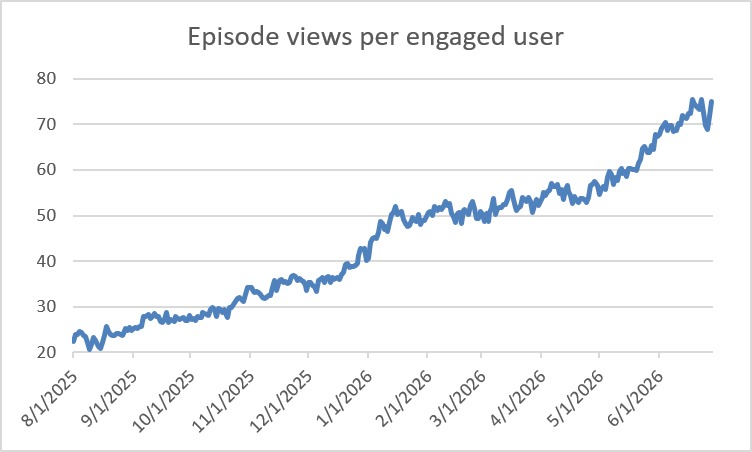
Interestingly the ShareChat ecosystem now serves approximately 70 million monthly active users of the format.
Charan explained that microdrama has indeed helped increase time spent on Moj, the short video sharing network.
“For 5 years, our time spent remained kind of rangebound, in 1 year we doubled it. This is all thanks to micro drama… Last year when we started free micro drama on Moj, we would service about 100 million episodes in a day. Today we service 850 million episodes in a single day. There has been an 8.5 times increase on that big a volume within a year’s time. India’s total micro drama market all platforms in the country put together services about 1 to 1.1 billion episodes in a single day. Of that, we alone are 850,” he explained.
“Between micro dramas, we show ads and we make money through that. We are now doing about 300-350 crore annualized revenue on ad-supported micro drama surfaces,” he highlighted while stressing the long-term sustainable business model for now an expanded platform.
Going forward with microdrama taking centre stage, ShareChat is ensuring it’s becoming a less capital-intensive studio.
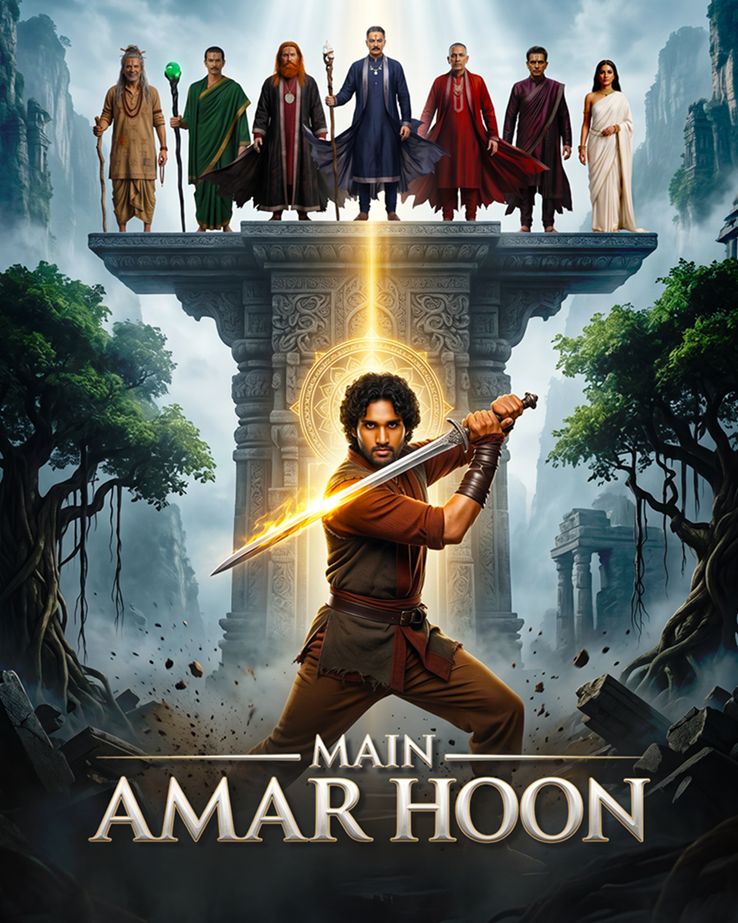
As micro drama expands, ShareChat is deliberately avoiding becoming a capital-heavy production house. When asked if managing productions diverts focus from tech, Manohar outlined their studio-funding strategy:
“… content is all done by our partners… We choose partners, we choose stories, and we choose to fund production of those stories, and some studios will produce that story for us exclusively. So, we own the right to that, but we’re not the actual producer, of course. We’re funding the production, and we will own the right to that,” he further explained.
That said, with an operational turnaround firmly in place and a USD 400 million IPO in the pipeline coupled with high-margin bet on AI and microdramas, ShareChat has a new window of opportunity. This is in stark contrast with many of its early peers which are mainly cited for uncalibrated cash burn and eventual collapse. Microdramas, in particular, are the flavour of the season. Many new and existing names are placing huge bets on the same. Naturally, there will be more intense competition with bigger players coming into the picture.
Social media is hard.
In the last decade or so, many desi challengers to the likes of Meta (Facebook, Instagram, WhatsApp), Twitter, and TikTok have come and gone. Do names like Josh, Koo, Kimbho, Arratai, Chingari and MX Takatak ring a bell?
ShareChat, however, is among the last ones standing.