WHO CONTROLS TATA?
N. Chandrasekaran’s exit reignites a key question: who really controls Tata? Governance experts weigh in on trusts, boards & shareholder power.
You're reading Entrepreneur India, an international franchise of Entrepreneur Media.
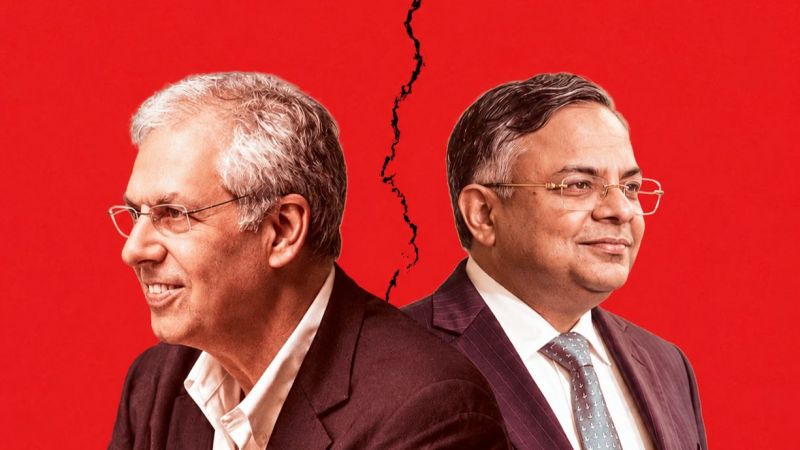
The exit of N. Chandrasekaran has brought an old question back into focus: where does shareholder influence end and professional management begin at the Tata Group? Governance experts Sriram Subramanian and Sonam Chandwani believe the latest episode exposes structural questions that go far beyond one chairman. By Punita Sabharwal
For Years, the Tata Group’s Governance Model was regarded as one of the more unusual experiments in Indian corporate life: a vast business empire controlled through a holding company in which philanthropic trusts hold a majority stake, but run day-to-day by professional managers. It worked – until the interests of ownership, the board and professional management began to diverge.
The decision by N. Chandrasekaran not to seek another term as chairman of Tata Sons has brought that tension into sharp focus. What appears on the surface to be a disagreement over one man’s continuation at the helm has opened up a much larger question: who actually controls Tata?
Is it the Tata Trusts, which hold the majority of Tata Sons? Is it the Tata Sons board, which is responsible for the company’s management and governance? Or does the chairman, as the group’s professional leader, have enough autonomy to pursue a long-term strategy even when the controlling shareholder has reservations?
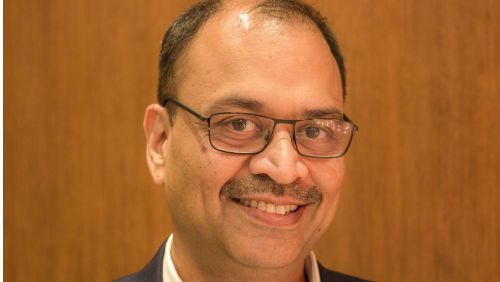
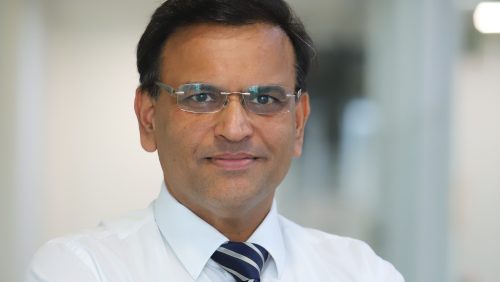
Corporate governance experts Sriram Subramanian and Sonam Chandwani of KS Legal arrive at different points of emphasis, but both see the current episode as exposing deeper questions in Tata’s governance architecture.
For Subramanian, the Chandrasekaran chapter is essentially over. The immediate priority, he says, is finding a successor and ensuring a smooth transition. “The efforts should be finding whoever is going to be the new person,” he says, arguing that the board needs to arrive at a consensus quickly and allow sufficient time for a transition.
But the departure itself, he believes, cannot be viewed in isolation.
WHEN OWNERSHIP MEETS PROFESSIONAL MANAGEMENT
At the heart of the episode is a fundamental corporate governance tension: how much influence should a controlling shareholder have over professional management? Subramanian sees the current episode as, to some extent, a conflict between ownership and professionalism. One issue was the question of Chandrasekaran’s proposed five-year term and the Tata policy around executive directors continuing until the age of 65. But, he says, other strategic questions appear to have subsequently entered the discussion, including concerns around “capital guzzling enterprises.”
That brings the debate back to first principles. The Tata Trusts, through their majority ownership of Tata Sons, have a legitimate interest in how capital is deployed, Subramanian argues. “Shareholders have a right to demand how they would like to see their companies being taken,” he says. Given the Trusts’ majority position, they can reasonably expect management to use capital prudently. And the change in the leadership of the Trusts matters.
The passing of Ratan Tata and the subsequent appointment of Noel Tata as chairman of the Tata Trusts altered the personalities at the centre of the governance structure. According to Subramanian, that has also meant a shift in the thinking and influence of the Trusts. “The thinking of the Trust has fundamentally, at least, changed a bit,” he says. That doesn’t necessarily make the structure flawed. But it does highlight its dependence on how different centres of power interpret their respective roles.
THE PROBLEM WITH BEING ‘INDEPENDENT’
Chandwani takes the argument considerably further. In her view, the Tata structure contains a fundamental asymmetry: those who exercise control are not necessarily the same people who bear the consequences of those decisions.
“The Tata structure separates the people who exercise control from the people who bear its consequences, and there is no accountability running between them.” – Sonam Chandwani, Managing Partner, KS Legal & Associates
Her concern is not simply about who supported or opposed Chandrasekaran. It is about the architecture within which such a decision can be made.
A majority shareholder has considerable power over a professional chairman, she says. It can influence board composition and ultimately support or oppose the continuation of a chairman. But that influence has limits because the law places management with the board, while directors’ duties run to the company rather than simply to the shareholder who appointed them. Tata’s structure adds another layer of complexity: the controlling shareholders are not a conventional family promoter or investment fund, but philanthropic trusts. “A trustee answers to the charitable purpose, not to shareholders,” Chandwani says.
That creates an unusual situation in which individuals associated with the Trusts can be navigating both commercial ownership and charitable responsibilities. “Two duties, two statutes, two regulators, one set of people carrying both,” she says. And, in her view, the current episode is what happens when that structure is put under stress.
6 MONTHS. 1 VOTE. 1 QUESTION.
Perhaps the most striking part of Chandwani’s argument concerns the decision-making process around Chandrasekaran’s reappointment. According to her account, both trusts had recommended the extension, the nomination committee had recommended it, and five of the six directors supported it. One did not. That was enough to leave the issue unresolved. “The decision may well have been correct on the merits, but nobody outside that room can tell,” Chandwani says. Her broader concern is that the system can be legally valid while remaining difficult for outsiders—including investors—to understand. “That’s perfectly legal, and it is not governance,” she argues.
She characterises the situation as evidence that the chairman’s independence was structurally limited: if renewal ultimately depends on the support of a board in which the controlling shareholder has substantial influence, the chairman’s position is inherently vulnerable. The question, therefore, isn’t simply whether Chandrasekaran deserved another term. It is whether the governance system gives a professional chairman enough institutional independence to disagree with the shareholder when necessary.
THE MISTRY LESSON
There is an obvious precedent. In 2016, the removal of Cyrus Mistry as Tata Sons chairman triggered a prolonged legal and corporate governance battle. Nearly a decade later, the episode remains an unavoidable reference point for understanding the current situation. Subramanian believes the Mistry episode contains an important lesson—but one that starts with succession planning. He faults the Tata system for not having put in place a clear succession plan for Ratan Tata’s eventual departure from the Trusts’ leadership.
Had there been a successor working alongside Ratan Tata for a longer period, he argues, the transition might have been smoother. Instead, Ratan Tata’s death was followed by Noel Tata’s arrival as chairman of the Trusts, bringing a new centre of influence into the system. “The influence of the person would have been over a period of time,” Subramanian says. “Whereas in this case Mr. Ratan Tata passed away only then did Mr. Noel Tata come in as chairman of the trust.” The lesson, therefore, is not merely about choosing the right individual. It is about institutionalising succession before it becomes urgent.
DID MISTRY ACTUALLY SETTLE THE GOVERNANCE QUESTION?
Chandwani is more critical of the conclusions drawn from the Mistry litigation. The Supreme Court judgment, she argues, established that Tata’s structure was legally valid. But legal validity and good governance are not necessarily synonymous. “The Court held the structure valid. It never held it sound, and those are different findings,” she says.
Her argument is that several questions remain unresolved. Among them: how charitable trustees should balance their fiduciary obligations with their position as controlling shareholders; how those competing duties operate in practice; and what meaningful options a minority shareholder has when it holds an interest in an unlisted holding company. Those questions have acquired fresh relevance. The Tata governance model may have survived its previous legal test. But that doesn’t mean every structural question was resolved by it.
THE INVESTOR NOBODY SEES
For public-market investors, the implications are potentially significant. Tata Sons sits at the centre of a sprawling ecosystem of listed companies. Investors in these businesses may assess them partly on the strength and credibility of the Tata parentage and the governance framework around it. Yet Tata Sons itself is unlisted. That creates an unusual information asymmetry.
Chandwani points to a striking consequence: if a governance issue occurs at an unlisted holding company, shareholders of listed Tata companies may learn about it through media reports rather than through direct corporate disclosures from the entity at the centre of the issue. “The risk sits precisely where the disclosure duty does not,” she says. Her argument goes further. She describes the minority position in Tata Sons as particularly constrained, raising questions about what practical remedies or exit options minority shareholders have. “Eighteen per cent with no voice and no way out is not a minority shareholder,” she says. “It is a captive.” It is a provocative formulation—and one that will invite debate. But it captures the central concern: ownership and economic exposure do not always translate into meaningful influence or liquidity.
THE AGM THAT BECAME A GOVERNANCE TEST
The Tata Sons AGM has provided another illustration of how unusual the structure can become. According to Chandwani, the Articles require the two Trusts to act jointly in certain circumstances—a provision designed as a safeguard so that neither can act alone. But what happens when one cannot act? That question became particularly relevant when a charity-law-related order affected the ability of one of the trusts to participate, contributing to the failure of the AGM to proceed. For Chandwani, the incident demonstrates the danger of governance documents that have never been adequately stress-tested against unusual circumstances. “Nobody asked what happens if one of them cannot act at all,” she says. Her conclusion is stark: “That is not misfortune. That is a document never stress-tested.”
SO, WHO CONTROLS TATA?
There may be no single answer. And that is precisely the point. The Tata model deliberately distributes power. The Trusts provide the ownership base. Tata Sons sits at the centre of the group structure. The board carries formal corporate responsibilities. The chairman provides strategic leadership. The operating companies have their own boards, shareholders and management teams. The system works when these centres of power remain aligned. The real test comes when they don’t.
Subramanian believes the immediate priority is practical: find a successor quickly and ensure a smooth transition. “The Tata’s need to quickly go through the entire path of succession planning,” he says. The next chairman, he believes, will need to be someone who is aligned with the vision of the Tata Trusts while also establishing sufficient harmony between the Trusts and the professional management of Tata Sons.
Chandwani’s prescription is more structural. She believes the joint-action requirement between the Trusts should be revisited, alongside a clear deadlock mechanism and an alternative route when one trust is unable to act. But that reform itself runs into the same problem at the heart of the current episode: the Trusts would need to agree to change the structure. Which brings the debate full circle.
THE REAL SUCCESSION QUESTION
The temptation now is to focus entirely on who will replace Chandrasekaran. But that may be the smaller question. The bigger one is what kind of authority the next chairman will actually have. Will the new leader be expected to operate with broad strategic autonomy? Will the Tata Trusts take a more active role in capital allocation and group strategy? Will Tata Sons strengthen its governance mechanisms to prevent future deadlocks? And will the group establish a clearer succession framework so that the next leadership transition does not become another test of institutional trust?
For Subramanian, the immediate answer is simple: identify the successor and create a proper transition. For Chandwani, however, choosing another chairman without addressing the underlying architecture would leave the fundamental problem intact.
The Tata Group has survived leadership changes, market upheavals, acquisitions, restructurings and even a major boardroom battle. But the Chandrasekaran episode has brought a different question to the surface. A business can survive a change of chairman. Can its governance model survive a conflict between ownership and management?
That is the question Tata now has to answer. And perhaps the most important question isn’t who controls Tata. It is whether Tata’s governance structure gives anyone, not even its most powerful stakeholders, the unchecked ability to control it.
“As far as Chandrasekharan is concerned, that chapter is closed. He just needs to wait for someone else to be nominated and selected, followed by a transition period. So, I don’t think there will be any further discussion about him.”
– Shriram Subramanian, Founder & MD, InGovern Research Services
THE TATA SUCCESSION TIMELINE
- 1991 — Ratan Tata becomes chairman of Tata Sons
- 2012 — Ratan Tata retires; Cyrus Mistry succeeds him
- 2016 — Mistry is removed as Tata Sons chairman
- 2017 — N. Chandrasekaran becomes chairman
- 2024 — Ratan Tata dies; Noel Tata takes over as chairman of Tata Trusts
- 2026 — Chandrasekaran’s reappointment becomes contested
- August 2026 — Chandrasekaran announces he will not seek another term
- February 2027 — New Tata Sons chairman will take charge
Subhash Chandra’s Rs 22,000 Cr. Question
What a Personal Guarantee Really Means
INR 22,006.57 crore. That is the figure that has circulated in reports around Subhash Chandra’s personal insolvency proceedings, creating the impression that the Essel Group founder had personally borrowed—and now owed—more than Rs 22,000 crore to banks and financial institutions. Chandra now says that interpretation is wrong. In a detailed statement issued on August 30, 2026 after three days of social-media discussion, Chandra sought to draw a distinction between money borrowed personally by him and loans for which he had provided personal guarantees.
His position is straightforward: his personal borrowing was zero. The approximately Rs 22,000 crore figure, he says, represents the aggregate value of personal guarantees he had signed for borrowing entities. Of that, only around Rs 4,800 crore of guarantees were signed when the underlying borrowers actually received the funds; the balance of the guarantees, according to Chandra, were signed after defaults had already occurred. That distinction matters. But it does not mean that a personal guarantee is merely a piece of paper with no financial consequence.
In corporate India, promoters giving personal guarantees for company borrowings is hardly an exotic arrangement. Banks have long used promoter guarantees as an additional layer of comfort when lending to closely held or promoter-driven companies. RBI’s guidelines explicitly recognise circumstances in which personal guarantees can be useful, including closely held companies, companies where financial strength or cash-generation capacity is inadequate, stressed businesses and businesses with interlocking funds between group entities. At the same time, RBI says banks should not insist on personal guarantees as a matter of course where the company’s financial position, management and cash-generation capacity are satisfactory.
The underlying logic is simple: the company is the borrower; the promoter guarantee is the second line of accountability. It is intended to give lenders another avenue of recovery if the borrowing company defaults. And once a guarantee is validly invoked, Indian law does not generally allow the guarantor to insist that the lender exhaust every remedy against the borrower first. Section 128 of the Indian Contract Act makes the surety’s liability co-extensive with that of the principal debtor unless the contract provides otherwise. The Supreme Court has repeatedly upheld the creditor’s right to proceed against the guarantor.
This is where Chandra’s latest statement becomes particularly important. According to the figures released by his office, borrowing entities had received approximately Rs 4,808 crore from the lenders covered in the statement. Those entities had subsequently repaid around Rs 3,803 crore, leaving roughly Rs 998 crore outstanding. Yet lenders filed claims totalling approximately Rs 5,311 crore in the personal insolvency proceedings. After accounting for claims of around Rs 1,049 crore that had been settled or paid, Chandra puts the remaining claims at approximately Rs 4,262 crore. That is a materially different picture from saying that Chandra personally borrowed Rs 22,000 crore and failed to repay it.
But there is another number that cannot simply be ignored. The repayment plan approved by the NCLT provides for Chandra to contribute around Rs 6.5 crore, against admitted creditor claims of approximately Rs 22,006.57 crore—an apparent recovery of roughly three paise for every Rs 100 claimed. The plan received support from more than 80% of creditors by voting share, although some lenders have objected and are considering legal challenges.
The tribunal’s decision therefore raises a much larger question than whether Rs 22,000 crore was “Chandra’s debt.” How much can a lender actually recover from a personal guarantee when the guarantor’s personal assets are nowhere near the value of the underlying corporate liabilities? This is perhaps the least understood aspect of promoter guarantees. A bank may have a guarantee covering hundreds or thousands of crores. That does not mean the guarantor necessarily has assets worth that amount sitting behind the guarantee. Chandra’s office says his declared personal assets stood at Rs 31.79 crore in 2024, including a residential property valued at around Rs 25 crore. It disputes earlier estimates that placed his personal net worth at tens of thousands of crores, arguing that those calculations conflated the market value of Essel Group businesses with Chandra’s personal wealth. That distinction is fundamental. Owning or controlling a valuable business is not the same thing as personally owning its enterprise value in cash or liquid assets. A promoter can therefore sign a guarantee running into thousands of crores while having personal assets worth a fraction of that amount. When the corporate business collapses, the guarantee exposes those personal assets—but it cannot manufacture wealth that no longer exists.
The Chandra case exposes a weakness that goes beyond one promoter or one business group. A personal guarantee can establish a creditor’s right to pursue the guarantor. It cannot guarantee the creditor a recovery equal to the amount of the guarantee. Recent data underline the problem. According to IBBI data, creditors had recovered only about 1% of admitted claims in personal-guarantor proceedings since FY20, with 64 approved repayment plans out of 2,137 proceedings in which resolution professionals had been appointed as of June 2026.
The exit of N. Chandrasekaran has brought an old question back into focus: where does shareholder influence end and professional management begin at the Tata Group? Governance experts Sriram Subramanian and Sonam Chandwani believe the latest episode exposes structural questions that go far beyond one chairman. By Punita Sabharwal
For Years, the Tata Group’s Governance Model was regarded as one of the more unusual experiments in Indian corporate life: a vast business empire controlled through a holding company in which philanthropic trusts hold a majority stake, but run day-to-day by professional managers. It worked – until the interests of ownership, the board and professional management began to diverge.
The decision by N. Chandrasekaran not to seek another term as chairman of Tata Sons has brought that tension into sharp focus. What appears on the surface to be a disagreement over one man’s continuation at the helm has opened up a much larger question: who actually controls Tata?

Entrepreneur Staff • Editor
Entrepreneur Staff
For more than 30 years, Entrepreneur has set the course for success for millions of... Read more