The Internet’s Next Owner
Yat Siu says AI agents and blockchain will reshape digital ownership, finance and the next internet.
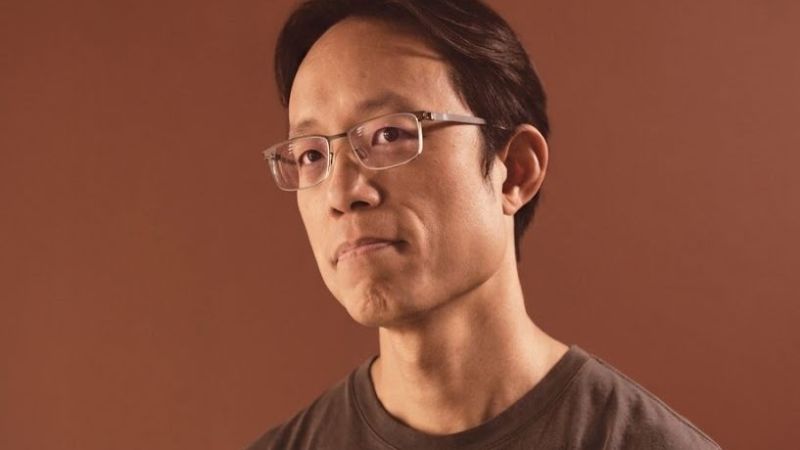
Yat Siu, Co-Founder, Animoca Brands
Opinions expressed by Entrepreneur contributors are their own.
You're reading Entrepreneur India, an international franchise of Entrepreneur Media.
Why Yat Siu Believes the Future Won’t Be Won by the Smartest AI—But by Those Who Own It
The Animoca Brands chairman has spent nearly a decade championing digital ownership. Now, as artificial intelligence reshapes every industry, he believes blockchain isn’t becoming obsolete – it is becoming the operating system of the next internet. By Punita Sabharwal
There is something unusual about speaking with Yat Siu. Unlike most technology leaders, he rarely talks about products. He doesn’t obsess over the next funding round, quarterly metrics or the latest AI model. Instead, every answer circles back to one idea—ownership.
Long before NFTs became dinner-table conversations and years before generative AI became Silicon Valley’s newest obsession, Siu had already built Animoca Brands around what many dismissed as an abstract concept: digital property rights.
The headlines have changed. The technology has evolved. But his thesis hasn’t. “The platform shift we bet the company on in 2017 is the same platform shift today,” he says. “It’s simply expressed differently.”
“Digital ownership is no longer about NFTs. It’s about owning the intelligence you create.” — Yat Siu, Co-Founder, Animoca Brands
For Siu, blockchain was never about cryptocurrencies. It was never about speculation. It was always about ensuring that people own their digital identities, data, creations and assets in an increasingly virtual world.
Artificial intelligence, he argues, has only made that mission more urgent.
The Bet That Never Changed
Technology loves labels. Animoca Brands has been called a gaming company, a blockchain company, an NFT investor and now an AI company.
Siu smiles at these classifications because, in his mind, the company has always been building the same thing. “Digital property rights,” he says simply.
Everything else from gaming to NFTs to tokenisation and now AI is merely another expression of that vision. “When we started, digital ownership was visible through gaming assets and NFTs. Today it extends to AI, identity and data. The mission hasn’t changed.”
That ability to separate enduring trends from temporary hype explains why Animoca has survived multiple technology cycles while others pivoted every few years. For Siu, entrepreneurs shouldn’t build around fashionable technologies. They should build around irreversible shifts.
He compares it to the early internet. Initially everyone believed browsers were the business. Then came search. Then social media. Then mobile. None of those developments invalidated the internet, they expanded it.
Blockchain, he believes, is following the same trajectory. “If you build for the next funding round, your horizon is very short,” he says. “But if you’re building for a long-term shift, you develop expertise. You begin to see opportunities others simply don’t.”
The Metaverse Isn’t Coming. It’s Already Here.
Few people have championed the metaverse as passionately as Siu. Ironically, AI has changed his understanding of it. “We thought we’d spend more time inside virtual worlds,” he says. “Instead, what’s happening is the opposite.”
The virtual world is entering ours. “The metaverse isn’t something we’ll go into. The metaverse is coming to us.”
Those virtual citizens are AI agents. Not chatbots. Not assistants.
Autonomous digital workers capable of learning, negotiating, purchasing and making decisions independently. “I already have over 300 AI agents.”
He pauses before asking a question that reframes the future. “If there are billions of AI agents working for people, what’s the one thing they’ll eventually need?”
His answer comes instantly. “Money.”
Welcome to the Agent Economy
For Siu, the next internet won’t revolve around apps. It will revolve around agents.
Every entrepreneur, every enterprise and perhaps every individual will eventually deploy multiple AI agents performing tasks around the clock. Research. Writing. Programming. Customer support. Negotiation. Investment analysis. Supply-chain optimisation.
But intelligence alone doesn’t make them autonomous. “They need banking.” Banks won’t open accounts for software. Blockchain will.
AI agents will own wallets. They’ll transact using stablecoins and tokenised assets.
They’ll negotiate contracts, purchase services and exchange value without waiting for human approval. “The entire fabric of transactions will change through agent commerce,” Siu predicts.
This, he believes, is where blockchain finally finds its biggest customer—not humans, but machines. “Blockchain is the machine banking system for AI.”
THE BIG IDEA
Web4 = AI Agents + Blockchain Wallets + Digital Property Rights
According to Siu, the next internet will be driven by autonomous AI agents capable of owning wallets, managing digital assets and executing transactions independently.
Why AI Makes Blockchain More Valuable
Many believe AI has replaced blockchain as technology’s defining narrative. Siu disagrees.
If anything, he says, generative AI has exposed why digital ownership matters more than ever.
Every prompt entered into an AI model… Every business strategy uploaded… Every design shared… Every customer interaction… becomes training data.
“When you feed your business ideas into AI platforms, you’re training them.” He points to the example of design software companies whose workflows increasingly helped train competing AI systems.
To Siu, this isn’t simply a technology debate. It’s a property rights debate.
Who owns the intelligence being created? Who owns the data? Who owns the output?
Blockchain provides provenance, authenticity and traceability—qualities becoming indispensable in a world flooded with AI-generated content.
“Digital property rights aren’t just about NFTs anymore,” he explains. “They’re about sovereign compute.” In other words, the right to own not just digital assets, but the intelligence your organisation creates.
RAPID FIRE
One founder you admire?
Masayoshi Son. “He built SoftBank when Asia barely had a venture capital ecosystem.”
One startup you’re watching?
Anthropic. “Whatever it does reverberates across the entire AI industry.”
Biggest misconception about Web3?
“That it’s only scams and memecoins.”
One book every founder should read?
Antifragile by Nassim Nicholas Taleb.
One technology you’d keep investing in?
“The intersection of AI and crypto.”
Entrepreneurs Are Using AI All Wrong
Ask Siu where businesses are making their biggest mistake, and his answer is immediate.
“They’re still using AI in ChatGPT mode.” Most companies treat AI like an upgraded search engine.
Type. Ask. Receive. Repeat. Useful but unimaginative.
The real opportunity, he argues, lies in autonomous execution. Instead of asking AI questions, entrepreneurs should ask AI to perform ongoing work.
Research markets. Generate code. Monitor competitors. Optimise operations. Manage workflows. Run continuously.
“The better question isn’t, ‘How are you using AI?'”
“It’s: ‘How are you using autonomous AI agents to optimise your business?'”
That subtle change, Siu believes, separates productivity from transformation. He sees AI becoming as universal as smartphones.
15 years ago, social media was a specialist skill. Today everyone instinctively creates content, edits photo, and manages digital identities. AI, he believes, is reaching the same inflection point.
5 IDEAS TO STEAL FROM YAT SIU
- Build for decades, not funding rounds.
- Think in AI agents, not AI tools.
- Treat data as property.
- Digital ownership is becoming infrastructure.
- Financial literacy is the world’s biggest untapped opportunity.
Why India Could Lead the Next Financial Revolution
Among global markets, India occupies a special place in Siu’s thinking. Not because of its population. Or its developers. Or even its startup ecosystem. It’s because of its financial inclusion challenge.
He sees blockchain and tokenisation solving problems that traditional finance has struggled with for decades.
Imagine a farmer in rural India. Instead of buying physical gold, she owns fractional tokenised gold. Instead of needing a traditional bank, she uses a secure digital wallet. Instead of relying on financial advisers, an AI agent guides every investment decision.
“Raise financial inclusion by just ten percent in India,” Siu says, “and the impact on GDP would be enormous.”
He believes tokenisation of real-world assets from commodities to securities combined with AI-powered financial assistants could democratise investing for millions who have traditionally remained outside formal financial systems.
That, for him, represents blockchain’s greatest opportunity. Not speculation. Participation.
Regulation Isn’t the Enemy
Few industries have experienced regulatory uncertainty like digital assets. Yet Siu doesn’t see regulation as innovation’s enemy. He sees it as its eventual partner.
Innovation always moves first. Policy catches up later. Without experimentation, industries never mature. Without regulation, consumers never trust them.
“The collaboration between industry and government is really critical.”
The future, he says, won’t be defined by whether governments regulate digital assets. It will depend on how intelligently they do it.
Consumer protection, digital ownership and AI accountability are becoming interconnected policy challenges. Governments and entrepreneurs, he argues, will need to solve them together.
Success Beyond Valuation
Ask most founders where they see their companies in 2035, and the answers usually involve revenue, market share or valuation. Siu answers differently.
Success, he says, isn’t measured by Animoca Brands. It’s measured by adoption. “When more than half the world’s population has true digital ownership, we’ll know we’ve succeeded.”
Notice he doesn’t say cryptocurrency. Or NFTs. Or even blockchain.
He talks about ownership. Tokenised stocks. Digital identities. Fractional assets. Intellectual property. Financial inclusion.
For Siu, these aren’t separate industries, they’re building blocks of a more equitable digital economy.
If the first internet connected information, and the second connected people, the next internet, he believes, will connect ownership itself.
That vision explains why Animoca Brands continues to invest where AI meets blockchain, where finance meets inclusion and where technology creates not just intelligence, but agency.
Because in Yat Siu’s world, the defining question of the next decade isn’t how intelligent AI becomes. It’s who owns the value it creates.
Why Yat Siu Believes the Future Won’t Be Won by the Smartest AI—But by Those Who Own It
The Animoca Brands chairman has spent nearly a decade championing digital ownership. Now, as artificial intelligence reshapes every industry, he believes blockchain isn’t becoming obsolete – it is becoming the operating system of the next internet. By Punita Sabharwal
There is something unusual about speaking with Yat Siu. Unlike most technology leaders, he rarely talks about products. He doesn’t obsess over the next funding round, quarterly metrics or the latest AI model. Instead, every answer circles back to one idea—ownership.