TIS 2026: Enterprise Tech Unlocked
At Entrepreneur India’s Tech and Innovation Summit, the DataOps, AIOps & the Automation Advantage panel emphasized how automation is no longer a peripheral efficiency tool but a strategic backbone for modern organizations.
Entrepreneur India
Opinions expressed by Entrepreneur contributors are their own.
You're reading Entrepreneur India, an international franchise of Entrepreneur Media.
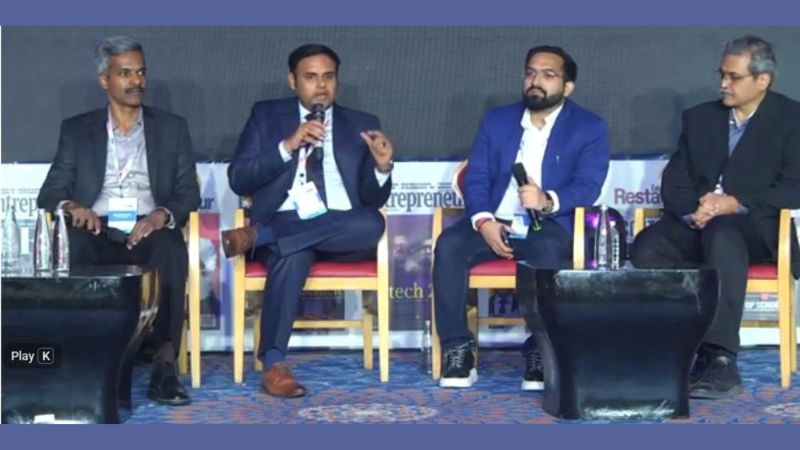
The panel on Enterprise Tech Unlocked: DataOps, AIOps & the Automation Advantage offered a sharp look at how enterprises are grappling with automation, compliance, and AI adoption.
The panel discussed regulated industries must embrace compliance‑by‑design principles, with geo‑fencing, encryption, and residency frameworks to ensure sovereignty while experimenting with AI
Tushar Gupta, CTO, Microsoft, said, “We need compliance by design principle in place coupled with enterprise standard framework.” He noted that legacy systems and stale data often block innovation, but extensibility connectors and unified governance frameworks can unlock value.
Sugumar Umapathy, CTO, Dell Technologies India noted that the fundamental challenges that enterprises face today is that existing data is not usable by AI readily. “Data ops is the first layer which gives meaning to the data. Federated approach reduces friction and makes data AI‑ready without forcing everything into a single lakehouse.”
DataOps provides the discipline to manage fragmented and siloed data across clouds, on‑premises systems, and edge environments. By treating data as products owned by business units, enterprises can ensure security, lineage, and governance while making data AI‑ready.
The discussion then shifted to banking and telecom examples. Panelists pointed out that banks resist sharing branch‑level data, yet citizens demand portability and seamless services.
On AIOps, the panel explained how incident management is evolving with natural language interfaces, anomaly detection, and agentic systems.
“Cataloguing of data, avoiding duplicity, are the basics that enterprises need to start off with when it comes to data ops,” said Yatin Dharamshi, RAN & Core CTO, Technology and AI Office, Nokia.
Government initiatives were discussed with counterpoints highlighting growing collaboration between corporates and ministries. “Private industry is not unwilling to cooperate with the government; in fact, we are seeing growing collaboration across telecom, technology, and startups to build next‑generation infrastructure and make public data truly work for citizens,” Nokia CTO added.
DataOps, and AIOps are no longer optional; they are a part of modern enterprises. These explored enterprises are reimagining IT operations through automation, data governance, and AI integration. The central theme is that automation is no longer a peripheral efficiency tool but a strategic backbone for modern organizations.
The panel highlighted real‑world challenges: regulated industries struggle with legacy systems, stale data, and compliance requirements. Yet frameworks built on compliance‑by‑design principles; geo‑fencing, encryption, and sovereignty controls, allow innovation without compromising trust.
The panel on Enterprise Tech Unlocked: DataOps, AIOps & the Automation Advantage offered a sharp look at how enterprises are grappling with automation, compliance, and AI adoption.
The panel discussed regulated industries must embrace compliance‑by‑design principles, with geo‑fencing, encryption, and residency frameworks to ensure sovereignty while experimenting with AI
Tushar Gupta, CTO, Microsoft, said, “We need compliance by design principle in place coupled with enterprise standard framework.” He noted that legacy systems and stale data often block innovation, but extensibility connectors and unified governance frameworks can unlock value.