Pocket FM Partners with OpenAI to Accelerate AI-Native Content Creation
Pocket FM is the latest Indian company to team up with OpenAI to bring more advanced AI-powered features.
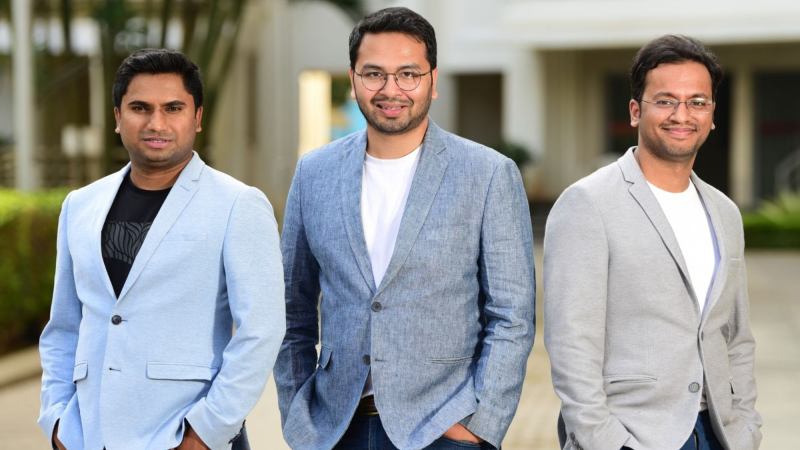
Pocket FM founders
You're reading Entrepreneur India, an international franchise of Entrepreneur Media.
Audio streaming platform Pocket FM on Thursday announced a collaboration with OpenAI to deploy AI tools across its content ecosystem.
As part of the collaboration, Pocket FM will integrate OpenAI’s APIs into various workstreams aimed at accelerating content creation and production infrastructure to help its 300,000-member strong creator community.
Pocket FM disclosed that it hosts over 100,000 AI-native audio series and that AI-led titles are now emerging as the fastest-growing segment, at an average of approximately 30% month-on-month.
“At Pocket FM, AI is foundational to everything we do. Our collaboration with OpenAI takes our AI vision to a new level. By combining OpenAI’s APIs with our deep content infrastructure and creator ecosystem, we are building something the world has not seen before: an entertainment platform where a single creator in any corner of the world can produce, publish, and reach millions of listeners globally, with the quality and consistency of a full production studio. This is what the democratisation of storytelling truly looks like.” said Prateek Dixit, Cofounder – Product, Tech and AI, Pocket FM, said in a release.
“Pocket FM is demonstrating how AI can help creators scale storytelling for global audiences. Our collaboration brings OpenAI’s technology into their creator ecosystem to support faster content creation, localisation, and distribution. This is a compelling example of how AI can expand creative opportunity, while keeping human creativity at the core.” said Oliver Jay, Managing Director – International, OpenAI.
Pocket FM joins a slew of Indian startups that have partnered with OpenAI in the recent months.
For instance, it recently teamed up with MakeMyTrip to bring AI-led travel discovery and capture high-intent travel queries. As part of this collaboration, MakeMyTrip plans to leverage OpenAI’s APIs to power new AI features in its app.
Jio-Hotstar is also integrating OpenAI to bring ChatGPT-powered voice discovery and more contextual AI driven features to the streaming platform.
OpenAI is not only focusing on platforms for end users but is also expanding its collaborations within the enterprise sector.
OpenAI has partnered with Tata Group’s TCS. Described as a “multi-dimensional strategic AI partnership” the two companies will work together to develop AI infrastructure.
According to the firms, TCS’s HyperVault unit and OpenAI through a multi-year partnership will develop AI infrastructure in India, starting with infrastructure with 100MW of capacity. This could be further scaled 1GW.
TCS and OpenAI will enable Indian and global enterprises to transform with AI-powered solutions tailored to their organizational contexts. Through this collaboration, TCS will help its customers accelerate AI-led transformation by deploying, integrating, and scaling OpenAI’s advanced AI platforms worldwide.
ALSO READ: OpenAI’s India Gambit: All-In Infrastructure, Local Partnerships, and Expanding Presence
Audio streaming platform Pocket FM on Thursday announced a collaboration with OpenAI to deploy AI tools across its content ecosystem.
As part of the collaboration, Pocket FM will integrate OpenAI’s APIs into various workstreams aimed at accelerating content creation and production infrastructure to help its 300,000-member strong creator community.
Pocket FM disclosed that it hosts over 100,000 AI-native audio series and that AI-led titles are now emerging as the fastest-growing segment, at an average of approximately 30% month-on-month.

Entrepreneur Staff • Editor
Entrepreneur Staff
For more than 30 years, Entrepreneur has set the course for success for millions of... Read more