The Cult of Nothing
Five years into its journey, the London-based smartphone company has begun to enjoy a cult following.

Nothing
Opinions expressed by Entrepreneur contributors are their own.
You're reading Entrepreneur India, an international franchise of Entrepreneur Media.
Smartphones used to be fun. Some experimented with modular design, some cranked up specifications, some waged war on the 3.5mm headphone jack, some banked on ecosystem play, some wanted phones to flip, some to fold. It was never a dull moment.
Even as it began to feel like smartphones had hit a ceiling of sameness, a new smartphone brand grabbed everyone’s attention. First of all, Nothing is a pretty darn bold name to ignore. And then, co-founder Carl Pei is already a well-known name from his stint at OnePlus, which had the famous tagline of “the flagship killer.”
Five years into its journey, the London-based smartphone company has begun to enjoy a cult following – earlier this year, thousands of fans gathered at Nothing’s flagship retail store in Bengaluru – euphoria generally seen for celebrities, concerts, and so on.
And beyond the social media glitz, numbers back it up too. According to Counterpoint, Nothing’s shipments grew 32% YoY in Q4 2025, supported by its expanding offline retail presence. Its clean UI, reliable connectivity, and distinctive design emerged as key differentiators.
Nothing’s juggernaut roll isn’t new. “It is the ninth time in the last 10 consecutive quarters that Nothing has emerged as India’s fastest-growing smartphone brand,” according to Counterpoint Research.
This was driven by the successful launch of the CMF Phone 2 Pro and the brand’s strong retail expansion efforts.
The Phone (4a) launched in Q1 2026 and became the best-selling smartphone on Day 1 in the INR 30,000 and above segment on Flipkart.
The Excitement
For Nothing, design and uniqueness were not just about looking different for the sake of it but a response to what had become a stagnant market. And it builds on the same love for all the milestones from decades past.
Akis Evangelidis, co-founder and India president at Nothing, resonates with good old nostalgia and fondly recalls the “magical moments” of new innovations in personal consumer tech.
“It felt like Christmas mornings… we wanted to re-create all our products with that level of excitement. And part of that to achieve was through the design.”
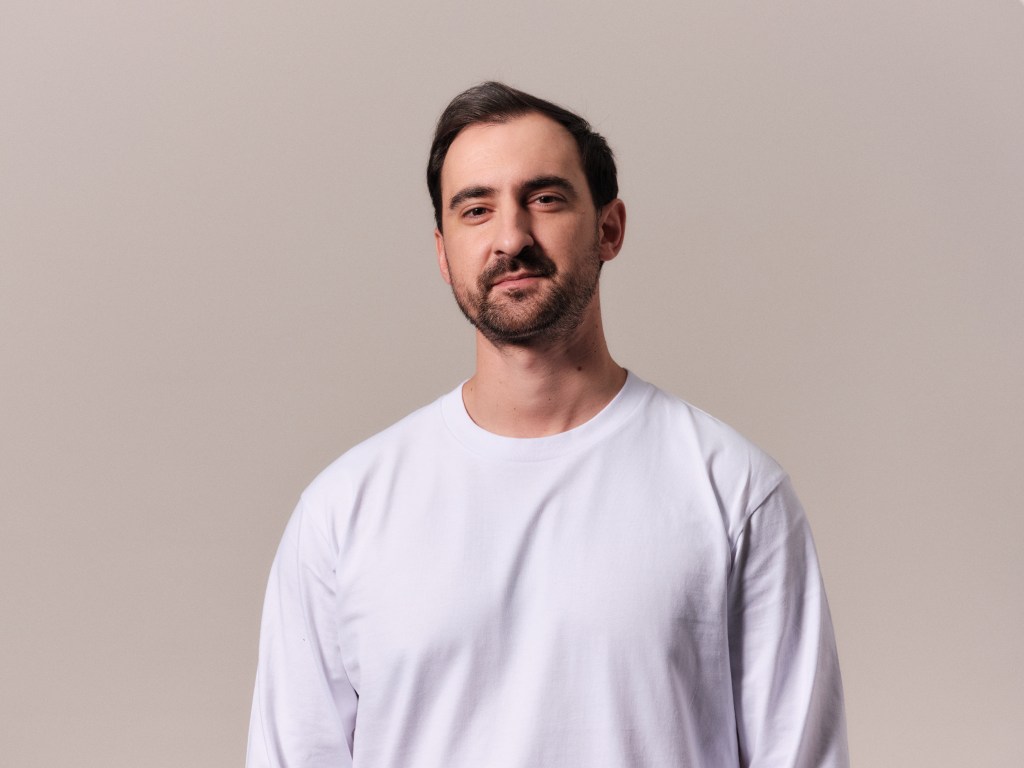
Akis Evangelidis, Co-founder and India President at Nothing
Nothing anchored its visual identity in transparency, quite literally. The first generation – Phone (1) – was remarkably different from the rest. A few iterations later, the transparent aesthetic has become a signature. The newly launched Phone (4a) is a massive design milestone for the brand.
“Even for me, the first time I saw the prototype, I was quite surprised. You know, it still feels very Nothing per se, but at the same time different, and I think from a pure design standpoint, the team has done a tremendous job. This is how every single product launch brings that level of excitement, joy, and surprise to some extent,” Evangelidis added.
Evidently, the premise that technology should evoke joy, surprise, and intentionality is working.
AI: Back to The Future
Smartphones were arguably the first consumer devices to bring AI-like experiences to our fingertips. For years, mobile cameras have leveraged machine learning algorithms to improve photography. And the mobile software ecosystem has quietly leveraged ML to deliver personalized experiences. Given the precedent, an integration of next-generation, ChatGPT-like generative AI into our handheld devices is a natural next step.
Different companies are adopting different strategies to provide the same: Apple’s AI strategy banks on ecosystem exclusivity with “Apple Intelligence.” In contrast, Google is deploying its Gemini to the broader Android landscape. For instance, a Google-Samsung partnership enables a deep integration of Gemini into Samsung’s Galaxy ecosystem to power next-gen search, productivity, and hands-free assistance.
While many brands are pushing AI as purely a marketing gimmick, Nothing’s perspective is rather intensely grounded in the practicalities, as it perceives the technology as an architectural tool to enhance the user experience instead.
“The future we’re heading toward is not about having one operating system for a billion people, but rather an operating system that enables a billion different operating systems for a billion people. We are all unique as individuals, so our needs differ. For us, this ‘next-gen operating system’ will be hyper-personalized, highly context-aware, and quite agentic. You won’t have to open individual apps to do multiple tasks – which creates a lot of friction. Instead, everything will be aggregated together,” Evangelidis added.
“The end goal here is to declutter your digital life. Right now, it’s quite overwhelming – we have so many apps and notifications. We work on our phones, we watch media on them, we do so many things. Our focus is on how we can declutter that experience. While it will take a couple of years to fully realize this next-generation operating system, that goal, however, is at the essence of all the AI features we are introducing,” he explained.
The Nothing co-founder highlighted that the company has built an ‘Essential Space’, which acts almost like a “second brain.”
“You can drop any document, screenshot, voice note, or meeting recording into it. It organizes all of this data, prompts action points, and adds reminders to your calendar. The hope is that you don’t have to retain all that information in your head or scatter it across different parts of your smartphone—like a screenshot in your gallery and a note in another app. It’s one space where you put everything, and it makes sense of it all, highlighting what’s important and recommending next steps,” Evangelidis said.
Back to Reality
With tech giants training their focus on AI, the broader consumer tech space is bearing the brunt of this transition. This is mainly because chipmaking companies are now allocating a vast amount of resources (production capacity and R&D budgets) to cater to a massive demand for enterprise AI chips and high-bandwidth memory (HBM).
Consequently, this transition is straining the supply chain for conventional consumer components, triggering a sharp increase in the cost of memory, storage, and other related units. Expectedly, companies are forced to pass the price on to consumers as well as expand new product launch window timeframes. Just recently, Apple, in an unprecedented move, raised iPad and MacBook prices due to soaring memory and storage chip costs.
Nothing is well aware of these realities. They’ve had to make some hard choices lately, choosing to prioritize a great user experience over slashing prices just to stay cheap.
Noting the price rises, Evangelidis said it has become impossible to launch a new product under INR 25,000 without drastically compromising the user experience. “We decided not to do that, and as a result, we chose to hold off on the launch of our new CMF phone,” he said.
“For the first time, the industry is seeing something unprecedented, even Apple has increased product prices across the life cycle. Usually, you launch a product, components get more affordable over time, and the price drops. This time around, everyone is increasing their prices every quarter. The dynamics have completely changed. However, because we have never built our brand equity around ‘value for money,’ I feel we are less impacted than brands that focus solely on that,” he added.
Love for India
Nothing is bullish on its India prospects.
As mentioned earlier, it already enjoys an unprecedented cult following in the country and has an impressive, increasing market footprint. In September last year, Nothing announced that it would set up a USD 100 million JV with Optiemus. It has also partnered with IIT Roorkee to propel deeptech innovation and mentor students in electronic design and product engineering.
Interestingly, Nothing’s USD 200 million Series C round saw investment from Zerodha founder Nikhil Kamath. It also has investors like Karan Johar, Yuvraj Singh, Sabyasachi Mukherjee, and Ranveer Allahbadia.
“Our journey has been fantastic. The level of support and engagement we’ve received since the beginning has been tremendous, which is why I have personally been focusing on the Indian market for the past year and a half. We don’t view India solely as a domestic market opportunity, even though it is a massive market where any successful brand can build a very sizable business. We look beyond that,” Evangelidis said.
“We see India building the next great tech ecosystem on a global scale, much like what China was 10 to 15 years ago. Anyone in India should be extremely excited about where things are heading. Within the next 10 years, India will pretty much be the epicenter of technology, and we will see more and more global brands emerging from there. I am just very excited about the opportunity and being part of this journey.”
Smartphones used to be fun. Some experimented with modular design, some cranked up specifications, some waged war on the 3.5mm headphone jack, some banked on ecosystem play, some wanted phones to flip, some to fold. It was never a dull moment.
Even as it began to feel like smartphones had hit a ceiling of sameness, a new smartphone brand grabbed everyone’s attention. First of all, Nothing is a pretty darn bold name to ignore. And then, co-founder Carl Pei is already a well-known name from his stint at OnePlus, which had the famous tagline of “the flagship killer.”
Five years into its journey, the London-based smartphone company has begun to enjoy a cult following – earlier this year, thousands of fans gathered at Nothing’s flagship retail store in Bengaluru – euphoria generally seen for celebrities, concerts, and so on.