India Needs To Be an Equal Partner In Global Semiconductor Supply Chain: Navin Bishnoi of Marvell Tech
Bishnoi stressed that India’s semiconductor progress hinges on a complete supply chain, extending beyond fabs to minerals, gases, equipment, and instruments, fully integrated into the global ecosystem.
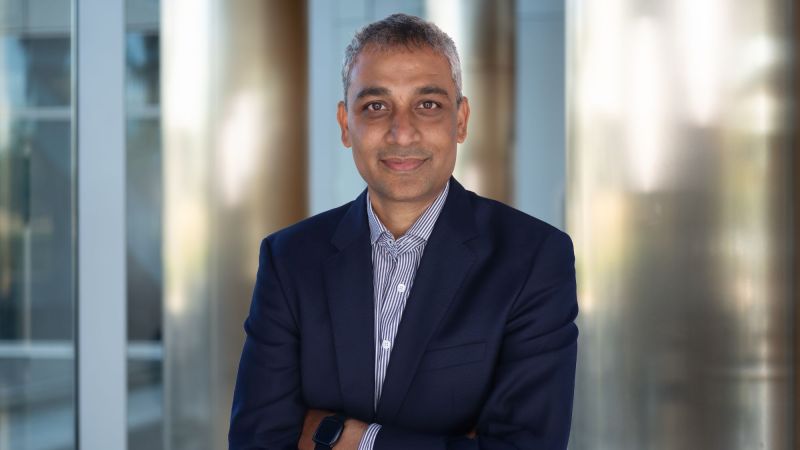
Navin Bishnoi, country head, Marvell Tech
Opinions expressed by Entrepreneur contributors are their own.
You're reading Entrepreneur India, an international franchise of Entrepreneur Media.
Marvell Technology, a semiconductor and data infrastructure technology company, priorities in India reflect alignment with global R&D and a sharp focus on the country’s semiconductor demands. It is focusing on next-generation semiconductor technologies from 2 nanometer (2nm) and 3nm chip design, IP creation to developing platforms that will power future products.
Marvell’s dual focus is on innovation and workforce expansion as it scales globally.
Navin Bishnoi, head of Marvell Technology India, said the company is among the fastest‑growing in revenues and is channeling much of that back into R&D investment in the country. A significant share, he noted, “Goes into human capital rewarding existing talent while hiring new skills and capacities. We continue to grow at a very fast pace to build data center and AI opportunities.”
The tech giant designs chips for data infrastructure, powering AI, cloud, data centres, enterprise networking, and automotive sectors. Bengaluru serves as Marvell’s India headquarters, while its Hyderabad centre focuses on security solutions for data centers. It has a team with expertise in embedded development for networking and storage in Pune.
Bishnoi said that the country’s role in the global chip supply chain must be that of an equal partner. He emphasized that a complete supply chain should extend beyond fabs to include inputs such as minerals, gases, equipment, and instruments, ensuring manufacturing plants are integrated into the global ecosystem.
“India should accelerate design and product development to keep fabs running and build a value chain rooted in intellectual property, not just wafer output. A skilled workforce for both manufacturing and design will enable India to contribute across the spectrum from fabs to electronics integration,” Bishnoi said.
He added that manufacturing is only the foundation. True progress lies in coupling supply chain depth with product innovation and talent pipelines.
In terms of what has worked in favour of Marvell Technology, Bishnoi said, “Many large R&D and multinational companies came to India not just for cost, though that plays a role, but because of the sheer depth of talent here. The engineering pool we’ve created, whether in semiconductors, IT, AI, or computing, is immense and continues to be the real draw. This has worked in our favour.”
Building on this, his second priority is execution: delivering end products on time, with uncompromising quality, and ensuring customer success. The third priority expands into ecosystem partnerships, leveraging collaborations to accelerate innovation and scale product development in step with India’s fast-growing digital footprint. Fourth, he underscores talent nurturing engineers to continuously grow in skills and competencies.
He said, “Our mission in India is not just about technology, it’s about building platforms for the future, empowering talent, and ensuring that innovation here contributes to a brighter, more inclusive tomorrow.”
Bishnoi said the company is reviewing partnership roadmaps with Indian OSATs (Outsourced Semiconductor Assembly and Test firms). Most local OSATs, he noted, are starting with legacy nodes serving automotive and industrial sectors. However, Marvell operates in advanced packaging for data centers, integrating chiplets and optic, far more complex than legacy assembly. “We are working with Indian OSATs more in a roadmap alignment mode. Looking at supply chain diversity and evaluating whether any innovation they bring can add value to our products,” he explained.
Highlighting more innovations from India, he said, “Big compute elements, whether in enterprises or data centers, need to be connected seamlessly. That requires networking solutions, copper, optical, and even wireless, extending into baseband and carrier portfolios. Many of those building‑block IPs and products are being developed from India, and we are investing in growing that capability.”
Globally, the company is seeing exceptional AI-related bookings, and as a result, it is significantly raising Marvell’s revenue outlook for both fiscal 2027 and fiscal 2028.
In the seven years that Navin Bishnoi has steered Marvell Technology’s India operations, he has become synonymous with the company’s transformation story.
What began as a broad, consumer-facing portfolio has, under his watch, evolved into a laser-focused data infrastructure powerhouse. Bishnoi’s leadership has been about more than managing scale, it has been about championing a bold pivot, rallying engineering talent around the mission to build semiconductor solutions that process, move, store, and secure data at massive scale.
He has positioned India as a core contributor to enterprise-grade innovation. His narrative is one of continuity and reinvention: guiding teams through cultural and technical shifts, aligning talent with enterprise challenges, and ensuring execution discipline that translates strategy into impact.
Marvell Technology reported a revenue of $2.418 billion for its first quarter of fiscal year 2027 (ending May 2, 2026), representing a 28 per cent year-over-year (YoY) increase. This brought the company’s trailing twelve-month (TTM) revenue to $8.72 billion.
Marvell Technology, a semiconductor and data infrastructure technology company, priorities in India reflect alignment with global R&D and a sharp focus on the country’s semiconductor demands. It is focusing on next-generation semiconductor technologies from 2 nanometer (2nm) and 3nm chip design, IP creation to developing platforms that will power future products.
Marvell’s dual focus is on innovation and workforce expansion as it scales globally.
Navin Bishnoi, head of Marvell Technology India, said the company is among the fastest‑growing in revenues and is channeling much of that back into R&D investment in the country. A significant share, he noted, “Goes into human capital rewarding existing talent while hiring new skills and capacities. We continue to grow at a very fast pace to build data center and AI opportunities.”

Shrabona Ghosh • Senior Correspondent
Entrepreneur Staff
I write on corporates and lead a project called 'Corporate Innovations', wherein I cover large... Read more