THE TIME KEEPER
Gaurav Mehta of Jaipur Watch Company on building a bootstrapped Indian luxury watch brand, the Modi moment, Baagh’s success and plans for 100 stores.
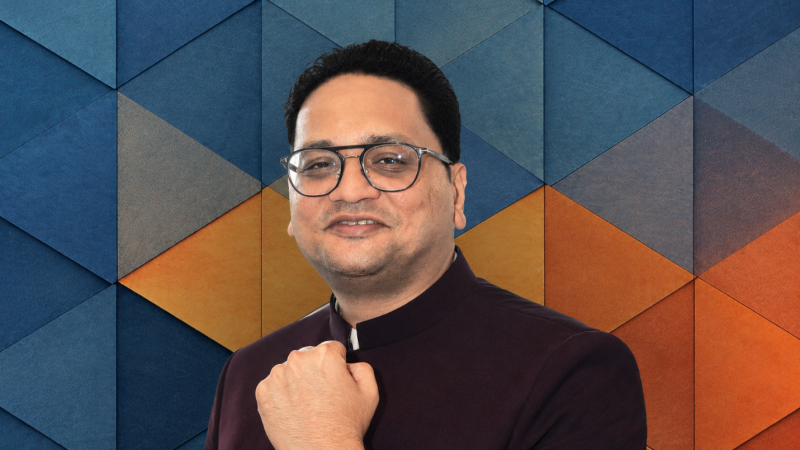
Jaipur Watch Company - Founder - Gaurav Mehta
You're reading Entrepreneur India, an international franchise of Entrepreneur Media.
How Jaipur Watch Company Is Redefining Indian Luxury – One Timepiece at a Time
Every four years, I find myself catching up with Gaurav Mehta to see how his business has evolved. Much like long-lost friends who reunite after years apart, each meeting offers a glimpse into how far we’ve come. Mehta’s relationship with watchmaking has followed a similar journey—his love for timepieces has never faded; it has only deepened with time.
Inspired by the timeless beauty of Jaipur, the city that gave his brand its name, Mehta has always focused on creating value rather than chasing valuations. We first featured him as part of Entrepreneur India’s iconic 35under35 initiative and, four years later, in 2022, recognised him again among India’s leading creative businesses. Now, in 2026, history repeats itself as we sit down once again to profile the remarkable business he has built over the past 13 years. His homegrown watch brand has grown from a niche microbrand into one of India’s most celebrated luxury labels—so much so that it even found its way onto the wrist of the Prime Minister, propelling the brand into the national spotlight.
“People once hesitated to buy Indian watch brands. Today, they proudly wear them. That shift in consumer confidence has transformed the industry.”
— Gaurav Mehta, Founder, Jaipur Watch Company
In this exclusive conversation with Entrepreneur India, Mehta reflects on his entrepreneurial journey, the rise of Indian luxury watchmaking, why he has chosen to stay away from external funding, and his vision of building a brand that will stand the test of time.
This version reads more like an editor’s note or feature introduction while preserving the narrative arc and improving readability.
From a Category of One to an Industry Movement
When Jaipur Watch Company was founded in 2013, India’s watch landscape looked vastly different. “There was no concept of a watch microbrand in India,” recalls Mehta. “Either there were large established brands or there was nothing in between.” The company quietly pioneered the microbrand movement in India. For nearly five years, it had virtually no competition. Today, there are more than 50 Indian watch brands—a testament to how dramatically consumer perception has evolved.
“People once hesitated to buy Indian watch brands. Today, they proudly wear them. That shift in consumer confidence has transformed the industry.” India has also emerged as one of the few global watch markets that continues to register positive growth, creating fertile ground for premium domestic brands.
Growth Without Chasing Capital
The company’s numbers reflect that changing landscape. After closing the previous financial year with revenues of around Rs. 25 crore, Jaipur Watch Company expects to touch Rs. 75–80 crore this year. Production has grown exponentially—from selling barely a thousand watches annually in its early years to targeting nearly 25,000 watches this financial year. Yet Mehta remains remarkably unconventional in today’s startup ecosystem.
Unlike many fast-growing consumer brands, Jaipur Watch Company has deliberately avoided external funding. “I don’t intend to dilute my equity simply because everyone else is raising money,” he says. “For me, losing ownership is more painful than not raising capital.”
Instead of celebrating fundraising milestones, Mehta believes entrepreneurs should celebrate sustainable businesses. “If the business is growing well and generating cash, why raise funds unnecessarily? If capital is ever required, debt is always an option.”
It’s an old-school philosophy in an era obsessed with valuations—but one he believes is critical to building a lasting institution.
Designing India, Not Just Watches
Every Jaipur Watch Company creation carries a distinctly Indian narrative. For inspiration, Mehta doesn’t travel to international design studios or luxury fashion capitals. “My biggest mood board is Jaipur itself.” The city’s architecture, craftsmanship, colours and centuries-old artistic traditions continually inspire new collections.
Transforming that inspiration into a finished watch, however, is a painstaking process. Each design moves through multiple stages—from sketching and digital rendering to feasibility checks, 3D prototyping, component development, sampling and finally production.
“A beautiful idea doesn’t automatically become a beautiful watch,” he says. “Every design has to be engineered before it can be manufactured.”
Building Icons Instead of Chasing Trends
Among Jaipur Watch Company’s many collections, one stands above the rest: Baagh. Launched in 2022, it remains the brand’s single biggest bestseller and contributes more than 20 percent of total sales.
Interestingly, Mehta has resisted the temptation to constantly redesign it. “When customers love something, you don’t change its DNA.”
Instead, the company has expanded the collection through thoughtful variations while preserving the original design language. Responding to overwhelming customer demand, it is now preparing to launch a women’s edition of the Baagh collection.
The Modi Moment That Changed Everything
Every entrepreneurial journey has defining moments. For Jaipur Watch Company, one arrived unexpectedly. In late 2025, a friend informed Mehta that Prime Minister Narendra Modi appeared to be wearing one of the brand’s watches. Initially sceptical, the team checked official photographs published on the Prime Minister’s website and discovered that he had been wearing the watch for weeks.
The discovery quickly went viral. “It was a complete surprise,” says Mehta. The impact extended far beyond publicity.
Online demand surged dramatically, pushing e-commerce ahead of retail for the first time. Today, online sales account for nearly 70 percent of business, with customers ordering from over 40 countries, including Switzerland and Japan—markets renowned for their appreciation of fine watchmaking.
The moment also symbolised something larger. “It sent a strong message that Indian brands deserve support and recognition.”
Expanding Beyond India
Jaipur Watch Company currently operates nearly twenty stores across India, with ambitious plans to expand to 100 stores within three years. Internationally, the company is exploring markets such as the UAE and Sri Lanka while continuing to strengthen its global online presence. Rather than pursuing rapid expansion at any cost, Mehta is focused on controlled, organic growth. “We’re building for the long term.”
How Jaipur Watch Company Is Redefining Indian Luxury – One Timepiece at a Time
Every four years, I find myself catching up with Gaurav Mehta to see how his business has evolved. Much like long-lost friends who reunite after years apart, each meeting offers a glimpse into how far we’ve come. Mehta’s relationship with watchmaking has followed a similar journey—his love for timepieces has never faded; it has only deepened with time.
Inspired by the timeless beauty of Jaipur, the city that gave his brand its name, Mehta has always focused on creating value rather than chasing valuations. We first featured him as part of Entrepreneur India’s iconic 35under35 initiative and, four years later, in 2022, recognised him again among India’s leading creative businesses. Now, in 2026, history repeats itself as we sit down once again to profile the remarkable business he has built over the past 13 years. His homegrown watch brand has grown from a niche microbrand into one of India’s most celebrated luxury labels—so much so that it even found its way onto the wrist of the Prime Minister, propelling the brand into the national spotlight.
“People once hesitated to buy Indian watch brands. Today, they proudly wear them. That shift in consumer confidence has transformed the industry.”
— Gaurav Mehta, Founder, Jaipur Watch Company
In this exclusive conversation with Entrepreneur India, Mehta reflects on his entrepreneurial journey, the rise of Indian luxury watchmaking, why he has chosen to stay away from external funding, and his vision of building a brand that will stand the test of time.

Punita Sabharwal • Managing Editor, Entrepreneur India
Entrepreneur Staff
Punita Sabharwal is the Managing Editor of Entrepreneur India.