FROM ROLL-UPS TO GLOBAL BRANDS: How Ananth Narayanan Is Building India’s Next Consumer Powerhouse
With an annual revenue run rate of roughly $200 million, the company is now EBITDA profitable and generating cash—a milestone many digital-first consumer startups struggle to reach.
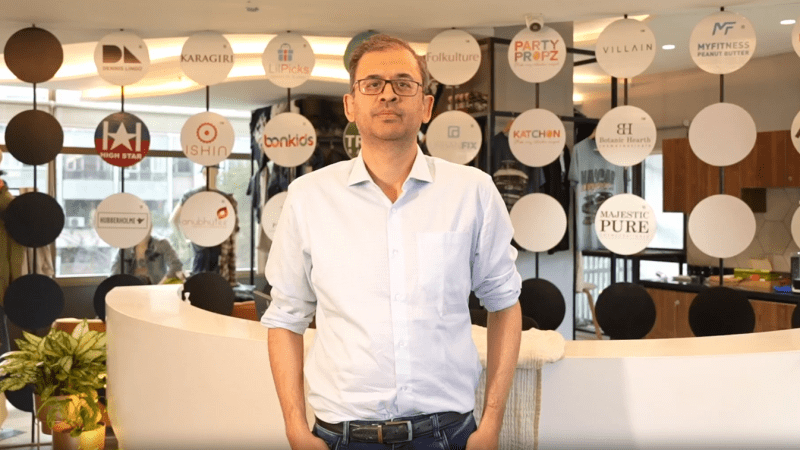
Ananth Narayanan, Founder and CEO of BRND.ME
You're reading Entrepreneur India, an international franchise of Entrepreneur Media.
In the past decade, India has produced global IT services giants, pharmaceutical champions and a new generation of SaaS startups. Now, a new category is emerging: global
consumer brands built from India. At the center of that shift is Ananth Narayanan, founder and CEO of BRND.ME, a tech-led house of brands that has quietly built a profitable, global consumer business in just four and a half years.
With an annual revenue run rate of roughly $200 million, the company is now EBITDA profitable and generating cash—a milestone many digital-first consumer startups struggle to reach.
“We started about four and a half years ago,” Narayanan says. “Today we’re a $200 million run-rate business. But the more exciting thing for me is that we actually generate cash. That’s eventually what public markets look for.”
That discipline may soon be tested at scale. BRND.ME is currently undergoing a reverse merger to move its domicile from Singapore to India, a step that positions the company for a future IPO. But Narayanan insists the real story isn’t the listing—it’s the long-term ambition.
“Our vision from day zero has been clear,” he says. “We want to build global tech-led consumer brands from India. Think of it as building a new version of Unilever.
BRND.ME was launched in 2021 to acquire and scale digital-first consumer brands across categories such as health and wellness, lifestyle, and personal care. The strategy drew inspiration from global aggregators like Thrasio and Perch, but the model quickly ran into
turbulence worldwide as rising marketing costs and weak unit economics sank many roll-ups. Narayanan believes the problem was not the model—but execution.
“If I think about what can go wrong in a house-of-brands strategy, it comes down to three things: focus, execution and frugality,” he says.
BRND.ME initially pursued multiple acquisitions in its first 18 months. But the leadership team soon realized a critical lesson. “The management attention required for a small brand and a large brand is exactly the same,” Narayanan explains. “Sometimes small struggling brands require even more attention.”
That realization led to a strategic reset. The company still owns 10 brands overall, but Narayanan has shifted the organization toward fewer, larger brands capable of scaling globally. “Focus matters,” he says. “Fewer but bigger brands is better.”
Narayanan is deeply bullish on the next phase of India’s economic story: consumer brands. “The first wave of global companies from India were IT services and pharma,” he says. “The next 20 years will belong to Indian consumer brands going global.”
The reason, he argues, is structural change. First, India has inherent sourcing advantages in several product categories—from essential oils to agricultural products. Second, distribution is now democratized. “You used to need a distributor in every international market,” he says.
“Now you can launch globally through platforms like Amazon or Shopify.” And third, data has transformed consumer insight. “Earlier you needed expensive market research to understand consumers,” Narayanan explains. “Now you have real-time funnel data, demographic insights, and engagement metrics from digital platforms.”
These shifts allow companies like BRND.ME to compete globally in ways Indian brands could not a decade ago. Majestic Pure, for example, has become one of the leading aromatherapy brands globally. “India has always produced essential oils,” Narayanan says. “But we never built global brands around them. That’s the opportunity.”
The Unit Economics Discipline
Narayanan’s approach to brand building is shaped heavily by financial discipline—a mindset forged during his time as CEO of Myntra and later as an investor and operator.
“Everything starts with gross margin,” he says. “If you don’t have enough gross margin, you can’t build a brand.”
Unlike many roll-up companies that pursued aggressive growth, BRND.ME prioritized unit economics from day one. “Positive unit economics has always been critical for us,” Narayanan says. “We’ve never bought growth.” That philosophy extends to acquisitions as well. “We bought brands very frugally,” he explains. “If you overpay for a brand upfront, the return on capital becomes difficult no matter how well the business performs.”
The discipline required walking away from several deals. “There were brands we chose not to buy,”he says. “That maturity matters.”
Another lesson BRND.ME learned early: modern brand-building looks very different from traditional advertising.
Instead of heavy celebrity spending, the company increasingly relies on community-led growth. “Brands today are built more through communities,” Narayanan says. “What a friend tells you matters more than what a celebrity influencer tells you.” For products like Botanic Hearth hair oils or MyFitness peanut butter, that means encouraging user-generated content, before-and-after photos and community testimonials. “Authenticity matters,” he says.
“And it’s also far more frugal.” While BRND.ME is fundamentally a consumer company, Narayanan insists it is equally a technology business. Technology allows the company to run lean while scaling multiple brands simultaneously.
“We’ve automated many things,”he says. Among the areas now driven by AI and automation: Product cataloging, Advertising optimization and pricing, Platform reconciliation and data processing & Supply chain analytics. “Our ads and pricing are run by an agent,”
Narayanan says. “Cataloging is mostly AI-generated.” The result is a significantly lower cost structure than many competitors. Scale also creates logistical advantages. “With scale, we can ship full containers to markets like the US,” he says. “That dramatically improves efficiency.”
Despite the speed of digital commerce, Narayanan insists brand-building remains a slow process. “The hardest part is patience,” he says. Trust takes time—and cannot be compressed indefinitely. “You can accelerate growth, but you cannot infinitely shorten the time required to build trust.”
That means resisting shortcuts such as aggressive discounting or sacrificing product quality for faster growth. “If you compromise on product quality, it always comes back to bite you,” he says.
Preparing for the Public Markets
BRND.ME’s upcoming reverse merger into India will set the stage for a public listing in the coming years. But Narayanan views the IPO not as an exit—but a new phase. “IPO is not the end,” he says.
“It’s the beginning.” His long-term ambition is to build global category leaders across the company’s core brands. “I can see each of our four major brands becoming $100 million businesses,” he says. That would create a portfolio of internationally recognized brands emerging from India. “I intend to do this for a long time,” he adds. “IPO is just the start of compounding.”
Behind the strategy lies a leadership model Narayanan borrowed from companies like Unilever. Each brand is run by brand managers acting as CEOs, rather than by founders.
“These are people who may have built startups or worked in large companies,” he says.
“They operate like CEOs for each brand.” Investors, too, have played a critical role in shaping the company’s evolution. Accel, Alpha Wave and Norwest backed BRND.ME early—and helped reinforce a key lesson. “Our board pushed us toward focus,” Narayanan says.
For Narayanan, that guidance proved invaluable. “It’s easy to get carried away with adrenaline when you’re acquiring brands,” he says. But focus, discipline and patience— combined with technology and data may ultimately determine whether India’s house-of-brands experiment can create the next generation of global consumer giants. And Narayanan is betting that the timing has never been better.
“This is a great time to build global brands from India,” he says.
In the past decade, India has produced global IT services giants, pharmaceutical champions and a new generation of SaaS startups. Now, a new category is emerging: global
consumer brands built from India. At the center of that shift is Ananth Narayanan, founder and CEO of BRND.ME, a tech-led house of brands that has quietly built a profitable, global consumer business in just four and a half years.
With an annual revenue run rate of roughly $200 million, the company is now EBITDA profitable and generating cash—a milestone many digital-first consumer startups struggle to reach.

Punita Sabharwal • Managing Editor, Entrepreneur India
Entrepreneur Staff
Punita Sabharwal is the Managing Editor of Entrepreneur India.