TIS 2026: The Future of Smart Manufacturing
The country is aligning with global Industry 4.0 standards, moving from being a cost-efficient production base to an innovation hub.
Entrepreneur India
Opinions expressed by Entrepreneur contributors are their own.
You're reading Entrepreneur India, an international franchise of Entrepreneur Media.
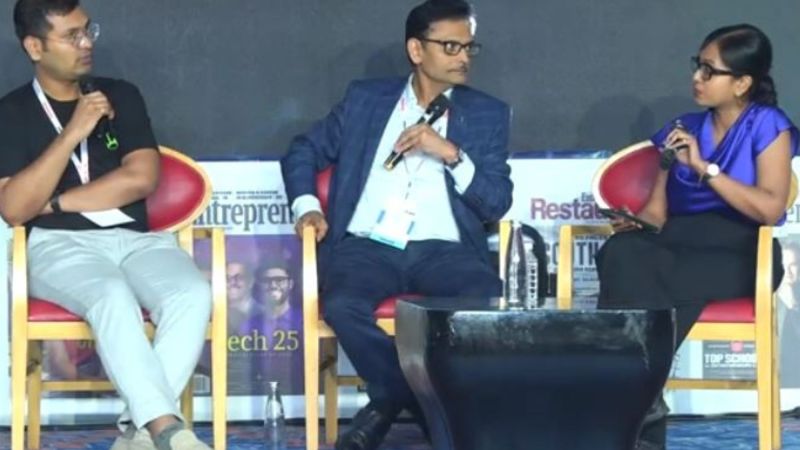
At Entrepreneur’s Tech and Innovation Summit, the Robotics & Industry 4.0: The Future of Smart Manufacturing discussion explored how robotics, AI, and Industry 4.0 are reshaping manufacturing and positioning India as a global player in smart production.
Robotics has moved beyond repetitive assembly to become central to flexible, adaptive manufacturing systems. Collaborative robots are increasingly deployed to work alongside humans, boosting efficiency while ensuring safety. AI and machine learning are enabling predictive maintenance, reducing downtime, and optimizing production schedules and supply chains.
With edge computing, decision-making is shifting closer to the shop floor, allowing real-time quality control.
“Machines will take over the mundane, but humans will rise to the multi‑skilled, evolving from feeding one machine to orchestrating many, making decisions in a world of endless customization,” said Gokul NA, founder, CynLr.
Digital twin technology is emerging as a critical tool, enabling manufacturers to simulate and optimize processes virtually, while smart factories powered by IoT sensors and AI analytics create self-regulating environments that minimize waste. India’s role was emphasized, with reports projecting its robotics market to grow at over 20 per cent CAGR through 2030, driven by demand in automotive, electronics, and logistics.
“In Industry 4.0, physics‑based simulations and digital twins will transform reliability into predictability, machines will model, humans will decide, and together they’ll craft a future of accuracy and customization,” said Dr. Aloknath De, founder, TechCrafter.cps.
In manufacturing, AI is not about replacing machines but retrofitting them, wrapping intelligence around legacy systems, reducing latency with edge AI, and future‑proofing factories to be reconfigurable, interoperable, and human‑centric.
The country is aligning with global Industry 4.0 standards, moving from being a cost-efficient production base to an innovation hub. The discussion highlighted reskilling in robotics programming, AI, and data analytics. The emphasis is on human-machine collaboration, where workers supervise and manage intelligent systems rather than being displaced.
Overall, the session underscored that robotics, AI, and digital platforms are converging to redefine manufacturing, making it adaptive, sustainable, and globally competitive, with India poised to play a leading role in shaping this future.
At Entrepreneur’s Tech and Innovation Summit, the Robotics & Industry 4.0: The Future of Smart Manufacturing discussion explored how robotics, AI, and Industry 4.0 are reshaping manufacturing and positioning India as a global player in smart production.
Robotics has moved beyond repetitive assembly to become central to flexible, adaptive manufacturing systems. Collaborative robots are increasingly deployed to work alongside humans, boosting efficiency while ensuring safety. AI and machine learning are enabling predictive maintenance, reducing downtime, and optimizing production schedules and supply chains.
With edge computing, decision-making is shifting closer to the shop floor, allowing real-time quality control.