TIS 2026: The Future of Gaming, Powering Technology, Innovation & Digital Culture
Taken together, the discussion made one thing clear: the future of gaming in India will not be defined by a single lever.
You're reading Entrepreneur India, an international franchise of Entrepreneur Media.
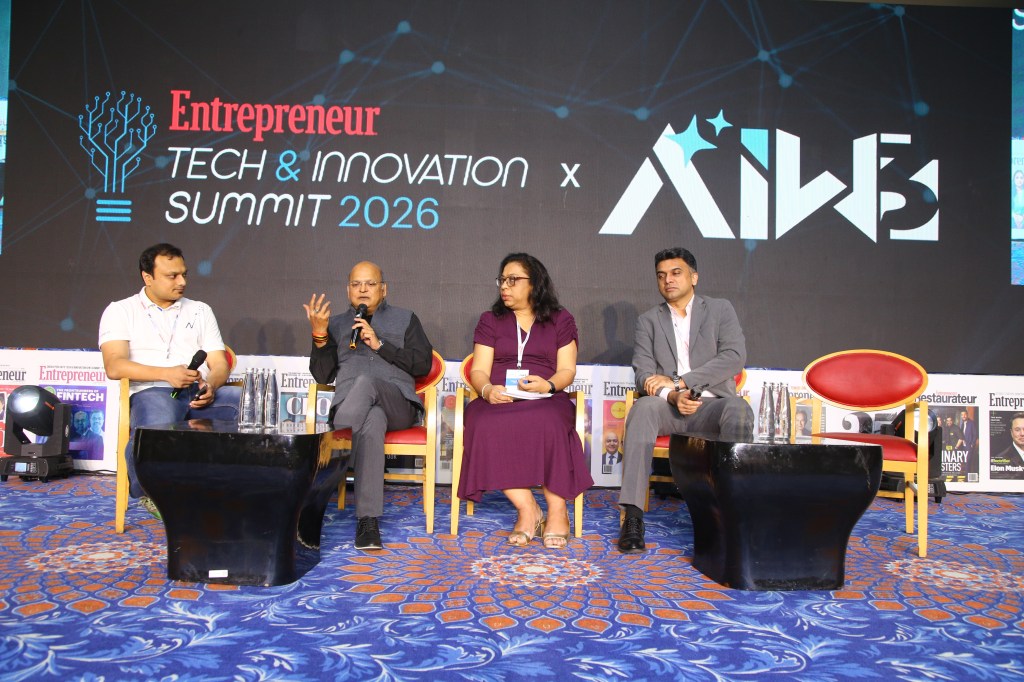
At a time when gaming is rapidly evolving from a leisure activity into a full-fledged digital economy, a Gaming-based panel at Entrepreneur India’s Tech & Innovation Summit 2026 unpacked how AI, infrastructure, and shifting consumer behavior are reshaping the industry’s future.
Anil Joshi, Managing Partner at Unicorn India Ventures, set the tone by emphasizing AI’s direct impact on engagement and monetization. “AI actually is changing a lot of things. And gaming industry is also not untouched. The beauty about AI is that it helps in engagement. And if engagement is there, then it also helps gaming company to monetize,” he said.
Joshi pointed out that while subscriptions remain limited, advertising continues to dominate revenue streams, an area where AI is already driving longer user sessions and better retention.
Joshi also highlighted AI’s potential to fundamentally alter gameplay itself. “AI probably would be able to identify the fatigue if a player may have, and may come up with some refreshing break and still allow the continuity,” he noted, adding that such personalization could redefine user interaction while improving monetization outcomes, which is a key concern for investors.
From an operator’s lens, Nupur Srivastava of JetSynthesys expanded the scope beyond efficiency to deeper user connection. “For us, AI is not just about cost efficiency. It’s about doing hyper-personalization, going deep, going local, and taking gaming deeper,” said Srivastava.
Positioning gaming as the next dominant content format, she added, “What a meta is today or what TikTok is globally is what gaming will be.”
Her focus on community-building and AI-led personalization reflects a broader industry shift, from mass gaming to highly segmented, culturally contextual experiences. This includes structured formats like e-cricket and chess, alongside brand-led gamification strategies that tap into specific consumer cohorts.
Amit Mishra from Yotta Data Services brought in the often-overlooked infrastructure perspective, stressing that AI-driven gaming experiences are only as strong as the systems supporting them.
“The AI infra and the latency need to be very, very critical for this. Which means that we need to have more data centers and more edge data centers,” he said. The goal, he said, is to ensure uniform gameplay experiences regardless of geography, whether a user is in Bengaluru or eastern Uttar Pradesh.
Mishra also raised important ethical and regulatory considerations as AI becomes deeply embedded in gaming ecosystems.
“From a content standpoint, it should never only be about making money… a lot of these youngsters, gamers are very, very young. What we show them is what they will believe in,” he cautioned. Mishra further pointed to data privacy concerns, questioning how player interactions and personal data might be used in AI-driven systems.
Beyond technology, the panel converged on a critical structural challenge: monetization in India. Despite being one of the largest gaming markets by user base, revenue realization remains inconsistent. Joshi attributed this to legacy habits.
“We have been made used to free games… It’s very difficult for us to find people who would be willing to pay and play,” he said. However, he sees a gradual shift underway. “India is now moving toward a spend economy than the saver economy… the newer generation… are willing to pay for it.”
Mishra added, pointing to untapped segments like older gamers. “There is something called nostalgia economy… don’t deprive us of playing games… There is another market… because I have a bigger wallet than an 18-year-old.”
Srivastava, meanwhile, zoomed out to the global opportunity. “There is a USD 90 billion gaming revenue sitting up there globally… let’s bring that money to India as well. Why not?”
Taken together, the discussion made one thing clear: the future of gaming in India will not be defined by a single lever. It will sit at the intersection of AI-led personalization, robust infrastructure, ethical frameworks, and a long-overdue shift in monetization models.
At a time when gaming is rapidly evolving from a leisure activity into a full-fledged digital economy, a Gaming-based panel at Entrepreneur India’s Tech & Innovation Summit 2026 unpacked how AI, infrastructure, and shifting consumer behavior are reshaping the industry’s future.
Anil Joshi, Managing Partner at Unicorn India Ventures, set the tone by emphasizing AI’s direct impact on engagement and monetization. “AI actually is changing a lot of things. And gaming industry is also not untouched. The beauty about AI is that it helps in engagement. And if engagement is there, then it also helps gaming company to monetize,” he said.
Joshi pointed out that while subscriptions remain limited, advertising continues to dominate revenue streams, an area where AI is already driving longer user sessions and better retention.

Entrepreneur Staff • Editor
Entrepreneur Staff
For more than 30 years, Entrepreneur has set the course for success for millions of... Read more