ARCHITECTING TRANSFORMATION: How Megha Gupta Sarda Is Rewriting the Playbook for Legacy Real Estate Leadership
Megha Gupta Sarda drives disciplined, values-led transformation at GS Group, balancing legacy with innovation, decisive leadership, and sustainable, institutional growth.
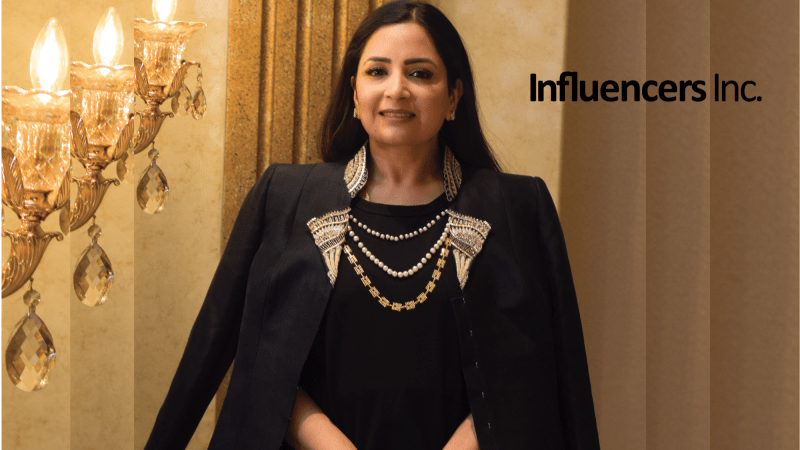
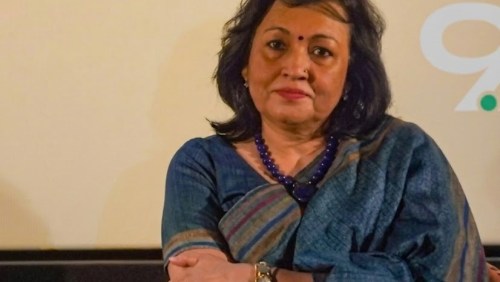
Megha Gupta Sarda, MD & CEO, GS Group
You're reading Entrepreneur India, an international franchise of Entrepreneur Media.
Visibility can be inherited. Accountability cannot.
For Megha Gupta Sarda, CEO of GS Group of Companies, that distinction became sharply clear during one of the most volatile periods in modern business history: the COVID-19 pandemic.
“The weight became real the first time I had to take a difficult decision during COVID— not reputation,” she reflects. “Visibility can be inherited; outcomes define credibility.”
Until then, her transition into leadership had been guided, mentored, scaffolded. Her father, the founder of the group, Shree GS Gupta had spent the first year equipping her with institutional knowledge—the “key lines,” as she calls them—needed to manage a sprawling real estate empire. Then, unexpectedly, his health deteriorated.
“That was the time when I had to take major decisions. Truly, my journey began there.”
It was no longer succession. It was stewardship.
Custodian and Architect
Family enterprises are often suspended between reverence for tradition and the urgency of reinvention. Megha refuses to see that as a binary. “I see myself as both—a custodian of legacy and an architect of transformation.”
Legacy, she believes, provides foundation. But relevance requires reinvention.
Real estate, particularly in India, is an industry shaped by velocity—regulatory shifts, financing cycles, consumer behaviour changes, digital disruption. Market dynamics change daily. Her mandate is clear: preserve values, redesign systems. Values, in her view, are non-negotiable. Methods are not. “I draw the line at values. Respect does not mean rigidity.”
The Mall Decision
Every leader has a defining decision. For Megha, it came early—and at scale. Hyderabad Central Mall: 3.5 lakh square feet of prime commercial real estate. The conventional approach would have been diversification— lease the space to multiple tenants, spread the risk. Instead, she held out for a single anchor. She chose Tata.
At the time, it was a calculated risk. Waiting meant opportunity cost. It meant resisting shortterm revenue in favour of longterm alignment. “It signalled that sentiment would not override performance.”
It also signalled something more profound internally: this was no transitional stewardship. It was an era shift. Professionalism would anchor the organisation’s next phase.
Reinvention Under Resistance
The first wave of transformation was operational. “I would love to answer this with pride,” she says. “This was my first challenge.” Operational efficiency and strategic focus demanded recalibration. That inevitably triggered resistance. Patterns deeply embedded in family enterprises often operate on precedent, not process.
“Change unsettles those comfortable with the past.”
But Megha’s approach was consistent—clarity of vision, consistency of action. Alignment followed.
In her framework, transformation is not theatrical disruption. It is structural recalibration.
Disciplined Growth in an Age of Scale
In a business climate obsessed with hyper-growth and valuation headlines, Megha speaks the language of discipline. “Disciplined growth prioritises sustainability over spectacle.” Scale without structure, she believes, is fragility disguised as ambition. For her, discipline is not a tactic; it is a cultivated habit. “Disciplined growth is a seed practised over years. The beginning is the answer that takes you to scale.”
The GS Group’s expansion strategy reflects that philosophy—measured, capitalconscious, governance-led.
Ambition, she insists, is not the enemy. Impulse is.
Control: Strength or Constraint?
Promoter-led organisations often walk a fine line. Too much control can stifle agility. Too little can dilute accountability.
Megha is unapologetic in her stance. “Control is the biggest strength. Where there is control and discipline, things align automatically.” But her interpretation of control is not micromanagement. It is institutional oversight.
Decision-making frameworks are formalised. Domain experts are empowered. Reporting systems are transparent. Oversight is defined.
The goal: agility without opacity.
The Industry Shift
Over the next decade, she believes the real estate sector will divide clearly between survivors and leaders.
The differentiators? Technological integration. Governance transparency. Capital efficiency. “Organisations that fail to institutionalise processes and embrace digital transformation will struggle.”
To that end, GS Group is investing in digital infrastructure and data intelligence—embedding adaptability into its operating DNA. The company is also expanding into the IT sector, diversifying exposure beyond traditional real estate cycles.
Future-proofing, Megha notes, is not about predicting disruption. It is about institutional adaptability.
Ambition Recalibrated
Early in her career, success meant scale and recognition. Today, it means resilience and stewardship. “Initially, success was scale. Today, it is strengthening systems.” Her perspective on ambition has matured, not diminished.
“It’s very good to be overambitious,” she says with a smile. “You land up creating impact anyway.” The difference lies in orientation. Ambition now fuels structural impact rather than episodic growth.
Leadership, particularly at the helm of a family empire, can be isolating. When stakes are high, Megha turns inward before outward. “Clarity comes from disciplined reflection, not noise.” She relies on structured analysis and trusted advisors who challenge assumptions rather than echo comfort. Her grounding, she credits to her upbringing. “My commitment is non-negotiable. It’s a luxury pack of values I inherited from my father, Shri GS Gupta, and my mother, Sarita Gupta.”
Commitment, for her, is not rhetoric. It is operating principle.
The Hard Lesson
If there is one leadership lesson she learned decisively, it is this: delay compounds risk.
“Decisiveness must override comfort.” Waiting for consensus can be costly in a dynamic sector like real estate. “My decision-making is quick, prompt, and correct by God’s grace,” she says with quiet confidence. “That is my USP.”
It is a conviction rooted in faith—but also in preparedness.
The Next Chapter: From Enterprise to Institution
The future she envisions is not simply larger—it is stronger. “The journey ahead is about stature.” Transitioning from enterprise to benchmark institution. From visibility to credibility. From growth to governance-led excellence.
Her focus for the next phase rests on three pillars: Structural Excellence. Calibrated Growth.
Adaptability in an everchanging market. Performance, she emphasises, will be Excellence-powered—not episodic. Ultimately, leadership for Megha is not about indispensability. “It is about building systems that endure beyond one’s presence.” That may be her most profound departure from inherited visibility.
Five Years Forward
If this conversation is revisited in five years, what metric will matter? Beyond financial growth, she says, institutional robustness. The ability of the organisation to function with clarity, discipline, and strategic foresight—regardless of external volatility. “As far as strategy is concerned, we are on the ball full-time. Success is bound to happen.” Confidence, in her tone, is not bravado. It is commitment backed by process.
Rewriting the Narrative
Megha Gupta Sarda stands at an inflection point emblematic of India’s evolving business landscape—second-generation leaders stepping into volatile markets, navigating legacy expectations while engineering transformation. Her leadership narrative is neither rebellion nor replication. It is recalibration.
She preserves values but redesigns systems. She embraces ambition but insists on discipline. She commands control but institutionalises accountability. Visibility may have been inherited.
Credibility, she is building. And in real estate—where skylines rise and fall with cycles—that may be the most enduring architecture of all.
Visibility can be inherited. Accountability cannot.
For Megha Gupta Sarda, CEO of GS Group of Companies, that distinction became sharply clear during one of the most volatile periods in modern business history: the COVID-19 pandemic.
“The weight became real the first time I had to take a difficult decision during COVID— not reputation,” she reflects. “Visibility can be inherited; outcomes define credibility.”

Entrepreneur Staff • Editor
Entrepreneur Staff
For more than 30 years, Entrepreneur has set the course for success for millions of... Read more