Redefining Space Surveillance
From satellites to strategic intelligence, Anirudh Sharma’s Digantara is reshaping the future of space surveillance.
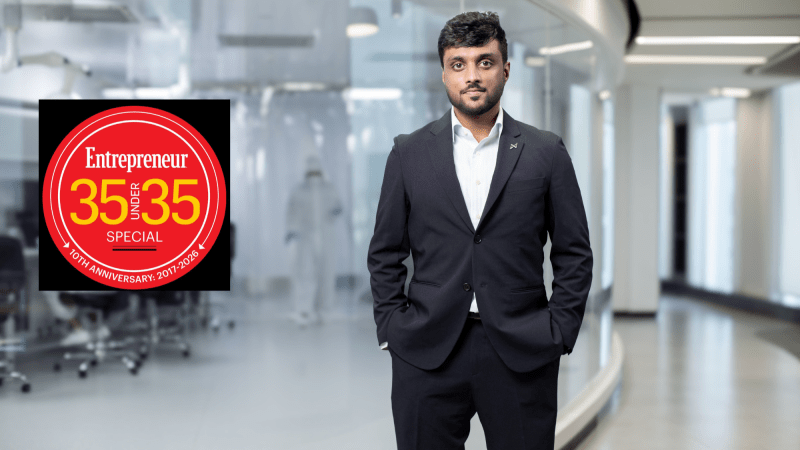
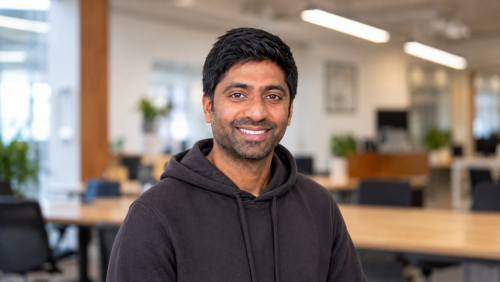
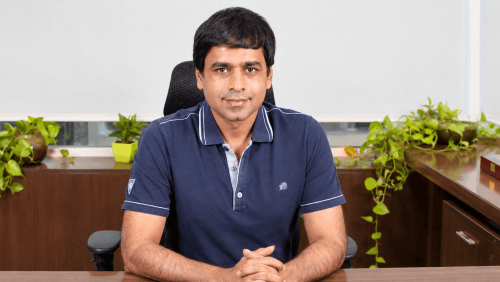
Anirudh Sharma, 27, Founder & CEO of Digantara Industries
Opinions expressed by Entrepreneur contributors are their own.
You're reading Entrepreneur India, an international franchise of Entrepreneur Media.
Anirudh Sharma did not grow up dreaming of being a startup founder. His interest quietly turned toward aerospace and defence through family conversations on security. His father’s work with DRDO planted early questions in his mind about how technology could protect strategic interests. “I didn’t come from a space background, but I carried a strong interest in what space would mean for security in the future,” recalled Sharma, Founder and CEO of Digantara Industries.
As a student, he worked on satellite projects and later joined a satellite club in Bengaluru. “That experience, along with early Indian Institute of Science (IISc) incubation, created the space I needed to experiment seriously,” Sharma said.
In 2020, he co-founded Digantara Industries with two co-founders. “We began Digantara during our college years and built it from scratch, working from first principles,” he added.
The idea behind Digantara emerged from a gap few wanted to address. At the time, space surveillance was largely controlled by governments, and private participation was minimal. “It wasn’t seen as a startup problem,” Sharma said. “The risks were high, the timelines long, and the market unclear.”
“At one point there were 1,500 satellites; today nearly 20,000 operate, but persistent, decision-ready orbital awareness infrastructure was missing,” he added.
Digantara began with space domain awareness as an entry point, but the intent extended further. By shifting sensing from ground to space, the company aimed to overcome latency and environmental limitations. “Seeing is important,” Sharma said, “but understanding and acting in real time matters more.”
By 2025, the Bengaluru-based company reached a defining phase with the launch of SCOT, its first space-based surveillance satellite, and the generation of proprietary orbital data. “We moved from development to execution. We crossed into multi-million-dollar annual revenues, raised a Series B round, and expanded to a team of 150 people,” he shared.
Today, Digantara works with government, defence, and intelligence stakeholders across the US, UK, Singapore, Japan, India, Australia, and India itself. “We support institutions such as UK Space Agency, US Space Force, the Ministry of Defence, and the Department of War, alongside aerospace and defence partners including Anduril, Safran, Telespazio, and ArianeGroup,” he mentioned.
“Looking ahead, we are expanding into Europe, scaling manufacturing and constellations, and advancing AIRA to integrate space, ground sensing, data fusion, and early missile-warning capabilities,” he ended.
Facts:
- Name and Designation: Anirudh Sharma, Founder & CEO
- Age (as of February 1, 2026): 27
- Number of Co-founders (3): Anirudh Sharma, Rahul Rawat, and Tanveer Ahmed
- Number of Employees: 150
- Year of Inception: 2020
- External Investors: 360 ONE Asset, SBI Investments Co. (Japan), Ronnie Screwvala, Peak XV Partners, Kalaari Capital, among others
Anirudh Sharma did not grow up dreaming of being a startup founder. His interest quietly turned toward aerospace and defence through family conversations on security. His father’s work with DRDO planted early questions in his mind about how technology could protect strategic interests. “I didn’t come from a space background, but I carried a strong interest in what space would mean for security in the future,” recalled Sharma, Founder and CEO of Digantara Industries.
As a student, he worked on satellite projects and later joined a satellite club in Bengaluru. “That experience, along with early Indian Institute of Science (IISc) incubation, created the space I needed to experiment seriously,” Sharma said.
In 2020, he co-founded Digantara Industries with two co-founders. “We began Digantara during our college years and built it from scratch, working from first principles,” he added.