Missing Women, Lapata Ladies: Invisible by Design: How India’s Financial System Is Failing Its Women
India’s financial system has an opportunity and a responsibility towards every woman, not just for privileged few.
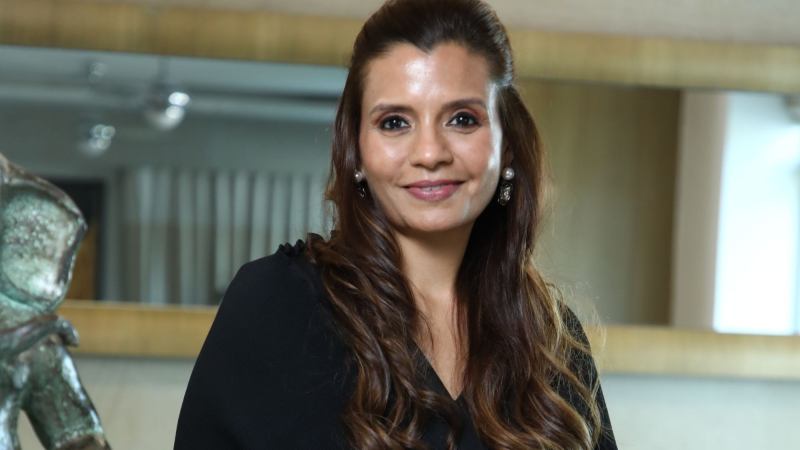
Priti Rathi Gupta, Founder of LXME
Opinions expressed by Entrepreneur contributors are their own.
You're reading Entrepreneur India, an international franchise of Entrepreneur Media.
Across India, women are being failed not by their lack of ambition or capability, but by a financial system that was never built with them in mind. The Lxme-EY Report calls this out clearly: the barriers women face aren’t incidental. They are designed in.
Financially Included, Financially Excluded
On paper, India’s financial inclusion numbers look promising. 89% of women now have a bank account. 69% use digital banking in some form. But behind these statistics lies a harder truth: having a bank account and being financially empowered are two very different things. The Lxme-EY Report reveals that fewer than half of women who use digital banking use it to make investments or grow their wealth. They pay bills. They receive transfers. But long-term financial planning, the kind that builds security and independence largely isn’t happening.
The Financial Literacy Gap No One Is Talking About
Only 27% of Indian women are financially literate, compared to 33% of men, a gap that may seem small but has enormous consequences. Financial literacy is not just about knowing what a mutual fund is. It is the foundation of every financial decision a woman will make: whether to start investing, how to plan for retirement, what insurance she needs, and how to protect herself if a marriage ends or a spouse falls ill. Without this foundation, women cannot make informed choices and without informed choices, financial inclusion is a hollow achievement.
The Lxme-EY Report places financial literacy at the centre of the solution. Educating women about money isn’t a soft social intervention, it is an economic imperative.
Culture, Control, and the Autonomy Deficit
Just 25% of women in India control their own financial products, versus 40% of men. Cultural norms remain a powerful barrier. In many households, financial decisions are still considered a male domain. Women who earn, save, and invest do so with the tacit approval or without the knowledge of their families. This isn’t a personal dynamic. It is a systemic pattern that the financial industry has, for too long, either ignored or reinforced.
Products marketed to married couples as a unit. Insurance policies where husbands are default nominees and decision-makers. Retirement planning that assumes continuous, unbroken careers. These design choices aren’t neutral; they actively sideline women.
What a Redesigned System Would Look Like
The Lxme-EY Report doesn’t just diagnose the problem, it points to a way forward. A financial system that works for women would look fundamentally different. It would offer products flexible enough to accommodate career breaks. Savings plans built around real-life priorities like a child’s school fees, a daughter’s wedding, or a parent’s medical care. Investment platforms that speak to women in plain language, without jargon. Financial advisors who understand and respect women’s distinct relationship with money and risk.
Most importantly, a redesigned system would treat women not as a secondary market or a niche demographic, but as primary financial agents in their own right because that is precisely what they are.
A Woman Who Controls Her Money, Controls Her Life
This is the truth that underpins everything the Lxme-EY Report argues: financial independence and personal independence are inseparable for women. A woman with her own savings can leave a difficult situation. A woman with her own investments doesn’t depend on her children in old age. A woman with her own retirement corpus doesn’t disappear into financial invisibility when her husband passes away.
India’s financial system has an opportunity and a responsibility to make this a reality for every woman, not just the privileged few. The tools exist. The will to act is what’s needed now. Because when women are no longer invisible to finance, they will do what they have always done when given the chance: build something extraordinary.
Across India, women are being failed not by their lack of ambition or capability, but by a financial system that was never built with them in mind. The Lxme-EY Report calls this out clearly: the barriers women face aren’t incidental. They are designed in.
Financially Included, Financially Excluded
On paper, India’s financial inclusion numbers look promising. 89% of women now have a bank account. 69% use digital banking in some form. But behind these statistics lies a harder truth: having a bank account and being financially empowered are two very different things. The Lxme-EY Report reveals that fewer than half of women who use digital banking use it to make investments or grow their wealth. They pay bills. They receive transfers. But long-term financial planning, the kind that builds security and independence largely isn’t happening.

Priti Rathi Gupta • Managing Director & Promoter, Anand Rathi Share and Stock Brokers Ltd and Founder of LXME
Priti Rathi Gupta is the Founder of LXME and the Managing Director and Promoter at... Read more