Understanding Over Tracking: Why the Future of Medicine May Be About Clarity, Not More Data
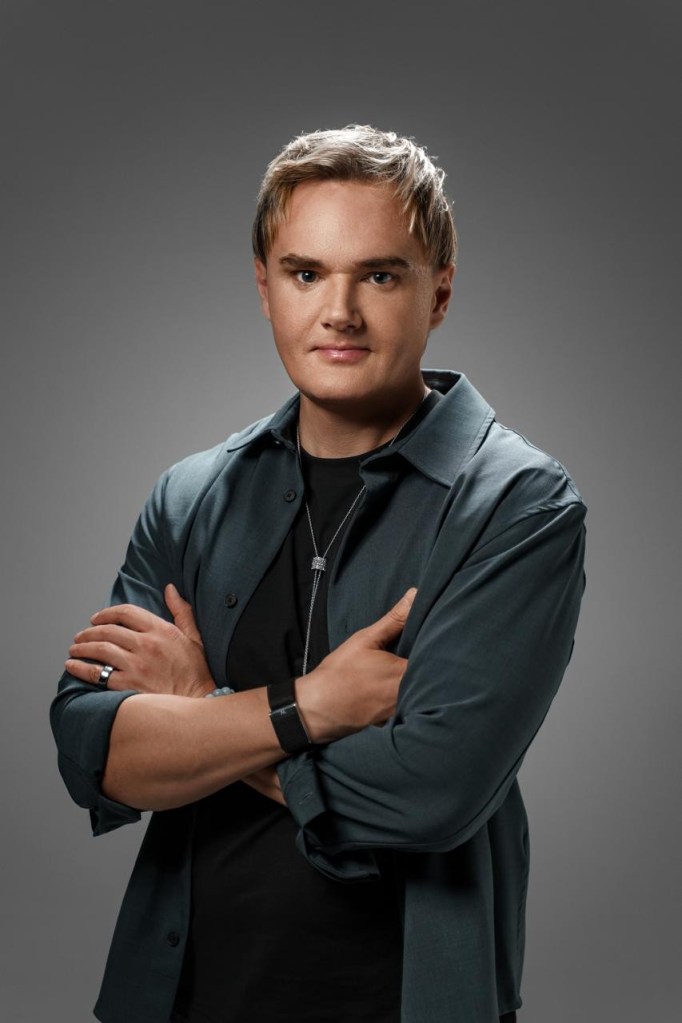
Dr. Dmitry Chebanov, molecular biologist and scientific lead of Holivita — an AI-driven health intelligence platform focused on structuring personal medical data — about prevention, digital twins, and why understanding matters more than tracking.
Opinions expressed by Entrepreneur contributors are their own.
You're reading Entrepreneur India, an international franchise of Entrepreneur Media.
Modern medicine produces more data than ever, yet many people feel more anxious about their health than before. Where exactly is the disconnect?
Yes, that’s true. Unfortunately, this data is not structured — it is fragmented and scattered, and it does not provide a full picture that would allow a person to receive well-grounded recommendations. For example: “This will be useful for you, remove this for now, and run these specific tests to prevent possible diseases.”
Without structure and strategy, data turns into noise, and valuable insights cannot be extracted from it. Even worse, conclusions drawn from incomplete data may not work — and may even cause harm.
Our approach is intelligent data management: data that is structured and placed within a clear strategy. Instead of collecting as much data as possible, we collect only what is meaningful for a particular person and their goals.
This is the Holivita approach: data works for you.
Looking 10 to 20 years ahead, what breakthrough in medicine do you believe will fundamentally change how we relate to our own bodies?
Great physicians of the past taught us that any disease is much easier to prevent than to treat. And this is true. Once a disease has already developed, damage has been done to the body, often irreversible.
For many years, we understood this in theory, but we had nothing to counter it with. We did not have technologies capable of accurately predicting possible diseases and acting in advance.
The key is the ability to extract meaningful forecasts from vast amounts of data. In the coming years, we will likely see a synergy: effective preventive methods such as gene therapy and cellular engineering will advance, but more importantly, doctors will gain knowledge about which specific mechanisms require preventive regulation.
Medicine will move toward a model of health preservation, rather than the expensive and damaging treatment of already developed diseases.
Nowadays, there is a lot of talk about AI driving breakthroughs across many fields. When it comes to medicine, what do you see as the most significant impact AI is having today?
One of the most significant breakthroughs is the modeling of living systems.
Scientists have learned to model cells, laboratory animals, and most importantly, aspects of the human organism using AI. I was directly involved in this work during my time at a scientific center in New York, and I saw how this technology allows the development of new drugs.
Before conducting long and expensive clinical trials, it is now possible to run a simulation and see how a new drug will affect the human body — whether it will heal or cause harm.
But this is not the only application. With such models, it is also possible to predict how supplements, nutrition, and physical activity affect a person — and what the long-term effect may be, over years or decades.
We apply these approaches in our work.
Are you saying it is possible to apply this method to our everyday life?
Absolutely. And that is what we are currently working on. This technology is called the Digital Twin.
Imagine you are playing a computer simulation game. Your goal is to ensure that the character you control lives a long, active life without disease and fully realizes their biological potential.
You introduce different interventions — supplements, dietary changes, physical activity — and then fast-forward months, years, or decades to see the outcome. You adjust the variables and observe the results again.
Now imagine that this character accurately represents your own organism, and that the projected outcomes correspond to what would likely happen in real life.
That is the idea of a Digital Twin. It shows the future effects of the lifestyle choices you make today.
At its core, what philosophy drives the Holivita project — and how do the technologies you’ve built reflect that vision?
We live in the age of information. This is both a strength and a vulnerability.
The strength is that scientific articles, expert interviews, and explanations of how biology works are publicly available.
The vulnerability is that large volumes of data often contain misleading or commercially driven information that confuses people and may lead them to harm themselves.
When complex electronic devices enter the market, they come with detailed instructions. Yet the most complex system — the human body — comes without a clear manual. As a result, people do not always handle it correctly, partly because publicly available information is contradictory.
Holivita is intended to serve as an intelligent guide to the body — to help a person understand how their body works and how to optimize it responsibly.
We aim to dispel myths, collect reliable evidence, and select what is truly suitable for each individual — for longevity and the realization of personal potential.
And finally, what one piece of advice would you give our readers as a scientist?
I would encourage everyone to become a little bit of a researcher in their own life.
Optimizing your body and living as fully as possible is a genuine scientific task. This does not necessarily mean learning complex theories or conducting experiments.
It means staying curious and not placing limits on what your body may be capable of.
My hope as a scientist is to contribute to tools that help people understand their own biology — and make decisions from clarity rather than fear.
Modern medicine produces more data than ever, yet many people feel more anxious about their health than before. Where exactly is the disconnect?
Yes, that’s true. Unfortunately, this data is not structured — it is fragmented and scattered, and it does not provide a full picture that would allow a person to receive well-grounded recommendations. For example: “This will be useful for you, remove this for now, and run these specific tests to prevent possible diseases.”
Without structure and strategy, data turns into noise, and valuable insights cannot be extracted from it. Even worse, conclusions drawn from incomplete data may not work — and may even cause harm.
Reports on emerging technologies, data-led enterprises, and the intersection of innovation and regulation.