Transforming Student Safety: How Advanced GPS Intelligence Is Shaping the Future of School Transportation
Is the bus running late? Has it already passed the stop? Should I keep waiting, or make other arrangements? For families balancing work schedules and school routines, these questions can create daily stress.
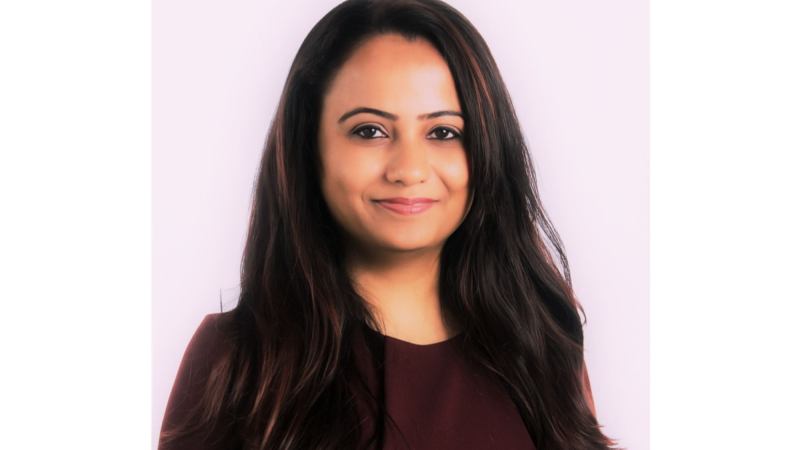
Rashmi Choudhary, Data Scientist at Zum Services.
Opinions expressed by Entrepreneur contributors are their own.
You're reading Entrepreneur India, an international franchise of Entrepreneur Media.
Every morning, millions of parents of school-age children face the same uncertainty: Is the bus running late? Has it already passed the stop? Should I keep waiting, or make other arrangements? For families balancing work schedules and school routines, these questions can create daily stress.
To address this, many school districts rely on commercial navigation and tracking APIs to provide bus ETAs. While these tools are effective for consumer driving routes, they often fall short in the context of school transportation, where safety requirements and operational constraints differ significantly from standard traffic models.
“As a mother and a data scientist, I’ve experienced both sides of this problem,” says Rashmi Choudhary, Data Scientist at Zum Services. “I understood the anxiety parents feel, and I also saw why off-the-shelf navigation tools struggle to predict school bus arrivals accurately. That perspective shaped how I approached the problem.”
Why Traditional Navigation Models Fall Short
School buses operate under conditions that differ markedly from personal or commercial vehicles. They must adhere to lower speed limits in school zones, come to full stops at railroad crossings, and account for frequent pickups that can add 30 to 60 seconds per stop. In residential areas, buses often travel well below posted speed limits, prioritizing safety over efficiency.
“A route a commercial API estimates at 12 minutes might realistically take 18 to 20 minutes for a school bus,” Choudhary explains. “These systems don’t account for mandatory stops, safety-driven routing, or the accumulated judgment of experienced drivers.”
That driver’s judgment is often critical. Over time, drivers learn which intersections are risky during school hours, which roads become congested during drop-off times, and which pickup locations are safest for children. Standard navigation tools typically lack visibility into this kind of contextual, human knowledge.
What Parents and Districts Actually Need
For families, the goal isn’t simply to see a bus moving on a map. It’s to receive arrival estimates they can trust and to know that pickup points are safe. In practice, some scheduled stops turn out to be unsafe or impractical, leading drivers to make small adjustments that aren’t reflected in static routing systems.
“Transportation isn’t just about reaching a destination,” Choudhary says. “It’s about predicting where buses actually stop and reducing the time children spend waiting.”
School districts face similar challenges. They need systems that reflect real-world operations, improve reliability, and support safer decision-making, while also managing limited budgets and resources.
Applying Data Science to School Transportation
Rashmi’s research focuses on building predictive models tailored specifically to school bus operations. These models incorporate known constraints—such as speed limits, stop requirements, and pickup protocols—alongside historical traffic data and real-time conditions.
At Zum, this approach has been integrated into the company’s transportation platform. According to internal data shared by the company, districts using the system report higher on-time arrival rates, fewer total student commute hours, and more efficient use of bus fleets.
Key technical elements include:
- Context-Aware Traffic Modeling: Probabilistic models designed for school transportation combine historical patterns with live traffic data and incident reports to adjust ETAs dynamically.
- Continuous Learning: As routes and traffic conditions evolve over the school year, the system updates its predictions using newly collected data.
- Route Segmentation: Clustering techniques break routes into smaller segments with distinct traffic characteristics, improving prediction accuracy at a granular level.
- Scalable Architecture: The system is designed to function across districts of varying sizes, from rural routes to dense urban networks.
Measurable Impact on Daily Routines
For parents, improved prediction accuracy reduces guesswork and waiting time. For students, even small time savings can add up. Cutting just 10 minutes per trip can reclaim dozens of hours over a school year—time that might otherwise be spent waiting at bus stops or sitting on buses.
Districts participating in these programs report higher satisfaction from families and greater confidence in their transportation operations, while also identifying opportunities to streamline routes and reduce operational overhead.
Looking Ahead
As school systems across the U.S. reassess how they manage transportation, data-driven approaches are becoming increasingly relevant. Choudhary believes that intelligent transportation systems can help districts move beyond reactive logistics toward more predictable and safety-focused operations.
“Modernizing school transportation isn’t about novelty,” she says. “It’s about using better data and better models to respect families’ time and keep children safe.”
Rather than a single technological fix, the shift reflects a broader recognition: school transportation has unique requirements, and addressing them requires tools designed with those realities in mind.
Every morning, millions of parents of school-age children face the same uncertainty: Is the bus running late? Has it already passed the stop? Should I keep waiting, or make other arrangements? For families balancing work schedules and school routines, these questions can create daily stress.
To address this, many school districts rely on commercial navigation and tracking APIs to provide bus ETAs. While these tools are effective for consumer driving routes, they often fall short in the context of school transportation, where safety requirements and operational constraints differ significantly from standard traffic models.
“As a mother and a data scientist, I’ve experienced both sides of this problem,” says Rashmi Choudhary, Data Scientist at Zum Services. “I understood the anxiety parents feel, and I also saw why off-the-shelf navigation tools struggle to predict school bus arrivals accurately. That perspective shaped how I approached the problem.”
Writes on private capital, deal structures, and the strategic thinking behind mid-market investments.