Global Semiconductor Equipment Spending Rises: An Opportune Moment for India
As countries expand manufacturing capacity and invest in advanced technologies, India has a unique opportunity to integrate more deeply into global semiconductor supply chains.
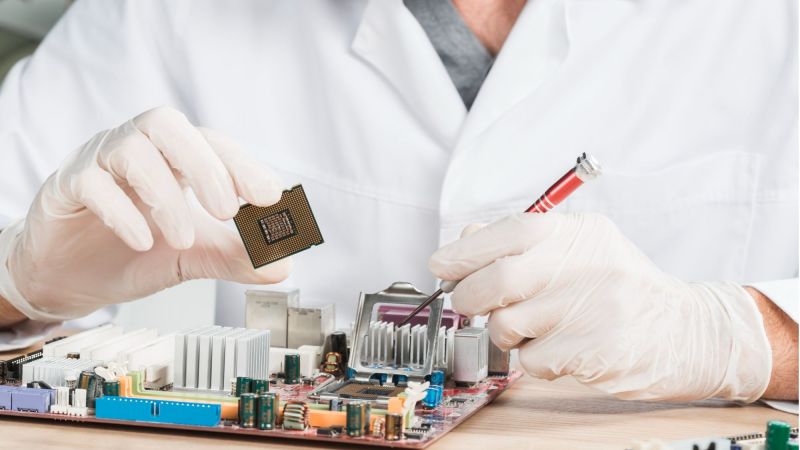
Freepik
Opinions expressed by Entrepreneur contributors are their own.
You're reading Entrepreneur India, an international franchise of Entrepreneur Media.
Global semiconductor equipment billings reached a record US$36.55 billion in the first quarter of 2026, reflecting continued investments in semiconductor manufacturing capacity and technology upgrades worldwide. Amid this growth, India is actively positioning itself to participate in this next phase of semiconductor revolution. As countries expand manufacturing capacity and invest in advanced technologies, India has a unique opportunity to integrate more deeply into global semiconductor supply chains.
In India, electronics production has grown six times in the last decade or so and exports crossed multi billion dollars in 2025, making electronics India’s second-largest export category. “India’s window is real. The policy architecture with ISM, PLI, and ECMS is sound. Global OEMs are actively de-risking from concentrated geographies. And demand signals from automotive, telecom, and industrial sectors are aligned with what India can credibly supply. Ecosystem depth — components, materials, design IP, skilled talent, logistics — is what separates a manufacturing destination from a manufacturing powerhouse. South Korea and Taiwan didn’t just build fabs, they built supply chains around fabs over decades,” said Sujay Shetty, Partner, PwC.
Rising investments in advanced packaging and manufacturing infrastructure worldwide will further open opportunities for Indian companies across semiconductor design, equipment engineering, materials, manufacturing services, and electronics production.
According to SEMI’s Worldwide Semiconductor Equipment Market Statistics (WWSEMS) report, equipment billings grew 14 per cent year-on-year (YoY), driven largely by accelerating demand from artificial intelligence (AI), advanced logic, DRAM memory, and advanced packaging technologies.
“The strong start to 2026 reflects continued industry investment in the capacity and infrastructure needed to support AI-driven semiconductor growth. Record first-quarter billings highlight ongoing momentum in leading-edge manufacturing and advanced packaging,” said Ajit Manocha, President and CEO of SEMI.
The record spending underscores the industry’s confidence in long-term semiconductor demand and signals continued expansion of global manufacturing capacity. Increased investments in wafer fabrication, packaging, testing, and semiconductor equipment are expected to strengthen supply chains and accelerate technology innovation worldwide.
Under the India Semiconductor Mission (ISM), 12 semiconductor and electronics manufacturing projects have been approved across semiconductor fabrication, ATMP/OSAT, display manufacturing, and component ecosystems. The anticipated ISM 2.0 program is expected to further strengthen India’s capabilities in semiconductor manufacturing, advanced packaging, materials, equipment, and design, helping the country captures a larger share of the growing global semiconductor value chain.
“With the foundation being created through the India Semiconductor Mission and the expected next phase of policy support, India can emerge as a significant hub for semiconductor design, advanced packaging, manufacturing, supply chain and ecosystem development,” Said, Ashok Chandak, President SEMI India and IESA.
Global semiconductor equipment billings reached a record US$36.55 billion in the first quarter of 2026, reflecting continued investments in semiconductor manufacturing capacity and technology upgrades worldwide. Amid this growth, India is actively positioning itself to participate in this next phase of semiconductor revolution. As countries expand manufacturing capacity and invest in advanced technologies, India has a unique opportunity to integrate more deeply into global semiconductor supply chains.
In India, electronics production has grown six times in the last decade or so and exports crossed multi billion dollars in 2025, making electronics India’s second-largest export category. “India’s window is real. The policy architecture with ISM, PLI, and ECMS is sound. Global OEMs are actively de-risking from concentrated geographies. And demand signals from automotive, telecom, and industrial sectors are aligned with what India can credibly supply. Ecosystem depth — components, materials, design IP, skilled talent, logistics — is what separates a manufacturing destination from a manufacturing powerhouse. South Korea and Taiwan didn’t just build fabs, they built supply chains around fabs over decades,” said Sujay Shetty, Partner, PwC.
Rising investments in advanced packaging and manufacturing infrastructure worldwide will further open opportunities for Indian companies across semiconductor design, equipment engineering, materials, manufacturing services, and electronics production.
Shrabona Ghosh • Former Senior Correspondent
Entrepreneur Staff
I write on corporates and lead a project called 'Corporate Innovations', wherein I cover large... Read more