A Legacy Built Brick By Brick
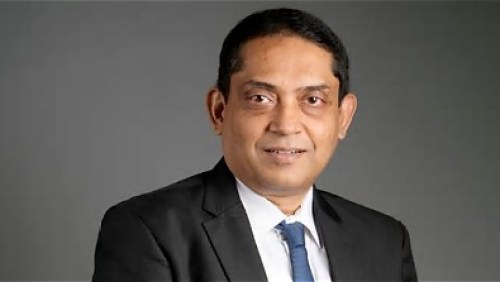
Mohit Goel, Managing Director of Omaxe, carries forward his father’s people-first legacy, blending empathy, integrity and financial discipline while expanding into emerging cities, believing technology should support humans and growth must stay honest and pioneering.

Mohit Goel, Managing Director, Omaxe Limited
Opinions expressed by Entrepreneur contributors are their own.
You're reading Entrepreneur India, an international franchise of Entrepreneur Media.
When Mohit Goel looks back at the beginnings of Omaxe, he always returns to one image. His father, Rohtas Goel, stood in 1987 with nothing but determination and an unshakable belief in honest work. “For him, Omaxe was never just a company. It was his first son. I grew up knowing I came second and I made peace with it,” said Goel, Managing Director, Omaxe Limited.
He recalled how the real foundation of Omaxe was not concrete or capital but people. Many team members have stayed for more than two decades. “They took my father’s vision as their own mission. Their loyalty shaped Omaxe more than any milestone,” he shared.
For Goel, taking over as the second generation never felt like a burden. Goel believes his father built a foundation that was ahead of its time. “I am not doing anything radically different. My role is to carry forward the spirit of empathy and commitment he lived by,” he said. Yet he also brought structure through financial discipline, a three point team framework, and a renewed focus on emerging markets in smaller cities.
Mohit described his father as “a walking university whose instincts cannot be learned from books.” Two lessons guide him every day. The first is to honour commitments without fail. The second is to stay simple and honest with everyone.
As the real estate sector evolves, Mohit believes innovation must serve people. “Technology should support humans, not replace them. Our strength lies in people,” he emphasised.
The family has endured tough phases together, including regulatory shifts and economic slowdowns. Through every challenge, unity and a shared purpose kept them grounded. “When times get tough, everyone steps up. That is the strength of a family led organisation,” Goel reflected.
Looking ahead, Mohit sees India’s growth rising from tier II and tier III cities. Through civic projects and urban partnerships, he hopes to contribute to their development. “Cities like Lucknow, Indore, New Chandigarh, and Faridabad are now thriving hubs of opportunity,” he mentioned.
If he had to describe the future of Omaxe in a single word, Mohit chose Pioneering. “We have always moved ahead of time while staying connected to people. That balance will define our next chapter,” he stated.
Facts:
- Inception: 1987
- Revenue (FY 2024–25): INR 1,637 Cr
- Employees: 2,000
- Presence: 31 cities across 8 states
Key Projects:
- The Omaxe State, Dwarka, Delhi
- Omaxe Chowk, Chandni Chowk, Delhi
- World Street, Faridabad
- Omaxe New Chandigarh
- Omaxe Royal Residency, Ludhiana
- Omaxe Hazratganj
- Omaxe Sangam City, Prayagraj
- Omaxe City 1 & 2, Indore
- Omaxe Eternity, Vrindavan
When Mohit Goel looks back at the beginnings of Omaxe, he always returns to one image. His father, Rohtas Goel, stood in 1987 with nothing but determination and an unshakable belief in honest work. “For him, Omaxe was never just a company. It was his first son. I grew up knowing I came second and I made peace with it,” said Goel, Managing Director, Omaxe Limited.
He recalled how the real foundation of Omaxe was not concrete or capital but people. Many team members have stayed for more than two decades. “They took my father’s vision as their own mission. Their loyalty shaped Omaxe more than any milestone,” he shared.
For Goel, taking over as the second generation never felt like a burden. Goel believes his father built a foundation that was ahead of its time. “I am not doing anything radically different. My role is to carry forward the spirit of empathy and commitment he lived by,” he said. Yet he also brought structure through financial discipline, a three point team framework, and a renewed focus on emerging markets in smaller cities.