Legacy Businesses Must Preserve Values, Not Old Ways
The future of legacy businesses lies in balancing the patience, financial discipline and experience of established enterprises with risk-taking mindset
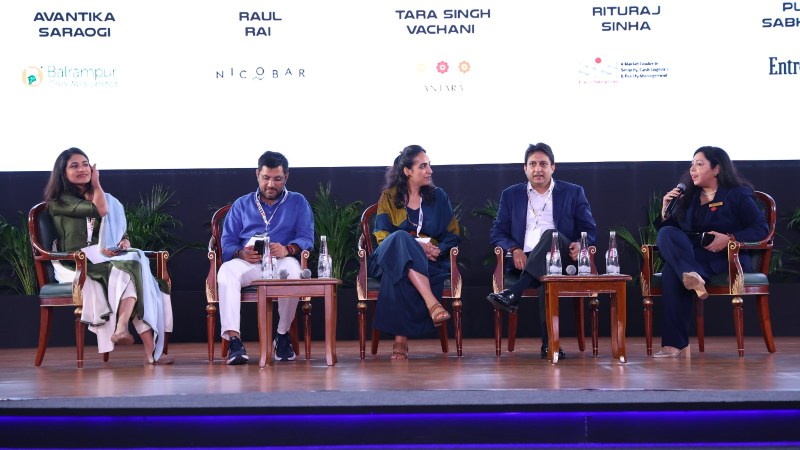
from(L-R) Avantika Sarawagi, Exceutive Director Balrampur Chini Mills, Rahul Rai, Co-founder of Nicobar,Tara Singh Vachhani, Executive Chairperson, Antara Senior Care Vice-Chairperson, Max India Limited,Rituraj Sinha, Group Managing director, SIS, Punita Sabharwal, Managing Editor, Entrepreneur India
Opinions expressed by Entrepreneur contributors are their own.
You're reading Entrepreneur India, an international franchise of Entrepreneur Media.
How does a family business stay relevant across generations without losing the values that built it? For India’s legacy businesses, the answer lies in knowing what to preserve and what to reinvent. At the Entrepreneur 2026 panel discussion Tomorrow Inc.: Next Generation in Legacy Businesses: Custodians or Disruptors, business leaders explored how the next generation is challenging convention, adopting artificial intelligence (AI) and entering new industries while carrying forward the legacy of their predecessors.
From biodegradable plastics to AI in services and farming, the discussion showed how legacy businesses are rethinking growth. Preserving a legacy does not mean preserving old ways.
The panel led by Punita Sabharwal, Managing Editor, Entrepreneur India featured Rituraj Sinha, Group Managing director, SIS, Tara Singh Vachhani, Executive Chairperson, Antara Senior Care Vice-Chairperson, Max India Limited, Rahul Rai, Co-founder of Nicobar, and Avantika Sarawagi, Exceutive Director Balrampur Chini Mills. Their experiences highlighted the need for professional management, financial discipline and adaptability.
Preserving values while embracing change
Building a sustainable business takes time, even in an environment shaped by technology and expectations of instant results. The key lesson from the first generation of entrepreneurs is patience.
SIS operates in security, facility management and cash logistics, employing 350,000 people. Rituraj KishoreSinha said “Founder-centred decision-making can become a bottleneck as businesses grow. Patience must be matched with professional systems and decentralised decision-making.”
For Avantika Sarawagi, who represents the fourth generation of Balrampur Chini Mills, preserving the company’s relationship with farmers remains a priority. The company supports 550,000 farmers across 10,000 villages. Her planned bioplastics plant in Uttar Pradesh aims to turn sugarcane into biodegradable plastic, using existing strengths to enter an emerging industry, and Avantika believes “the foundation created by previous generations gives the next generation room to explore opportunities beyond sugar.”
Building institutions for the long term
Antara, an elder-care business within the Max Group, reflects the importance of addressing long-term societal needs. Antara aims to serve India’s growing demand for senior-care products and services. Tara Singh Vachhani said “the business is being developed as a long-term institution rather than an opportunity driven by short-term market conditions.”
Her lessons include investing in strong leadership teams, positively affecting customers and employees, and balancing idealism with financial discipline. Professional succession planning can reduce dependence on individual leaders.
Antara’s early vision for senior care did not attract customers as quickly as expected. After more than a decade of building its foundations, the company is prioritising financial strength. Purpose-driven businesses need commercial viability to endure.
Culture as the foundation of growth
Nicobar keeps values and culture as center to building a business that can evolve without losing its identity. After more than two decades in investment banking and private equity, Rahul Rai mentioned “My first Nicobar document was not a business plan but Nico Sanskriti, outlining the culture he wanted.” He also added “Ibelieve values should guide expansion while allowing businesses to challenge established practices.”
At Nicobar, his wife and co-founder, Simran, drives new ideas, while a professional chief executive manages daily operations. Rai focuses on questioning existing methods, combining creativity with operational consistency.
AI: Enhancing human capabilities
The panel examined AI’s impact on traditional businesses. Rituraj Sinha mentioned robotics and AI could transform industries, but many blue-collar services involving physical work and human interaction may be less susceptible to immediate replacement than some white-collar roles. For SIS, the priority is to upskill employees and incorporate AI into everyday operations to improve efficiency and service delivery.
At Antara, technology adoption depends on digital familiarity among older consumers. Vachhani said 75% of sales in its consumer digital business come from customers aged 62–72, reflecting younger seniors’ comfort with online purchases. Businesses must strengthen internal technology before expecting every customer group to adopt AI.
Rahul Rai argued that AI can automate repetitive tasks and let employees focus on creativity and judgement. He emphasised organisational capabilities, reliable data, security and governance, saying technology should support people.
At Balrampur Chini Mills, AI is creating opportunities beyond the factory floor. Sarawagi talkedabout the company is piloting drone imagery to improve sugarcane surveys. Traditionally, employees measure plots using geo-tagged handheld devices, a process that can introduce errors. The pilot combines drone imagery with human-led surveys to identify sugarcane-growing areas and link them to the correct farmers, improving procurement data. Sensors can also guide irrigation and fertiliser use.
Building businesses that endure
The discussion underscored that the future of legacy businesses lies in balancing the patience, financial discipline and experience of established enterprises with the agility and risk-taking mindset of startups. As businesses pass from one generation to the next, the challenge is to preserve their core values while embracing new ideas, technology and opportunities. Ultimately, lasting success depends not on protecting the past, but on building institutions that can adapt, innovate and remain relevant for generations to come.
How does a family business stay relevant across generations without losing the values that built it? For India’s legacy businesses, the answer lies in knowing what to preserve and what to reinvent. At the Entrepreneur 2026 panel discussion Tomorrow Inc.: Next Generation in Legacy Businesses: Custodians or Disruptors, business leaders explored how the next generation is challenging convention, adopting artificial intelligence (AI) and entering new industries while carrying forward the legacy of their predecessors.
From biodegradable plastics to AI in services and farming, the discussion showed how legacy businesses are rethinking growth. Preserving a legacy does not mean preserving old ways.
The panel led by Punita Sabharwal, Managing Editor, Entrepreneur India featured Rituraj Sinha, Group Managing director, SIS, Tara Singh Vachhani, Executive Chairperson, Antara Senior Care Vice-Chairperson, Max India Limited, Rahul Rai, Co-founder of Nicobar, and Avantika Sarawagi, Exceutive Director Balrampur Chini Mills. Their experiences highlighted the need for professional management, financial discipline and adaptability.