Beyond the Hype: The New Economy
The challenge for founders and investors is to distinguish promising ideas from businesses capable of delivering sustained results.
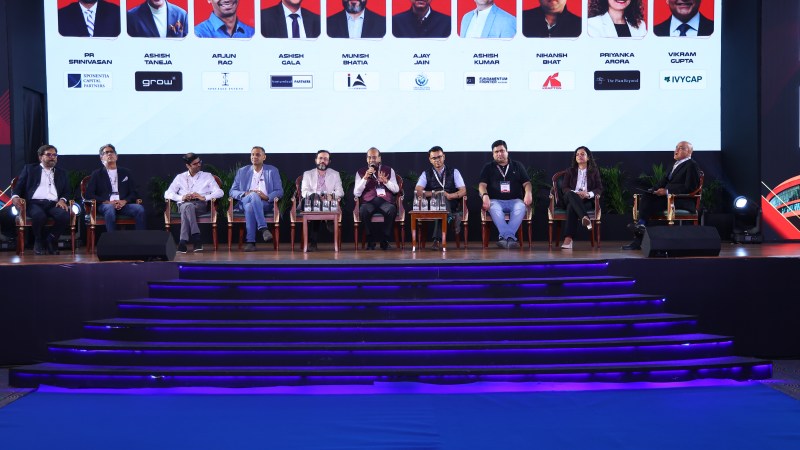
From (L-R) PR Srinivasan, Founder and Managing Partner of Xponentia Capital Partners, Ashish Taneja, Founder and CEO of GrowX Ventures, Arjun Rao, General Partner at Speciale Invest,,Ashish Gala, Co-Founder and Managing Partner of VentureSoul Partners, Munish Bhatia, Co-Founder of India Accelerator, Ajay Jain, Chairman of the IIM Calcutta Innovation Park Board, Ashish Kumar, General Partner at F2A (Fundamentum Frontier Advisors), and Nihansh Bhat, Lead – Corporate Development at Krafton India,Priyanka Arora, Founding Member and Chief Marketing Officer of The Plan Beyond,Vikram Gupta, Founder and Managing Partner, IvyCap Ventures
Opinions expressed by Entrepreneur contributors are their own.
You're reading Entrepreneur India, an international franchise of Entrepreneur Media.
India’s investment landscape is evolving, with investors exploring opportunities in deep technology, semiconductors, healthcare, gaming and other emerging sectors. But while opportunities are expanding, identifying businesses that can turn innovation into sustainable growth remains a challenge.
At Entrepreneur 2026 paneldiscussion titled Capital for the New Economy: Where Investors Are Placing Their Bets, industry leaders discussed how investors evaluate startups, the growing role of venture debt, the importance of market access and the competitive advantages that help businesses succeed over the long term.
The panel led by Vikram Gupta, Founder and Managing Partner, IvyCap Ventures featured PR Srinivasan, Founder and Managing Partner of Xponentia Capital Partners, Ashish Taneja, Founder and CEO of growX ventures, Arjun Rao, General Partner at Speciale Invest, Priyanka Arora, Founding Member and Chief Marketing Officer of The Plan Beyond,Ashish Gala, Co-Founder and Managing Partner of VentureSoul Partners, Munish Bhatia, Co-Founder of India Accelerator, Ajay Jain, Chairman of the IIM Calcutta Innovation Park Board, Ashish Kumar, General Partner at F2A (Fundamentum Frontier Advisors), and Nihansh Bhat, Lead – Corporate Development at Krafton India.
From Deep Tech to Market
Deep technology offers significant opportunities, but investing in such businesses requires a long-term view and careful assessment of commercial potential.
Ashish Taneja of growX ventures outlined “ The three factors his firm considers when evaluating deep-tech startups: whether the technology has matured enough to reduce risk, whether the company has identified a monetisable use case, and whether it has secured a reference customer.” The last factor can help establish credibility and make future scaling easier.
Taneja estimated that only around 10–15% of Indian deep-tech companies meet these criteria. Beyond technology and commercial readiness, he emphasised the founder’s determination to build a valuable business.
Arjun Rao of Speciale Invest highlighted “the opportunities in early-stage science and technology businesses, where the journey from innovation to commercial success can be complex. Such companies require investors who understand the risks involved and can support them through the process of building viable businesses.”
PR Srinivasan of Xponentia Capital Partners illustrated this with an investment in a deep-tech company incubated at IIT Bombay. After five to six years without revenue, the company secured an anchor customer. Although around 80% of its revenue initially came from that customer, Srinivasan said the business had a strong technology advantage, experienced management and a global patent for a specialised small powertrain solution.
The opportunity was closely tied to India’s large two-wheeler market. PR Srinivasan noted that, “Unlike in the 1990s, when investors often looked for businesses that could sell in the US, India’s expanding domestic market now offers companies the potential to build substantial businesses at home.”
Capital Matters
Capital remains important, but the panel highlighted the value of investor credibility, networks and strategic support.
Priyanka Arora said her company was bootstrapped and was not seeking capital at that stage. It was building a new category called “family continuity”, focused on helping families address specific challenges.
For a business creating a new category, Priyanka Arora explained, “Investor participation could bring credibility, trust and networks that help it reach more families.” Her perspective highlighted how an investor’s contribution can extend beyond funding or valuation.
Munish Bhatia identified “Semiconductors as an area of growing interest, citing the sector’s strategic importance and the emergence of new solutions. He also pointed to healthcare technology as a promising area, with several new use cases emerging.”
By contrast, Bhatia expressed caution about e-commerce and certain NBFC-led lending models, which he viewed as less attractive areas for fresh investment.
Gaming Requires Creativity
For Krafton India, competitive advantage in gaming comes from combining technology with an understanding of human behaviour and entertainment.
Building a successful game is not simply a technical exercise. Developers must understand what attracts players, what keeps them engaged and what makes an experience memorable.
Bhat emphasised the need for expertise in art, design and narrative alongside technology. He cautioned against relying on a purely technical team, arguing that gaming businesses need storytellers who understand how to create compelling experiences.
Drawing a parallel with filmmaking, Nihansh Bhat, said “games must be entertaining and offer something distinctive. Established formats can succeed, but original ideas and innovative gameplay can help companies stand out.” The broader lesson is that technology alone may not create a lasting advantage without an understanding of the people using the product.
Taking Grassroots Innovation to Market
Ajay Jain of IIM Calcutta Innovation Park highlighted a key challenge for impact-focused businesses: turning innovative ideas into commercially viable solutions.
He said, “Grassroots innovators often have ideas and the ability to address problems but lack access to customers, funding, mentors and go-to-market support.”
Jain cited the example of a company that developed a way to produce potable water from floodwater in disaster-affected areas. The innovators struggled to identify customers until they were connected with the National Disaster Response Force (NDRF), the Army and other agencies. These connections helped them find a market for their solution.
Startups also need institutional relationships and commercial pathways to turn their ideas into sustainable businesses.
Debt Can Fuel Growth
As India’s startup ecosystem matures, venture debt is becoming an additional financing option for companies seeking to fund growth without relying entirely on equity.
Ashish Gala, explained that “debt can support needs beyond conventional growth funding, including acquisitions, overseas expansion and certain investor buybacks. Such requirements were often financed through equity in the past.”
However, Gala stressed that venture debt should complement equity rather than replace it. Companies should consider borrowing when they have a stable, predictable business and need capital for the next stage of growth.
For startups still experimenting with products or uncertain about when they will generate revenue, debt can become a burden. Unlike equity, which can provide patient capital, debt comes with repayment obligations.
Gala advised founders to assess cash flows carefully before borrowing. Used at the right stage, debt can finance expansion while limiting dilution. Used prematurely, it can constrain a business that still needs time to establish its model.
Look Beyond the Hype
Ashish Kumar of F2A emphasised the importance of understanding a business from the ground up.
He said “superficial comparisons between companies as a major red flag, particularly when founders or investors have not examined the underlying supply chain and value chain. Without that understanding, they risk overlooking the economics and operational realities that determine whether a business can succeed.”
The panel also discussed the challenge of generating returns from investments. Rao observed that returning capital is harder than deploying it, although the process of building companies is what makes investing rewarding.
His point underscored the need to assess not just the excitement around a sector but also the path from investment to value creation and eventual returns.
Culture Drives Growth
Despite the diversity of sectors discussed, the panel returned to a common theme: long-term success depends on execution.
Together, the panel’s perspectives point to an investment ecosystem that is becoming more diverse and sophisticated. Deep tech and semiconductors are creating new opportunities, while gaming and grassroots innovation highlight the importance of understanding customers and markets. Venture debt, meanwhile, is expanding the financing options available to growing businesses.
The challenge for founders and investors is to distinguish promising ideas from businesses capable of delivering sustained results. Technology, capital and market opportunity provide a starting point, but commercial discipline, strong teams and consistent execution ultimately determine whether a company can turn its promise into lasting value.
India’s investment landscape is evolving, with investors exploring opportunities in deep technology, semiconductors, healthcare, gaming and other emerging sectors. But while opportunities are expanding, identifying businesses that can turn innovation into sustainable growth remains a challenge.
At Entrepreneur 2026 paneldiscussion titled Capital for the New Economy: Where Investors Are Placing Their Bets, industry leaders discussed how investors evaluate startups, the growing role of venture debt, the importance of market access and the competitive advantages that help businesses succeed over the long term.
The panel led by Vikram Gupta, Founder and Managing Partner, IvyCap Ventures featured PR Srinivasan, Founder and Managing Partner of Xponentia Capital Partners, Ashish Taneja, Founder and CEO of growX ventures, Arjun Rao, General Partner at Speciale Invest, Priyanka Arora, Founding Member and Chief Marketing Officer of The Plan Beyond,Ashish Gala, Co-Founder and Managing Partner of VentureSoul Partners, Munish Bhatia, Co-Founder of India Accelerator, Ajay Jain, Chairman of the IIM Calcutta Innovation Park Board, Ashish Kumar, General Partner at F2A (Fundamentum Frontier Advisors), and Nihansh Bhat, Lead – Corporate Development at Krafton India.