Building It Together. For Billions.
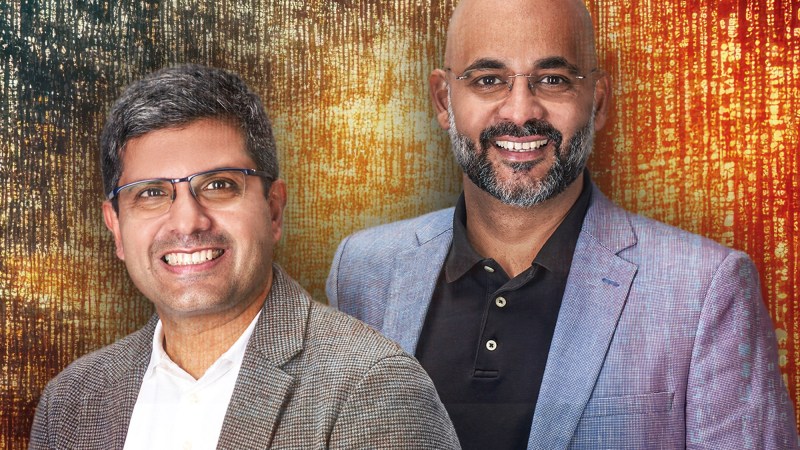
How Sameer Nigam and Rahul Chari turned PhonePe into the backbone of India’s digital payments economy
Entrepreneur India
You're reading Entrepreneur India, an international franchise of Entrepreneur Media.
India doesn’t adopt technology gradually—it absorbs it, reshapes it, and scales it at a speed that often defies conventional playbooks. Nowhere is this more evident than in the country’s digital payments revolution, where a simple act—paying for groceries, scanning a QR code, transferring money—has become second nature to hundreds of millions. At the center of this transformation sits PhonePe.
What began as a response to something as mundane as payment failures has evolved into one of India’s most consequential fintech platforms—powering transactions at a scale few companies globally can claim. But behind the app used by millions daily lies a story not just of timing, but of conviction, engineering discipline, and a founder partnership built for the long haul. For Sameer Nigam and Rahul Chari, PhonePe was never about building another payments app. It was about solving for India—at scale, from day one.
The Problem That Started It All
Long before PhonePe became synonymous with UPI payments, its origins were rooted in frustration. During their time at Flipkart, the founders witnessed firsthand how unreliable payment systems were crippling the e-commerce experience. Net banking failed. Credit card transactions dropped. Trust eroded with every unsuccessful payment attempt.
For Chari, this wasn’t just a product gap—it was a systemic failure. “Our obsession was rooted in performance and reliability,” he says. “We wanted to build a mobile-first payment layer that was as reliable as cash.” That insight would define PhonePe’s DNA. Not growth hacks. Not incentives. But reliability—at population scale.
Betting on India Before It Was Obvious
The timing, in hindsight, looks perfect. But at the time, it was anything but. India was on the cusp of a digital shift. Smartphones were proliferating. Aadhaar was laying the groundwork for identity. And UPI—still nascent—promised something radical: real-time, interoperable, bank-to-bank transfers.
Most players, however, chose the safer route—closed-loop wallets, controlled ecosystems, incremental innovation. PhonePe chose differently. “We didn’t want to build a better wallet,” Chari explains. “We wanted to build the digital plumbing for a new India.”
It was a contrarian bet—on openness, interoperability, and infrastructure rather than surface-level convenience. And it would prove decisive.
The Power of the Partnership
Great companies are often built on strong ideas. Enduring ones are built on strong partnerships. Nigam and Chari’s working relationship predates PhonePe. Having collaborated at Flipkart and MIME360, the duo entered the venture with a rare advantage—trust.
In the early years, roles were clearly defined but deeply interdependent. Chari, alongside co-founder Burzin Engineer, focused on what he calls “hard engineering”—building systems capable of handling millions of concurrent transactions. Nigam, on the other hand, drove vision, expansion, and regulatory navigation.
Over time, these roles evolved—but the core alignment didn’t. Their decisions, particularly the hardest ones, were anchored in a shared principle: build for the long term, even if it means sacrificing short-term wins. That philosophy was tested repeatedly.
The Decisions That Defined PhonePe
Every company has moments that shape its destiny. For PhonePe, there were several. One of the earliest—and boldest—was its commitment to UPI. At a time when the ecosystem was still unproven, PhonePe bet entirely on it. “We saw it as a TCP/IP moment for banking,” Chari says. “A way to democratize payments for every Indian.”
Another defining decision came in 2016, when PhonePe merged with Flipkart. It wasn’t just a strategic move—it was a philosophical one. The founders chose access to patient capital over the pressure of chasing rapid valuations. “We wanted to build something truly special,” Chari notes. “Not chase numbers for the next funding round.”
Then came the pandemic—a moment that tested not just business resilience, but values. While many companies downsized, PhonePe made a deliberate decision to protect its workforce, including its extensive on-ground merchant network. It was a reminder that even in a digital-first business, human infrastructure matters.
Building Through Uncertainty
If there was ever a phase where PhonePe’s future hung in balance, it was the early days of UPI. The infrastructure was new. Banks struggled to handle load. Transactions failed unpredictably. Trust—critical in any financial product—was fragile.
PhonePe’s response was not to retreat, but to double down on engineering. The team worked closely with banks and NPCI, optimizing transaction flows and building proprietary systems to predict and prevent failures. One such innovation was the “Kill Switch”—a mechanism that could assess the probability of transaction success and halt those likely to fail, avoiding the dreaded “money stuck” scenario. It was a small feature with a massive impact. Because in payments, trust isn’t built on features. It’s built on outcomes.
The Inflection Point: When India Went Digital
Demonetization in 2016 triggered awareness. The pandemic accelerated adoption. But PhonePe’s true breakout moment came after. As India reopened, millions of merchants and consumers—many of them first-time digital users—entered the ecosystem. PhonePe was ready.
Years of building a dense merchant network meant QR codes were already everywhere. The infrastructure was in place. The product worked seamlessly—even on low-end devices and patchy networks. “We were ready when Bharat came online,” Chari reflects. That readiness turned a moment into a movement.
Designing for a Billion Users
Building for India is often romanticized. In reality, it is brutally complex. A single app must serve urban professionals, small-town shopkeepers, and first-time smartphone users—each with vastly different expectations and constraints. PhonePe approached this challenge with a simple principle: utility over complexity.
The interface prioritizes core actions—sending money, recharging—while more complex financial products are layered beneath. The goal isn’t to push products. It’s to make them discoverable when needed. Trust, meanwhile, is engineered—not assumed. From predictive systems like the Kill Switch to relentless focus on success rates, every design decision is anchored in one question: will this work, every single time?
Perhaps PhonePe’s most underrated achievement is not its growth, but how it built for growth. Before launching its first version, the team spent months ensuring the platform could handle tens of millions of users. They adopted a microservices architecture early, built automation into every layer, and kept engineering teams lean.The result? A system where one engineer could effectively support a million users. It wasn’t just efficient. It was necessary. Because in India, scale isn’t optional. It’s existential.
Winning in a Crowded Market
India’s fintech space is fiercely competitive. Global giants, local players, and new entrants all vie for dominance. PhonePe’s edge lies in a combination of choices few others made together. First, its commitment to openness—allowing users to transact across multiple instruments, rather than locking them into a single ecosystem. Second, its platform-first approach—building a backend capable of handling complex financial flows with speed and reliability.
And third, its distribution—particularly its deep merchant network, which ensured relevance beyond urban centers. It wasn’t one advantage. It was the compounding effect of many.
Beyond Payments:
The Next Frontier
Today, PhonePe is no longer just a payments app. It is evolving into a broader financial platform—spanning insurance, investments, and eventually, lending. The expansion is guided by a simple framework: Send, Spend, Manage, Grow. Once payments (Send and Spend) were mastered, the natural progression was to help users manage and grow their money. But even here, the philosophy remains unchanged: simplify complexity.
Whether it’s buying insurance in two clicks or accessing investment products seamlessly, the goal is to reduce friction—not just add features.
The Road Ahead
If the first decade of PhonePe was about building infrastructure, the next will be about unlocking its full potential. Chari points to the digitization of the financial lifecycle—particularly lending and insurance—as the biggest opportunity ahead. With vast amounts of transaction data, PhonePe is uniquely positioned to create alternative credit models and expand financial inclusion. There’s also a new frontier emerging: AI. “If we were starting today, we would lean even earlier into AI-driven personalization,” Chari admits. It’s a glimpse into the next evolution—not just of PhonePe, but of fintech itself.
Building for India, Building for the Future
For founders looking to build in India, Chari offers a simple but profound piece of advice: “Don’t optimize for the first million users. Optimize for the hundred millionth.” It’s a philosophy that captures the essence of PhonePe. A company built not for quick wins, but for enduring scale. Not for narrow use cases, but for a nation. And perhaps most importantly—not by one founder, but by a partnership that understood early on that in India, the biggest ideas require not just vision, but alignment. Because building for billions is never a solo act.
India doesn’t adopt technology gradually—it absorbs it, reshapes it, and scales it at a speed that often defies conventional playbooks. Nowhere is this more evident than in the country’s digital payments revolution, where a simple act—paying for groceries, scanning a QR code, transferring money—has become second nature to hundreds of millions. At the center of this transformation sits PhonePe.
What began as a response to something as mundane as payment failures has evolved into one of India’s most consequential fintech platforms—powering transactions at a scale few companies globally can claim. But behind the app used by millions daily lies a story not just of timing, but of conviction, engineering discipline, and a founder partnership built for the long haul. For Sameer Nigam and Rahul Chari, PhonePe was never about building another payments app. It was about solving for India—at scale, from day one.
The Problem That Started It All

Punita Sabharwal • Managing Editor, Entrepreneur India
Entrepreneur Staff
Punita Sabharwal is the Managing Editor of Entrepreneur India.