India’s Growth Will be Driven by Infrastructure 4.0: Dr. Niranjan Hiranandani
India is now standing at a cusp transforming from infrastructure 1.0 to infrastructure 4.0
Entrepreneur India
Opinions expressed by Entrepreneur contributors are their own.
You're reading Entrepreneur India, an international franchise of Entrepreneur Media.
India’s infrastructure sector is witnessing robust demand driven by integrated planning, higher investments and technology-led execution. India is now standing at a cusp transforming from infrastructure 1.0 to infrastructure 4.0.
From connecting places, industries, cities, to intelligence, infrastructure development in India has come a long way.
Infrastructure 4.0 is about connecting intelligence. This phase is about innovation and talent creation. India’s next infrastructure will not be physical; it will be intellectual infrastructure. That is the defining difference. It is about Artificial Intelligence (AI), cloud and semiconductors.
The 4.0 refers to the modernization of physical assets such as roads, bridges, and energy grids by integrating digital technologies. It utilizes IoT, AI, and Building Information Modeling (BIM) to optimize operations, enhance resilience, and reduce environmental impact.
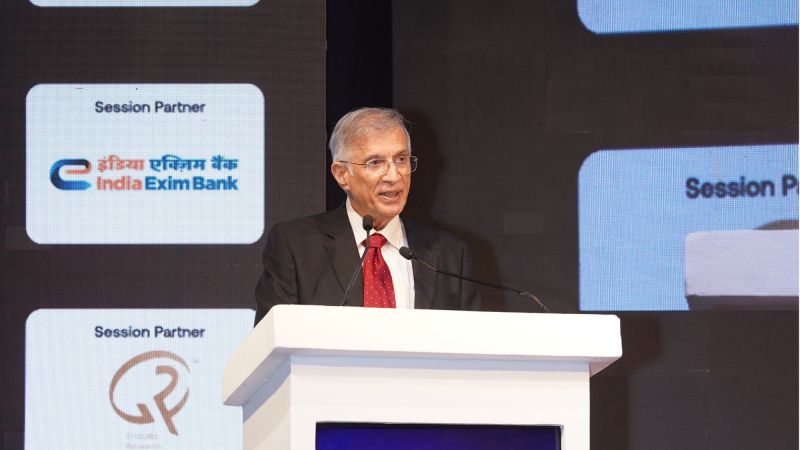
“The next phase of India’s growth will be driven by infrastructure 4.0,” said Dr. Niranjan Hiranandani, founder, Hiranandani Group, speaking at Entrepreneur India Investment Forum 2026.
Through his family office, Nidar Group, based in Mumbai, Hiranandani invests into energy infrastructure, natural gas pipelines, and data centers. India is set for the largest railway expansion and modernization in its history. At the same time, it already commands extensive digital public infrastructure. Indian Railways, one of the strongest pillars of infra growth, recorded a freight loading of 1.67 billion tonnes in FY26, achieving an all-time high and reflecting the continued growth of the nation’s logistics capabilities as per data by IBEF.
India has now officially crossed the $4 trillion mark in nominal GDP, establishing itself as the world’s fourth-largest economy behind the United States, China, and Germany. Propelled by a strong manufacturing boom and robust domestic demand, the country is on track to become the third-largest global economy by 2028.
“Countries don’t become rich because they are developed. They become rich because they develop infrastructure which in turn creates time, it is redefining connectivity and commerce,” he said.
The founder is a real estate tycoon, and believes that housing is an integral part of development. The current affordable housing schemes such as PMAY-U and state policies which provide financial subsidies, lower interest rates, or subsidized land, is a step in the right direction. “India is not just building projects; it is redesigning its economy. Housing is an economic infrastructure, it doesn’t consume capital, it produces it,” he added.
India’s infrastructure journey is no longer about projects alone; it is about possibilities. He emphasized that Bharat is positioning itself to lead the future by building confidence through roads, railways, digital networks, and now intellectual infrastructure. The true measure of progress lies not in concrete but in human potential, where skilling will play the foundational role.
“Infrastructure is where imagination becomes economic reality. Every kilometer built creates miles of opportunity. Capital flows to places that inspire confidence, and confidence, in turn, builds more infrastructure. Bharat is not building for today’s demand; it is building the capacity for tomorrow’s leadership,” he said, concluding the keynote.
India’s infrastructure sector is witnessing robust demand driven by integrated planning, higher investments and technology-led execution. India is now standing at a cusp transforming from infrastructure 1.0 to infrastructure 4.0.
From connecting places, industries, cities, to intelligence, infrastructure development in India has come a long way.
Infrastructure 4.0 is about connecting intelligence. This phase is about innovation and talent creation. India’s next infrastructure will not be physical; it will be intellectual infrastructure. That is the defining difference. It is about Artificial Intelligence (AI), cloud and semiconductors.
Shrabona Ghosh • Former Senior Correspondent
Entrepreneur Staff
I write on corporates and lead a project called 'Corporate Innovations', wherein I cover large... Read more