FMCG CEOs Rejig And What It Means For the Sector
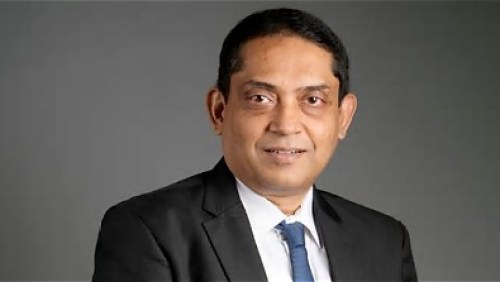
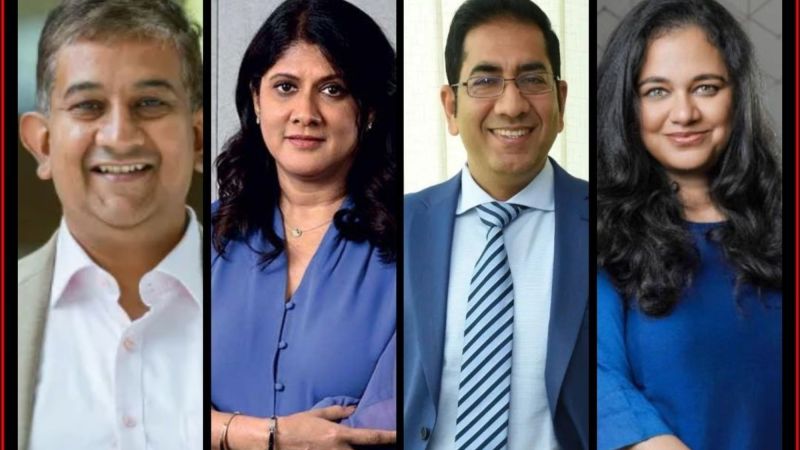
India’s FMCG sector has seen a wave of CEO reshuffles in 2025–26, with major players like Hindustan Unilever, Godrej Consumer Products, Dabur, Colgate-Palmolive, announcing leadership changes.
Collected
Opinions expressed by Entrepreneur contributors are their own.
You're reading Entrepreneur India, an international franchise of Entrepreneur Media.
The FMCG sector in India is seeing a mix of slowing consumption, impatient investors, rising input costs, and disrupted distribution models. The professional heads of companies are continuously demanded for faster execution, digital-first strategies, and sharper accountability, leading to exits and rapid leadership reshuffles.
India’s FMCG sector has seen a wave of CEO reshuffles in 2025–26, with major players like Hindustan Unilever, Godrej Consumer Products, Dabur, Colgate-Palmolive, announcing leadership changes.
Rising input costs from global uncertainty and supply-chain disruptions are squeezing margins, intensifying the pressure on leadership. Distribution disruption from quick commerce players like Blinkit, Zepto, and Swiggy Instamart is reshaping consumer buying habits, forcing companies to seek leaders with sharper digital and e-commerce expertise. The premiumisation shift is another stress point, with consumers moving toward higher-value products.
GCPL
At Godrej Consumer Products, Sudhir Sitapati’s resignation in August 2026 shocked investors, leading to a stock drop. The board elevated Aasif Malbari, the CFO, whose finance-heavy background signals a stronger focus on profitability and disciplined execution across India and international markets.
“After five extraordinary years, I am saying goodbye to GCPL. I leave with immense pride in what we have achieved together. When I joined GCPL in October 2021, the ambition was to transform the company — not just to improve the numbers, but to build a stronger, more future-ready portfolio and organisation. The journey has been full of challenges, learning and, most importantly, progress,” said Sitapati.
Since his appointment was announced on May 7, 2021, the Total Shareholder Return (stock price + dividends) has been around 10 per cent p.a., compared with around 8per cent for the Nifty. The business has also entered FY27 with strong momentum, with Q1 revenue growth of 19 per cent. “97% per cent of analysts now have a buy or hold on the company,” he added.
“We turned around market shares in our flagship Household Insecticides business after a decade. We returned Africa to profitability. We expanded our Air Care business globally. And we created new brands and businesses that I believe have the potential to become meaningful franchises — Fab, Spic, Good Knight Incense Sticks, Ninja, BLOQ and Cinthol Body Wash. Most of all, I am proud of the people,” he added.
HUL
Hindustan Unilever saw Rohit Jawa step down after the shortest tenure in the company’s history, with Priya Nair taking charge from August 2025. Nair’s appointment, as the first woman CEO of HUL, reflects the board’s intent to sharpen consumer engagement and accelerate digital-first strategies.
“Leading Hindustan Unilever, the company where I began my career, has been one of the most enriching chapters of my professional life. Over 37 years with HUL and Unilever, I have had the privilege of growing alongside remarkable colleagues, communities, and brands, while leading businesses in strategically important markets such as the Philippines, North Asia, and China. I remain deeply grateful to the Board, my mentors, and the HUL family for their unwavering support and wisdom throughout this journey. Now feels like the right moment to hand over the baton to Priya Nair,” Jawa had said during the transition.
After Nair took charge, FY 2025–26 has been an energising year, one that has only strengthened her belief in the immense opportunity India holds.
“We’re seeing Indian consumers evolve faster than ever, with rising aspirations and changing expectations. By staying closely anchored to these shifts, we’ve sharpened our focus on competitive, volume-led growth. We are beginning to see momentum build, with broad-based progress across our portfolio,” she said.
Colgate-Palmolive India
Colgate-Palmolive India announced that Prabha Narasimhan will leave her role as MD & CEO effective September 27, 2026, moving into a global position as Executive Vice President – Marketing for the Asia-Pacific division. Narasimhan, who took charge in September 2022, oversaw a period of mixed performance.
Her successor, Manish Anandani, brings deep familiarity with the company and the sector. Anandani previously worked at Colgate-Palmolive for over a decade, holding roles across India and Indochina before leaving in 2018 as Worldwide Director in Global Customer Development. Most recently, he served as Managing Director for India and South Asia at Kenvue, the former Johnson & Johnson consumer health business. His appointment as MD & CEO of Colgate-Palmolive India is for a five-year term, subject to shareholder approval.
Dabur
Dabur India has announced a significant leadership restructuring aimed at strengthening both its domestic and global operations. Mohit Malhotra, who has been serving as CEO of Dabur India, has now been elevated to the role of Global CEO, effective April 2026. In this expanded position, Malhotra will oversee the company’s worldwide businesses, reflecting Dabur’s ambition to accelerate international growth and consolidate its presence across diverse markets.
To ensure sharper focus on the domestic front, Dabur has appointed Herjit S. Bhalla as the new CEO for its India business. Bhalla, who previously held leadership roles at Hershey and Unilever, brings extensive experience in consumer goods and brand management. His appointment underscores the company’s intent to drive innovation, strengthen distribution, and capture growth opportunities in India’s evolving FMCG landscape.
This dual leadership structure is designed to balance Dabur’s global ambitions with the need for agile execution in its core Indian market. Malhotra’s elevation highlights the board’s confidence in his ability to scale Dabur’s international footprint, while Bhalla’s entry signals a renewed push to sharpen domestic performance. Together, the changes mark a strategic pivot toward global expansion, premiumisation, and digital-first consumer engagement, positioning Dabur to compete more effectively in both local and international arenas.
These transitions underscore a new reality: FMCG leadership in India is no longer about long tenures and steady stewardship. Decisions are recalibrated on agility, digital-first strategies, and immediate shareholder value. The baton is being passed to leaders who can navigate premiumisation, quick commerce, and global expansion.
The FMCG sector in India is seeing a mix of slowing consumption, impatient investors, rising input costs, and disrupted distribution models. The professional heads of companies are continuously demanded for faster execution, digital-first strategies, and sharper accountability, leading to exits and rapid leadership reshuffles.
India’s FMCG sector has seen a wave of CEO reshuffles in 2025–26, with major players like Hindustan Unilever, Godrej Consumer Products, Dabur, Colgate-Palmolive, announcing leadership changes.
Rising input costs from global uncertainty and supply-chain disruptions are squeezing margins, intensifying the pressure on leadership. Distribution disruption from quick commerce players like Blinkit, Zepto, and Swiggy Instamart is reshaping consumer buying habits, forcing companies to seek leaders with sharper digital and e-commerce expertise. The premiumisation shift is another stress point, with consumers moving toward higher-value products.
Shrabona Ghosh • Former Senior Correspondent
Entrepreneur Staff
I write on corporates and lead a project called 'Corporate Innovations', wherein I cover large... Read more