India’s Energy Transition Opportunity to Cross $100 Billion: Report
Charge driven by rising pressure to reduce fossil fuel dependence, localize energy infrastructure, and build resilience against global supply chain disruptions.
Opinions expressed by Entrepreneur contributors are their own.
You're reading Entrepreneur India, an international franchise of Entrepreneur Media.
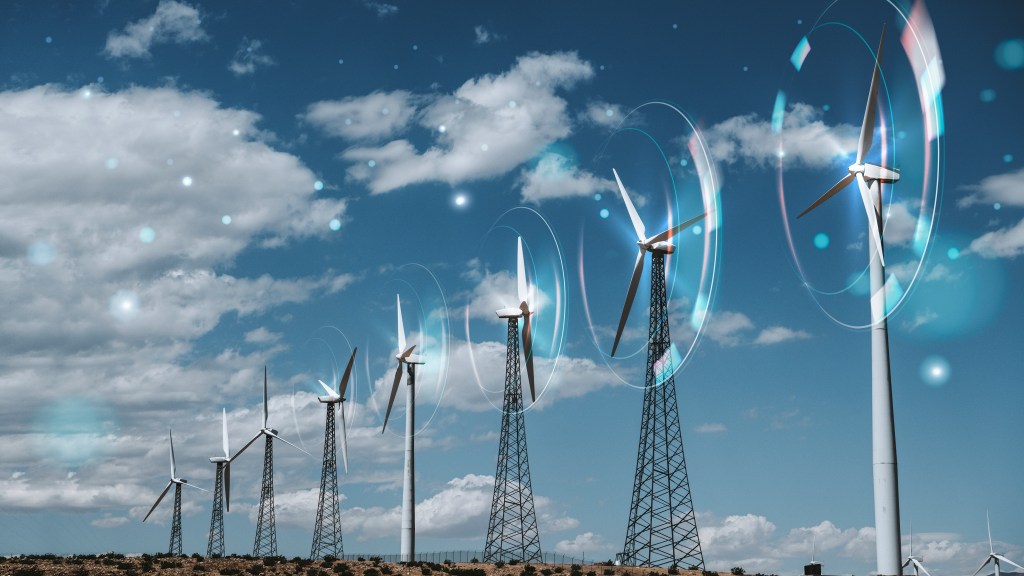
India’s industrial energy transition market could exceed USD 100 billion by 2030, driven by rising pressure to reduce fossil fuel dependence, localize energy infrastructure, and build resilience against global supply chain disruptions, according to a joint report by TDK Ventures and Theia Ventures.
The report positions industrial decarbonization not merely as a climate-focused agenda, but as a long-term economic hedge for India. With the country currently carrying an annual energy import bill of nearly USD 140 billion, reducing dependency on imported crude and fossil fuels is becoming increasingly central to economic stability. The report argues that India now has an opportunity to build what it describes as a “fortress economy,”, one that is less exposed to geopolitical shocks and volatile global commodity cycles.
Despite the scale of the opportunity, the sector remains significantly undercapitalized. Current funding levels are estimated to be less than half of what comparable sectors receive in more developed economies. The report, which draws insights from more than 50 founders and over 15 industry leaders, identifies long-duration energy storage, industrial AI and digital infrastructure, and energy efficiency technologies as some of the highest-potential investment areas over the coming decade.
For Ravi Jain, Investment Director at TDK Ventures, India’s transition away from fossil fuels is no longer optional. Instead, he believes it could become one of the country’s fastest-growing sectors over the next few years.
“I think this sector is one of the most likely to be the fastest growing sector in India,” Jain said in an interaction with Entrepreneur India. “Primarily because there is a policy encouragement to move away from crude imports, etc., towards non-fossil sources.”
He added that repeated supply-chain disruptions and global energy volatility are accelerating the urgency around energy independence. “The only way to remove that is to create new technologies which help us move away from fossil to non-fossil,” he said.
However, Jain emphasized that India’s transition challenge differs sharply from many Western markets. Unlike developed economies, where consumers and industries may absorb a “green premium,” Indian adoption will depend almost entirely on affordability.
“We have to do this transition, but not be more expensive; we have to be cheaper. So if the economics don’t work, it won’t work. Green premium etc. doesn’t, that concept doesn’t exist or work in India.”
That economic reality is shaping where venture investors are placing bets. According to the report, cost efficiency rather than regulatory compliance will likely become the biggest driver of industrial decarbonization in India over the next decade.
Priya Shah, Founder and General Partner at Theia Ventures, said, “India is at a defining moment in its energy transition, and the opportunity for founders and investors is larger than most recognise. This report is designed to cut through the noise and give entrepreneurs and capital allocators a practical, grounded view of where the highest-impact opportunities lie and what it will take to unlock them at scale.”
The report highlights long-duration energy storage as one of the most critical areas for innovation. Technologies such as sodium-ion batteries, vanadium redox flow batteries, and thermal storage systems are expected to play a major role in reducing dependence on imported raw materials while strengthening localized supply chains.
Jain believes this localization push will become increasingly important across sectors ranging from renewable energy infrastructure to electric mobility.
On electric vehicles, he acknowledged that adoption in India has been slower than many industry participants initially expected. However, he believes the broader structural direction remains unchanged.
“It is just a matter of time when these early adopters snowball to mass penetration,” Jain said, pointing to rising growth in electric scooters and increasing policy support as early indicators of that shift. TDK Ventures itself has backed electric motorcycle company Ultraviolette Automotive as part of its EV-focused investments, in a USD 21 million funding round.
“We are seeing growth in the scooter segment. We made a bet in Ultraviolet for the motorcycle segment where the penetration is less than 1 per cent right? Compared to 20 per cent in scooters right? So this will happen,” he said.
Jain also argued that India’s EV ecosystem requires domestic innovation tailored specifically to local usage patterns rather than simply importing models from overseas markets.
“The Chinese products have not been successful in India because the context of their usage versus what you require here has never matched in automotive,” he said. “Wherever there is a head-on-head competition between Indian OEMs in automotive for two wheelers versus China, India has always won.”
He believes government policy will continue to accelerate adoption, particularly in urban regions struggling with pollution and fuel dependency. Referring to Delhi’s proposed move to phase out new petrol two-wheeler registrations after 2028, Jain described such measures as early signals of broader nationwide shifts.
“Whatever happens in these states because they are seeing the implications of pollution etc. first, will eventually percolate everywhere,” he said.
Beyond mobility, the report highlights massive untapped opportunities in decentralized renewable energy systems and industrial energy optimization. Areas such as HVAC retrofits, advanced insulation materials, waste heat recovery systems, and AI-led energy management platforms are expected to become increasingly important as industries attempt to reduce power costs.
Jain noted that rooftop solar adoption in India still faces a fundamental affordability challenge despite growing awareness and government incentives.
“The key is that the recovery of investment should happen in 2-3 years time, which does not happen today. We need to bring the cost of energy storage down. And the cost of inverter manufacturing etc. should be localized here so that the costs come down,” he said.
As India attempts to balance industrial growth, energy security, and climate targets simultaneously, investors increasingly see industrial decarbonization as a long-duration economic transformation rather than a short-term sustainability trend. The next phase, according to both the report and investors like Jain, will depend less on climate narratives and more on whether startups can make clean technologies materially cheaper, scalable, and localized for India’s unique economic realities.
India’s industrial energy transition market could exceed USD 100 billion by 2030, driven by rising pressure to reduce fossil fuel dependence, localize energy infrastructure, and build resilience against global supply chain disruptions, according to a joint report by TDK Ventures and Theia Ventures.
The report positions industrial decarbonization not merely as a climate-focused agenda, but as a long-term economic hedge for India. With the country currently carrying an annual energy import bill of nearly USD 140 billion, reducing dependency on imported crude and fossil fuels is becoming increasingly central to economic stability. The report argues that India now has an opportunity to build what it describes as a “fortress economy,”, one that is less exposed to geopolitical shocks and volatile global commodity cycles.
Despite the scale of the opportunity, the sector remains significantly undercapitalized. Current funding levels are estimated to be less than half of what comparable sectors receive in more developed economies. The report, which draws insights from more than 50 founders and over 15 industry leaders, identifies long-duration energy storage, industrial AI and digital infrastructure, and energy efficiency technologies as some of the highest-potential investment areas over the coming decade.

Prince Kariappa • Features Content Writer
Entrepreneur Staff