Google Doubles Down on AI at I/O 2026: Spark, Gemini 3.5, and more
Key things announced at the Google I/O 2026 keynote.
Google
Opinions expressed by Entrepreneur contributors are their own.
You're reading Entrepreneur India, an international franchise of Entrepreneur Media.
Google’s annual developer conferences have traditionally served as the stage to showcase the technology giant’s software prowess. In the last couple of years, AI has been headlining the event. And the 2026 edition of the conference, I/O, is no different with its AI offerings getting much better, and then new offerings to catch up with the competition.
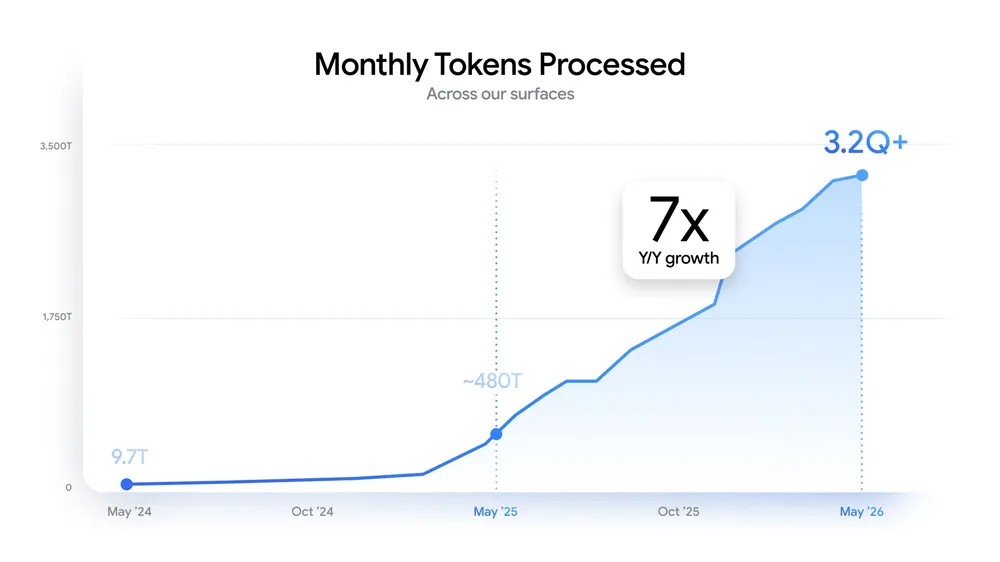
Google’s rally behind AI is pretty much understandable. Its services are omnipresent and users are anyway lapping it up. CEO Sundar Pichai objectively elaborates on this with some statistics on tokens, which are essentially units of data of its model processes.
Pichai disclosed that today it is processing 3.2 quadrillion tokens per month, exponentially higher from 9.7 trillion tokens a month a couple of years ago, and 480 trillion tokens last year.
Developers are too leveraging the new-age tools. According to Pichai, more than 8.5 million developers are building new apps and experiences using its models monthly. Google’s model APIs are now processing nearly 19 billion tokens per minute. In the last 12 months, over 375 Google Cloud customers each processed more than one trillion tokens.
In nutshell, Google’s AI bet is paying off with widespread adoption, including enterprise, dev community, and end users.
“Ten years since we pivoted the company to be AI-first, we still see AI as the most profound way to advance our mission and improve people’s lives at scale. That’s why we’ve been taking a differentiated, full-stack approach to AI innovation, from our custom silicon and secure foundation, to our world-class research and models, to our products and platforms that touch billions of people. This approach enables us to iterate and innovate faster in ways that are lighting up every part of the company,” Pichai said at the Google I/O 2026.
“What’s incredible is how people are using AI, whether it’s students prepping for final exams with the Gemini app, musicians and artists using generative AI models like Lyria and Veo as part of their creative flow, or developers coding and bringing their ideas to life.”
Gemini Omni
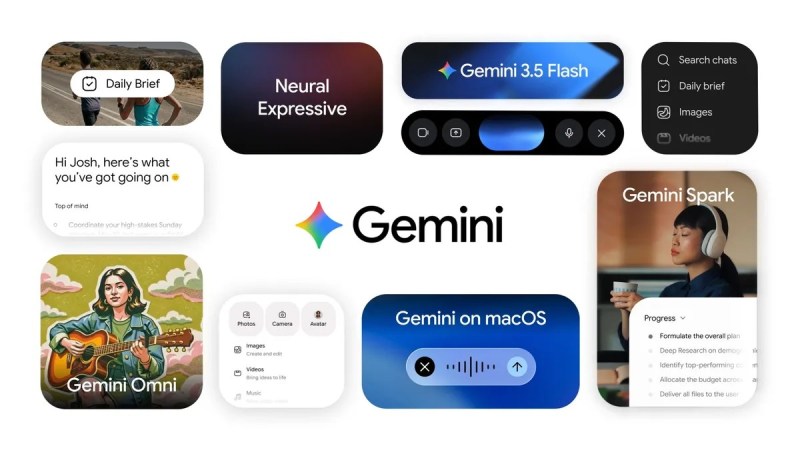
With Google making giant infrastructural strides with eighth generation TPUs, Google is now looking to crank up its AI model game. Its new Gemini Omni is a new model which is capable of generating samples in any output modality from any input. In the initial stage, it will be video outputs, and soon it will be able to do images and text. The model is a combination of Gemini intelligence and Google’s media models. Gemini Omni Flash is now rolling out to users via Gemini app, Google Flow and on YouTube Shorts. Developers and Enterprise customers will be able to access it via APIs in the coming weeks.
Gemini 3.5 Flash
Gemini 3.5 Flash builds on the previous iterations with Google describing the model as a “gamechanger.” Google says that they had used Flash with a reimagined version of its agent-first development platform Antigravity, and it dramatically accelerated how they build.
“In March we were processing half a trillion tokens a day internally across our AI developer tools, and we’ve been doubling every few weeks. Now, we’re processing more than three trillion tokens a day. This scale created a powerful feedback loop helping us improve 3.5,” the company said.
Essentially, Gemini 3.5 is faster and more efficient than previous versions. For companies deploying the older versions and processing about 1 trillion tokens a day, using the new model for nearly 80% of their workloads will help save USD 1 billion annually.
Antigravity
Google is also paying attention to the agentic AIs. Antigravity is essentially an agent-driven developer platform allowing devs to turn their ideas into a production ready application. At the I/O 2026, Google said it was now expanding the Antigravity ecosystem to manage and deploy agents that can integrate across key developer surfaces.
A desktop application, Antigravity 2.0, enables an agent-optimized experience, acting as a central home for agent interaction. This allows devs to orchestrate multiple agents to execute tasks simultaneously. Similarly, Antigravity CDL is available for those who prefer terminal. Google is now also offering Antigravity SDK, and in Gemini Enterprise Agent Platform.
Gemini Spark: Agentic Era
Considered as a response to OpenClaw, Gemini Spark is essentially a personal AI agent in Gemini app that enables one to navigate one’s digital life.
According to Google, Spark runs on dedicated virtual machines on Google Cloud and is available 24×7. Powered by Gemini 3.5 and Antigravity, it enables long-horizon tasks in the background. Spark will also work with other tools, starting with Google’s first and third-party tools via MCPs in the near future. One can access Spark in Gemini app or via email or chat. On Android, it will be available through Android Halo, a new UI space. Google AI Ultra subscribers will be the first ones to get the access.
Moreover, Google Search will also get the agentic feature.
“With the power of Gemini 3.5 Flash and Google Antigravity, Search will build custom experiences just for your individual questions, like dynamic layouts and interactive visuals. These generative UI capabilities will be available for everyone in Search this summer, free of charge,” Google said.
Google recently launched Ask Google feature on Maps, enabling conversational AI on its map service. Soon the feature rolled out to Google Search. At the annual developer conference, Google announced that the feature will now also be available on YouTube.
Essentially, users can now make conversational and contextual searches on the video sharing network.
“Ask YouTube entirely reimagines the experience, making information much more digestible and easy to navigate. You’ll see videos that best match your interest, and most importantly, it jumps right to the part of the video most relevant to you,” Google said.
Intelligent eyewear
Long before popular smart glasses we see today, Google had experimented with a similar concept way back in 2012. In a rare commercial failure, Google Glass could not take off in the commercial market and was pivoted to enterprise usage. Years later, Facebook-parent Meta launched Ray-Ban Display AI-powered glasses with advanced in-lens display technology. Apple has something of its own called, Apple Vision Pro, which is a spatial computer and mixed-reality headset.
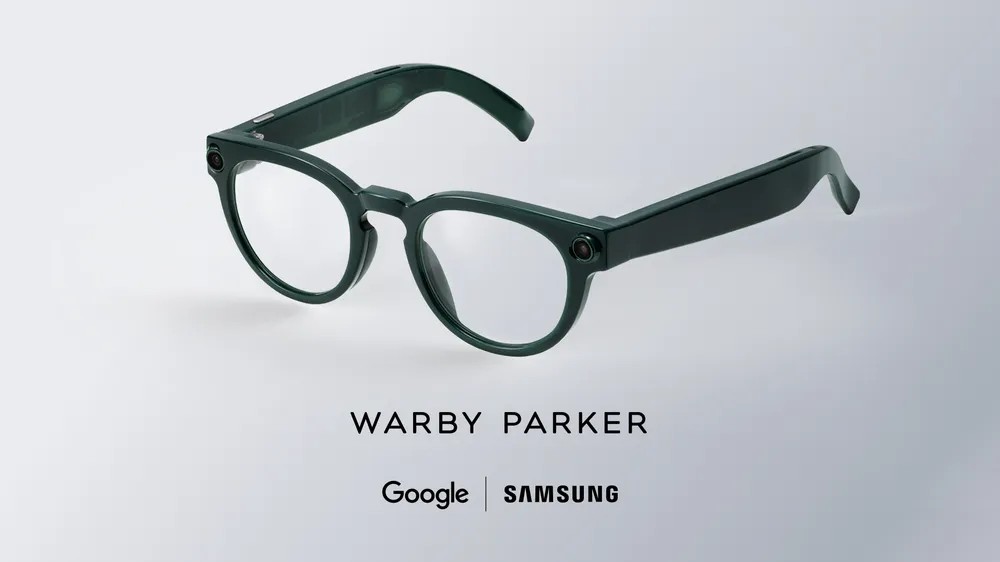
Google is taking a shot at the smart eyewear again in partnership with Samsung and Qualcomm. Based on the Android XR platform, there are two versions of the smart eyewear – audio glasses that offer spoken help in your ear, and then with display glasses that show you the information. Google has also banded with eyewear brands Gentle Monster and Warby Parker for the same.
As expected, the eyeglasses are capable of capturing and editing multimedia, ask Gemini for contextual information, and translate speech and writing, among others.
The audio version of the glass will roll out first followed by the other one.
To sum up, Google appears to be doing all in the AI with agentic push as well as upgrading a lot of its existing services with Gemini. It has also made improvements with the eighth generation TPUs, for more optimised and efficient outputs.
Google’s annual developer conferences have traditionally served as the stage to showcase the technology giant’s software prowess. In the last couple of years, AI has been headlining the event. And the 2026 edition of the conference, I/O, is no different with its AI offerings getting much better, and then new offerings to catch up with the competition.
Google’s rally behind AI is pretty much understandable. Its services are omnipresent and users are anyway lapping it up. CEO Sundar Pichai objectively elaborates on this with some statistics on tokens, which are essentially units of data of its model processes.
Pichai disclosed that today it is processing 3.2 quadrillion tokens per month, exponentially higher from 9.7 trillion tokens a month a couple of years ago, and 480 trillion tokens last year.