International Women’s Day: From Startups to Scale, Women Founders Lead the Way
On International Women’s Day, women entrepreneurs share how resilience, innovation, and self-belief helped them overcome challenges and build impactful businesses across sectors.

vecteezy
Opinions expressed by Entrepreneur contributors are their own.
You're reading Entrepreneur India, an international franchise of Entrepreneur Media.
Every year, International Women’s Day serves as a time to honor the achievements of women who are reshaping sectors, founding businesses, and making an impact through determination and resilience. Across sectors—from technology and energy to healthcare and consumer brands—women entrepreneurs are redefining leadership and proving that innovation and empathy can go hand in hand. Their journeys reflect not only professional milestones but also the challenges, pivots, and decisions that define entrepreneurship.
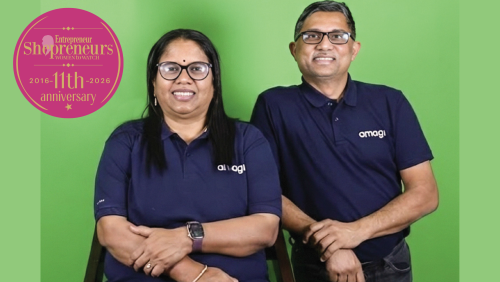
For Amagi’s co-founder and CTO, Srividhya Srinivasan, the entrepreneurial path has been defined by both successes and setbacks. “Our entrepreneurial journey has been marked by a series of defining highs and deeply testing moments, both as business partners and as a couple,” she added, reflecting on the experience of starting a business with her spouse.
“One of the most rewarding highs has been building Amagi into a global SaaS platform that distributes and monetizes video content at massive scale and reaches audiences across the world,” she added. The changing media landscape also required the company to evolve constantly. “It required fundamental strategic and operational reinvention to pivot from traditional, targeted TV advertising to cloud-based broadcasting, and later to streaming, FAST, and CTV,” Srinivasan added. Adaptability has continued to be essential to her journey. “In the end, ongoing reinvention has been both our greatest strength and our biggest challenge.”
Shreya Mishra, CEO and Co-founder of SolarSquare, highlights how rooftop solar is transforming energy consumption in the renewable energy market. She explained, “Energy has traditionally been an infrastructure business dominated by massive power plants and large-scale operations. Rooftop solar has changed that. Energy is now private and personal, more like a consumer durable or a home upgrade.”
Reflecting on the mindset required for entrepreneurship, Mishra stated, “Entrepreneurship is a self-belief sport. Most of the battles are in the mind.” She believes the most fulfilling aspect of building a company is witnessing its long-term impact. “The most rewarding part of this journey is seeing the compounding impact of the business, the growth, customer experience, and value that emerge from the brand and systems we’ve built over the years.”
For Nikita Kumawat, Co-founder and Executive Director of Brandworks Technologies, working in a technology and manufacturing-heavy sector often meant challenging preconceived notions. “As a woman co-founder in a technology and manufacturing-heavy sector, credibility had to be proven repeatedly,” she said.
She also highlighted the importance of maintaining strong founder relationships. “Disagreements are unavoidable, especially during stressful stages,” she said. “Learning how to disagree constructively without letting ego take over has helped us keep conversations centred on what’s best for the business.”
For Dr Sonam Kothari, CEO and Co-founder of Butterfly Learnings, building a company in developmental and behavioural health requires patience and persistence. She explained, “Developmental and behavioural health is still often viewed as secondary to academics, and shifting that mindset requires patience and persistence.”
The impact of this work often appears in simple moments. “The most rewarding moments are often the quiet ones, when a child surprises themselves, or when a parent says, ‘I finally understand my child better.'”
Meanwhile, Naina Parekh, Co-founder of EUME, believes entrepreneurship is about combining creativity with leadership. Reflecting on her journey, she mentioned, “Building EUME has given me the opportunity to lead with vision, creativity, and strategic clarity across every aspect of the business.”
A defining moment for the company came when customers began associating the brand with a larger perspective. “EUME began to be recognised not just as a luggage brand, but as a point of view,” she explained.
For Rachana Gupta, Co-founder of Gynoveda, entrepreneurship meant taking a bold step with her partner. She recalled, “We started Gynoveda at age 44, a time when people usually want to keep it steady with least unpredictability.” Despite the risks, they chose to rely on their strengths. “We chose to play to our strengths rather than play to the gallery,” she said.
These voices show how women entrepreneurs across sectors are building businesses with resilience and purpose. Their journeys reflect the spirit of International Women’s Day.
Every year, International Women’s Day serves as a time to honor the achievements of women who are reshaping sectors, founding businesses, and making an impact through determination and resilience. Across sectors—from technology and energy to healthcare and consumer brands—women entrepreneurs are redefining leadership and proving that innovation and empathy can go hand in hand. Their journeys reflect not only professional milestones but also the challenges, pivots, and decisions that define entrepreneurship.
For Amagi’s co-founder and CTO, Srividhya Srinivasan, the entrepreneurial path has been defined by both successes and setbacks. “Our entrepreneurial journey has been marked by a series of defining highs and deeply testing moments, both as business partners and as a couple,” she added, reflecting on the experience of starting a business with her spouse.
“One of the most rewarding highs has been building Amagi into a global SaaS platform that distributes and monetizes video content at massive scale and reaches audiences across the world,” she added. The changing media landscape also required the company to evolve constantly. “It required fundamental strategic and operational reinvention to pivot from traditional, targeted TV advertising to cloud-based broadcasting, and later to streaming, FAST, and CTV,” Srinivasan added. Adaptability has continued to be essential to her journey. “In the end, ongoing reinvention has been both our greatest strength and our biggest challenge.”