In 2024, Bain & Company's India Venture Capital Report finds that CVCs stepped up meaningfully: their deal volumes increased approximately 1.8 times versus 2023, and their share of India's overall VC deal volume rose to 20 per cent, up from 16 per cent in 2023.
Insights captured from nearly 100 deeptech founders in India revealed that over 53 per cent of the founders maintain that funding in the sector remains difficult to access, while 44 per cent found it reasonably available. Only 3 per cent of the study group said that the funds were abundantly available.
The company said in a release that the funding will be utilized towards R&D, accelerate product innovation, and strengthen manufacturing capacity, with an aim to build deeper market penetration through its direct-to-consumer (D2C) online presence.
India's private capital markets have witnessed a shifting landscape in 2025, with both venture capital (VC) and private equity (PE) showing diverging momentum compared to the same period last year. Data from January to August 19, 2025, from Tracxn highlights both cautious deployment and sectoral rebalancing across the ecosystem.
This week's deals highlight investor appetite for health savings platforms, instant groceries, luxury retail, AI storytelling, and rapid home service delivery.
Approved in principle earlier this June, SEBI has cleared a framework to let Cat-I/II AIFs launch a Co-Investment scheme (CIV) inside the AIF structure, instead of using a separate portfolio management service (PMS), available to accredited investors in that AIF. Each co-investment will be a separate CIV scheme with some relaxed requirements.
India's private equity (PE) and venture capital (VC) investment landscape in 2025 reflects a market navigating both macroeconomic headwinds and sectoral realignments: In the first half of the year, PE/VC investments totaled USD 26.4 billion across 593 deals, according to the latest data from the EY-IVCA Mid-Year Report.
In H1 2025 alone, there were 73 M&A deals, up from 54 in H1 2024. Notable transactions include Magma General Insurance's USD 516M sale to DS Group/Patanjali and HUL's USD 350M acquisition of Minimalist.
Even amid cautious global capital flows, Indian startups attracted diversified funding in CY24, with investors showing increasing conviction in DeepTech, ClimateTech, and AI-enabled solutions.
As venture funding tightens, founders are increasingly tapping grants, venture debt, and revenue-based financing to extend their runway without giving up ownership
As capital access tightens amid rising interest rates, this financing shift serves as both protection and a catalyst for India's entrepreneurial landscape
In India, firms are doubling down on tech-led diligence and proprietary data-driven strategies. As AI adoption deepens, it promises to sharpen competitive edges, even as challenges around infrastructure and talent persist.
A homegrown venture capital firm, and at the helm of it, founder and managing partner, Vikram Gupta, whose tech-focused investment thesis is making careful bets in artificial intelligence (AI), healthtech, and other deep tech sectors. The firm's origin is unique: a venture capital fund backed by Indian institutional money and a strong IIT alumni trust.
A tailwind caused by factors such as internet penetration, evolving demographics, and policy changes is among the trends that have enabled the rise of new age consumer companies such as Swiggy, Urban Company, Boldfit, and more, said the report.
India's defence-tech landscape is undergoing a revolution, driven by a mix of policy liberalisation, heightened geopolitical urgency, and an emerging breed of deeptech startups.
Private equity and venture capital (PE/VC) investments in India declined by 53 per cent in May 2025 compared to April 2025 in value terms, according to an EY-IVCA report.
Drawing on lessons from Ola, where funds in the early days dismissed the notion of a 'cab company' as a billion-dollar opportunity, Harsha emphasized that insights as an operator sharpen one's ability to identify potential and empathize deeply.
American VC continues to be a key contributor to this trend, with US-based private equity giants like Blackstone planning a USD 25 billion India PE portfolio over five years, citing the country's stable regulations and immense growth in digital infrastructure.
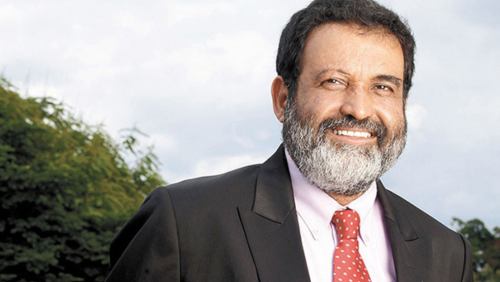
Restrictive regulations of the government have resulted in inadequate domestic capital for the Indian startup ecosystem, said Mohandas Pai, Chairman at Aarin Capital, who called for reforms in policy and better investments to drive the ecosystem in an interview with PTI.
In an ecosystem where product cycles are seemingly short and founder burnout is real, having a partner that has walked the same path can make all the difference, not just in raising another funding round, but in building sustainable businesses.
At a time when Artificial Intelligence (AI) continues to dominate many facets of life, the education technology sector is emerging as one of the more promising ones.
The tech industry veteran brings over 25 years of experience to Bessemer, where he will focus on AI, enterprise-tech and cybersecurity investments in India.