The round saw participation from a mix of family offices and institutional investors including Advenza Global Limited, Atharva Green Ecotech LLP, HDFC Bank, Artha Select Fund, Prathithi Ventures and 100X.VC.
Union Minister Piyush Goyal said the move will strengthen domestic innovators with access to vital resources, helping position India as an emerging global space power.
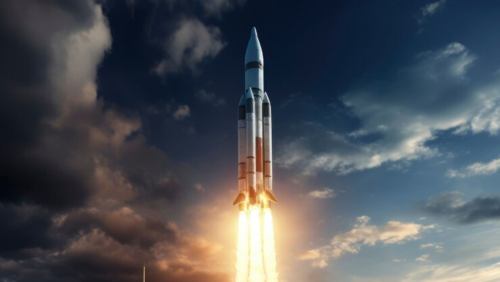
Scheduled for liftoff on July 30, 2025, at 5:40 PM IST, the mission will take off aboard the GSLV-F16 rocket from the Satish Dhawan Space Centre in Sriharikota.
The country is now home to more than 100 space-tech startups, most of which were founded in the last 5 years. The global space technology startup stage experienced a slowdown, while the Indian counterparts enjoyed a healthy upward funding trend.
The fund is set up to disburse it capital over five years, kicking off with an INR 150 crore in 2025-26, followed by an annual INR 250 crore release for the next three years and closing the fund with the remaining INR 100 crore in 2030, with the government aiming to support at least 40 startups across.
Through the announcement, the companies said they would leverage each other's expertise to create better synergies across the Indian and Japanese space ecosystems.
With India's government, private investors, and pioneering startups aligned, the next decade could well see India becoming a formidable player in the trillion-dollar space economy.
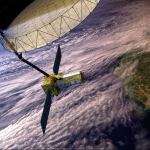
The funds will bolster R&D and manufacturing capabilities, positioning Sisir to launch India's highest-resolution L-band Synthetic Aperture Radar (SAR) satellite by the end of 2026.
Emerging technologies such as deeptech, spacetech, and biotech have made significant startups in India but remain behind the US and China in creating companies that have a significant global impact.
According to the Indian Department of Space, the country's space economy is currently valued at USD 8.4 billion, constituting a 2 per cent share of the global market.
The Series B round saw participation from new investors M&G Catalyst and Glade Brook Capital Partners, who joined existing backers, including Google, Radical Ventures, Lightspeed, and others.
Abhay Egoor, CTO and Co-founder, Dhruva Space points out that recent policy changes have been instrumental in creating a favourable environment for growth.
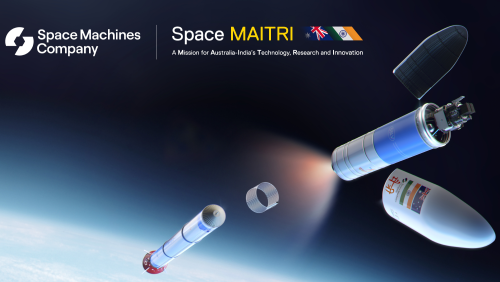
The Space MAITRI (Mission for Australia-India's Technology, Research, and Innovation) mission is slated for 2026, with the Optimus satellite scheduled to launch aboard NewSpace India Limited's (NSIL) Small Satellite Launch Vehicle (SSLV).
The company will deploy funding towards advancing its satellite subsystems by strengthening its talent pool and procuring essential electronic components for integration and comprehensive testing
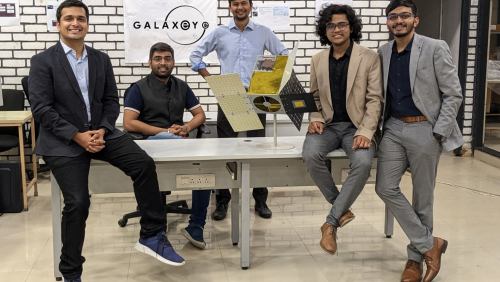
The fund raised will be used to bolster the hiring of top-tier talent and accelerate the launch of the world's first multi-sensor satellite for earth observation
The company is developing a satellite launch vehicle for payload capacity of up to 100 kilograms. It said it plans to use these funds for ground testing, fabrication and team expansion.