From drone-led healthcare logistics to AI-optimised urban transport, a new class of deep-tech startups is emerging to tackle structural inefficiencies.
According to the report, three or more AI-native services companies built in India could scale to over USD 1 billion in revenue within the next five years
To stay safe while browsing the web, more and more people are turning to tools like Guardio, which offer real-time protection designed to keep them safe.
Joby has said that it expects to carry its first passengers later this year in Dubai, with more cities around the world to follow through the Joby-Uber partnership.
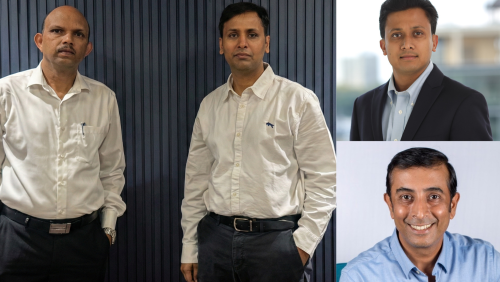
Now the Co-Founder of Scimplify, Sachin represents a new generation of founders tackling industrial and deep-tech challenges with scale, discipline, and global ambition.
According to the firm, it has enabled over USD 1.6 billion in credit across nearly 200 portfolio companies, including 20 unicorns, while evaluating more than 15,000 companies globally.
Jeremy Tang is globally recognized for bringing technical depth to modern marketing, building scalable systems with a founder’s instinct for speed and scale.
This represents a near threefold increase in funding share in just five years, even as overall VC deployment remained broadly stable at around USD 10 billion annually in 2024 and 2025.
These transactions, arriving as India hosts industry convenings and promotes the IndiaAI Mission, reflect both investor conviction and strategic positioning in a capital-intensive segment historically dominated by global hyperscalers.
According to the announcement, the fund, to be carried by Qualcomm Ventures, the company’s global investment arm, will support startups at all growth stages.
The capital will back AI, defence tech, healthcare, industrials, and fintech, reinforcing the firm’s deepening India presence, marking one of the largest VC bets in the country.
The India AI Impact Summit 2026 concluded another day of landmark announcements, important investment pledges, and strategic global collaborations that signal India’s accelerating rise as a strategic hub for artificial intelligence.
Japan’s push to deepen defence cooperation with India reflects a quiet recalibration in Indo-Pacific strategy, writes Srikanth Kondapalli, Professor of Chinese Studies at Jawaharlal Nehru University.
Late-stage funding recorded a slight decline compared to 2024, but remained significantly higher than 2023 levels, as seed and early-stage investments declined compared to previous years.
The PMS, which is branded as ‘InvestValue India Winners’, will invest across market capitalisations, with a focus on companies expected to benefit from structural shifts in the economy, such as formalisation, rising consumption, manufacturing growth, and digital transformation.