From Access to Accuracy: How Digital Health is Reshaping Patient Care in India
India’s digital health sector is growing rapidly, with AI, diagnostics, and data-driven models improving access, accuracy, and efficiency, while addressing gaps in infrastructure, affordability, and patient-centric care delivery.
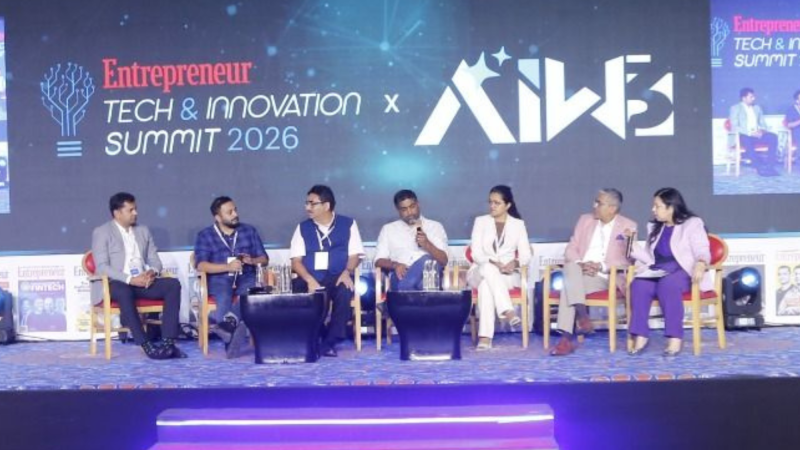
[L-R] Rahul Agarwal (Healthquad), Dr Anand Sivaraman (Remidio), Dr Chandrasekhar Bhaskaran Nair (Molbio Diagnostics), Kiran Kalakuntala (ekincare), Aridni Shah (mmunitoAI), Puneet Vijay Pantane (4baseCare), & Punita Kapoor (Entrepreneur India)
Opinions expressed by Entrepreneur contributors are their own.
You're reading Entrepreneur India, an international franchise of Entrepreneur Media.
India’s digital health sector is really taking off, with projections indicating it could surpass USD 37 billion by 2030. Reports from NITI Aayog and other public health sources reveal that around 65 percent of the population still struggles to access quality healthcare, particularly in rural areas.
At the Tech & Innovation Summit 2026 in Bengaluru, a panel discussion titled “Digital Health: The Future of Patient-Centric Care,” led by Punita Kapoor, Managing Editor of Entrepreneur India, explored how technology is helping to close the gaps in healthcare.
A key concern raised during the discussion was the continued reliance on non-diagnostic treatment methods. Dr Chandrasekhar Bhaskaran Nair, Executive Director and CTO, Molbio Diagnostics, noted, “Healthcare in emerging markets still relies heavily on presumptive treatment rather than diagnostic-led care, which directly impacts recovery outcomes and creates a larger burden on society.”
Dr Nair added, “The real transformation must start at the primary care level, where access to reliable, point-of-care diagnostics can generate actionable data early and improve treatment pathways.”
Technology, particularly AI, was identified as a key enabler of this shift. Dr Anand Sivaraman, CEO and Founding Director, Remidio, said, “AI for access is about bringing early diagnosis to regions where specialists are unavailable, ensuring patients are identified and treated before conditions become severe.”
He further highlighted how non-invasive methods are opening new frontiers in diagnosis. “We see the eye as a window to overall health, helping detect systemic conditions like cardiovascular and kidney diseases through ocular biomarkers,” he explained.
Rahul Agarwal, Partner and and Investment Committee member at HealthQuad, pointed out, “It’s important to look beyond treatment expenses and consider systemic costs like infrastructure and access, which significantly impact overall healthcare delivery.”
He added that traditional models have limitations in scaling. “Brick-and-mortar healthcare systems are capital-intensive and struggle to scale beyond urban centers, creating gaps in accessibility across regions,” Agarwal said.
As digital health expands, data is becoming central to decision-making. However, fragmentation continues to be a major hurdle. Kiran Kalakuntala, Founder and CEO, ekincare, observed, “Despite having thousands of diagnostic centers and hospitals, healthcare data in India remains siloed and lacks standardisation across the ecosystem.”
“Without standardized data, even the most advanced AI systems fail to deliver meaningful outcomes—it ultimately becomes a case of garbage in, garbage out,” he added.
Meanwhile, early detection and preventive care emerged as recurring themes. Dr. Sivaraman noted, “A large number of patients remain unaware of their conditions until it is too late, which is where AI-enabled screening at the last mile becomes critical.”
From a clinical standpoint, improving treatment accuracy is equally important. Puneet Vijay Pantane, Chief Digital Officer, 4baseCare, said, “Healthcare often relies on trial-and-error treatment, which increases both costs and the burden on patients.”
He highlighted how emerging technologies are changing this approach. “Genomics and AI can enable early diagnosis and guide clinicians toward the most effective treatment pathways from the beginning,” Pantane said.
On the innovation front, deep-tech and personalised medicine are gaining momentum. Aridni Shah, Co-founder and CEO, ImmunitoAI, stated, “In areas like cancer and autoimmune diseases, accessibility and personalisation remain major challenges, with advanced therapies often out of reach for most patients.”
She emphasised the role of AI in drug discovery. “AI-driven platforms can design targeted therapies, helping move toward personalised medicine where treatments are tailored to individual patient profiles,” Shah added.
The panel also discussed how AI is improving efficiency within healthcare systems. Dr Sivaraman said, “AI also supports clinicians by helping them navigate complex datasets, improving decision-making and enabling more standardised and accurate outcomes.”
Similarly, Pantane pointed, “Collaboration between governments, healthcare providers, and technology companies is essential to build scalable and impactful healthcare solutions.”
From an investment lens, the shift toward outcome-driven care is becoming more visible. Agarwal said, “Healthcare is gradually shifting from episodic care to outcome-based models, where technology plays a central role in improving efficiency and patient outcomes.”
India’s policy initiatives are also supporting this transformation. Programmes like the Ayushman Bharat Digital Mission (ABDM), along with platforms such as eSanjeevani, U-WIN, and Aarogya Setu, are building a digital backbone for healthcare delivery. These initiatives are leveraging AI and connectivity to improve access and affordability across the country.
Kalakuntala noted, “To unlock the full potential of digital health, India must establish a standardised framework for data exchange that enables accurate predictions and personalised care.”
Looking ahead, panelists agreed that innovation must remain patient-focused. Dr Nair concluded, “With the right data in place, AI can enable predictive care models, helping shift the focus from treating illness to ensuring long-term wellness.”
As India’s healthcare ecosystem evolves, the integration of AI, diagnostics, and digital infrastructure is expected to play a defining role in building a more accessible, efficient, and patient-centric system.
India’s digital health sector is really taking off, with projections indicating it could surpass USD 37 billion by 2030. Reports from NITI Aayog and other public health sources reveal that around 65 percent of the population still struggles to access quality healthcare, particularly in rural areas.
At the Tech & Innovation Summit 2026 in Bengaluru, a panel discussion titled “Digital Health: The Future of Patient-Centric Care,” led by Punita Kapoor, Managing Editor of Entrepreneur India, explored how technology is helping to close the gaps in healthcare.
A key concern raised during the discussion was the continued reliance on non-diagnostic treatment methods. Dr Chandrasekhar Bhaskaran Nair, Executive Director and CTO, Molbio Diagnostics, noted, “Healthcare in emerging markets still relies heavily on presumptive treatment rather than diagnostic-led care, which directly impacts recovery outcomes and creates a larger burden on society.”