This Trust’s Mission to Unlock Human Potential Across Rural India Through Education and Generational Opportunity
Vineyard India Compassion Trust is transforming rural communities through education, creating long-term opportunities, stronger livelihoods, and generational change.
Opinions expressed by Entrepreneur contributors are their own.
You're reading Entrepreneur India, an international franchise of Entrepreneur Media.
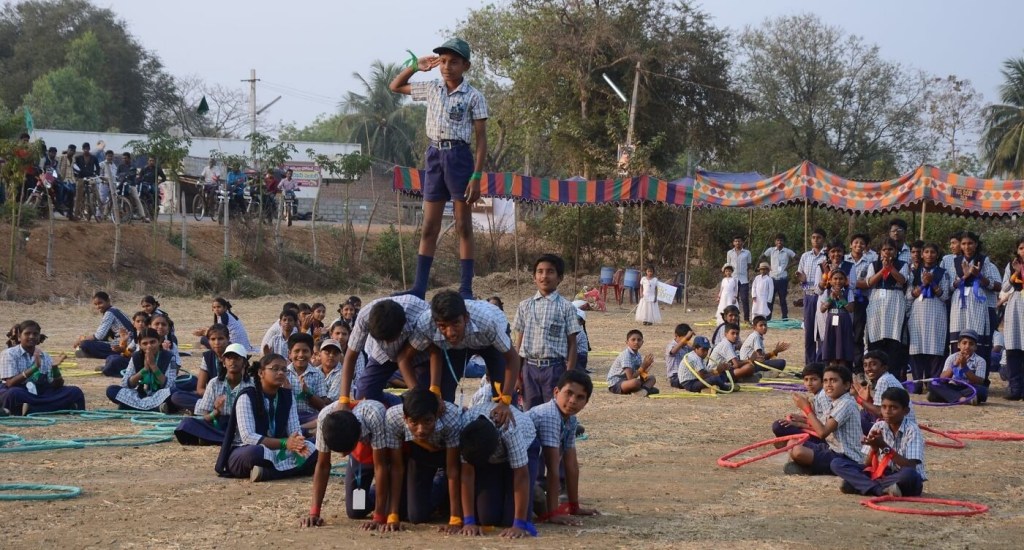
Vineyard India Compassion Trust operates with a clear objective to expand opportunity within rural communities by addressing one of the most persistent barriers to long-term progress, access to quality education. Through its work, the organization focuses on breaking generational cycles where limited literacy and restricted exposure often define what individuals believe is possible for their lives.
According to co-founder Tim Wilbur, the challenge is not a lack of capability but a lack of access. He explains that many children in rural areas grow up following the same path as previous generations, often shaped by low-wage agricultural work and limited formal schooling. “These children are bright, eager, and hungry to learn,” he says. “What they need is the opportunity to discover what they are capable of.”
The Trust’s core initiative, the New Song Community School, was established to address that gap by providing structured, high-quality education within a supportive environment. From Wilbur’s perspective, education serves as a catalyst for expanding both individual ambition and economic mobility. When children are equipped with literacy, language skills, and critical thinking, they begin to see options beyond what their immediate surroundings have historically offered.
Over more than two decades, the impact of this approach has become increasingly visible. Wilbur reflects on his early visits to the community, where families lived in basic mud structures, and education was not widely accessible. “I was welcomed into homes that were simple and modest,” he says. “Today, I am invited back into those same families’ homes, and they are entirely different. That change reflects what education can unlock.”
He notes that these shifts are not isolated improvements but indicators of broader transformation. As students progress through school and pursue higher education, they often secure employment opportunities beyond their local environment. Some have entered fields such as law and information technology, while others have worked internationally. These outcomes create ripple effects within families and communities, where increased income and exposure contribute to improved living standards and expanded expectations. Wilbur highlights that one of the most meaningful outcomes has been the sense of responsibility students carry forward. He points to the examples of former students who have supported teachers or contributed financially to the school, reinforcing a cycle of giving back. In his view, this reflects an emphasis on character alongside academic achievement. “We want students to succeed, but we also want them to remember where they came from and help others along the way,” he says.

The organization’s model is intentionally inclusive, welcoming students from diverse religious and social backgrounds while maintaining a strong focus on English-language education. Wilbur notes that language plays a critical role in connecting students to broader opportunities, particularly in a globalized workforce. At the same time, the school emphasizes consistency in teaching standards, ensuring that students receive an education that aligns with their potential rather than their circumstances.
Beyond individual outcomes, the broader societal implications are also significant. According to Wilbur, expanding access to education contributes to stronger workforce participation and more informed communities. “As individuals gain knowledge and confidence, they are better positioned to engage with economic systems and civic processes, creating long-term benefits that extend beyond a single generation,” he notes.
According to Wilbur, interest in replicating this model has grown over time, with communities in other regions expressing a desire to establish similar initiatives. He acknowledges the potential for expansion but emphasizes the importance of sustainability. “We are often asked to start schools in other places,” he says. “The reality is that meaningful impact requires resources, infrastructure, and committed people on the ground.”
While the organization remains focused on its current community, there is a recognition that the underlying approach could be applied more widely. From Wilbur’s perspective, the experience in rural India demonstrates what is possible when education is treated as a long-term investment rather than a short-term intervention.
Ultimately, the work of Vineyard India Compassion Trust reflects a broader principle that access to education can reshape not only individual trajectories but entire communities. Wilbur frames the transformation both as practical and deeply personal. “These children have done remarkable things with what they have been given,” he says. “That is what makes this work so meaningful, seeing potential realized in ways that change lives for generations.”
Vineyard India Compassion Trust operates with a clear objective to expand opportunity within rural communities by addressing one of the most persistent barriers to long-term progress, access to quality education. Through its work, the organization focuses on breaking generational cycles where limited literacy and restricted exposure often define what individuals believe is possible for their lives.
According to co-founder Tim Wilbur, the challenge is not a lack of capability but a lack of access. He explains that many children in rural areas grow up following the same path as previous generations, often shaped by low-wage agricultural work and limited formal schooling. “These children are bright, eager, and hungry to learn,” he says. “What they need is the opportunity to discover what they are capable of.”
The Trust’s core initiative, the New Song Community School, was established to address that gap by providing structured, high-quality education within a supportive environment. From Wilbur’s perspective, education serves as a catalyst for expanding both individual ambition and economic mobility. When children are equipped with literacy, language skills, and critical thinking, they begin to see options beyond what their immediate surroundings have historically offered.
Focuses on infrastructure, logistics, and the business implications of India's urban expansion.