The Revolutionist
Rajashree Birla is a prominent philanthropist driving impactful CSR across education, healthcare, and rural communities in India.
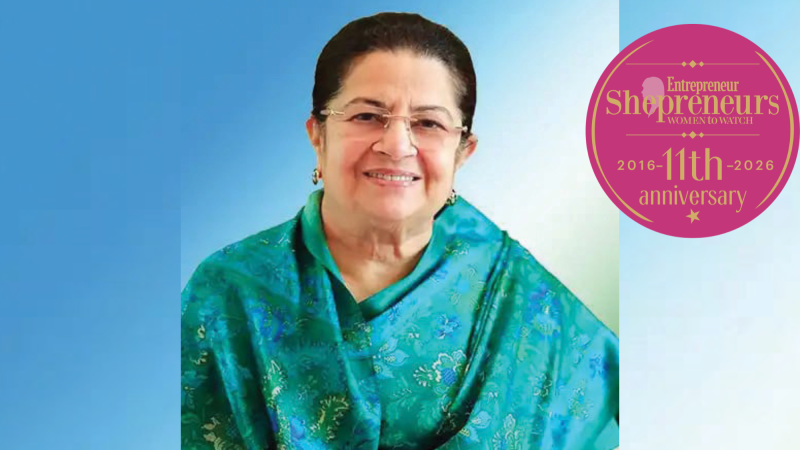
Rajashree Birla, Chairperson, Aditya Birla Centre For Community Initiatives & Rural Development
You're reading Entrepreneur India, an international franchise of Entrepreneur Media.
For decades, Rajashree Birla has been synonymous with large-scale philanthropy—education, healthcare, and women’s empowerment. As chairperson of the Aditya Birla Centre for Community Initiatives and Rural Development and a board member of the Aditya Birla Group, she oversees community work that spans hundreds of villages across India.
But in a sunlit store lined with handwoven silks and intricate textiles, Birla’s latest intervention tells a different story—one about reviving memory, restoring dignity, and redefining what corporate social responsibility can look like.
The initiative is called Kosala. And it began, unexpectedly, with coal.
In 2021, the group acquired two coal mines in Chhattisgarh. As with every new industrial footprint, the first question internally was familiar: what can we do for the communities around us?
For Birla, CSR has never meant writing cheques alone. It has meant embedding opportunity into ecosystems. Schools, hospitals, and healthcare initiatives already existed in the group’s portfolio. But she has long believed that India’s true distinctiveness lies in its art and cultural heritage.
So when the team surveyed the mining districts, they found something fragile yet extraordinary—an ancient weaving tradition known locally as Kosar (Khosa) silk, practiced largely by the Devangan community. The craft was fading. It was, in many ways, a textbook case of heritage at risk.
Birla saw possibility.
Kosala was established in 2021 as a not-for-profit entity, independently managed, with operational overhead supported by Hindalco Industries. When the team entered the cluster, they identified structural bottlenecks.
The solution was comprehensive. A design team was embedded to work with artisans—reviving archival patterns sourced from local palaces and oral histories, reinterpreting them for contemporary markets. Women were trained and certified in silk reeling, allowing them to spin yarn from cocoons at home.
Dyeing units, tailoring support, and embellishment processes were integrated into a cohesive ecosystem. For the first time, the value chain was consolidated—and the middlemen removed.
Artisans no longer simply wove fabric without knowing its fate. They became part of a finished product journey that included saris, dupattas, jackets, laptop sleeves, accessories, and even furniture accents.
Today, Kosala works with approximately 700 community members across six villages, within a broader Devangan population of nearly 2,500 families.
In many corporations, CSR presentations focus on scale, spending, or brand amplification. Inside the Birla ecosystem, the question is simpler: what is the impact?
Wages in the Kosala cluster have increased by 63% in just two years. Average monthly incomes for women artisans have risen meaningfully, with some earning up to INR 15,000 per month—an increase Birla tracks personally.
“She monitors nearly 700 villages,” one executive notes. “Her reviews are detailed. It’s about outcomes, not headlines.”
The philosophy is consistent: CSR must create sustainable livelihoods, not permanent dependency.
When asked how she views the initiative’s impact on women, Birla’s response is direct: “The women are enthused. They feel happy learning new sustainable livelihood skills.”
For decades, Rajashree Birla has been synonymous with large-scale philanthropy—education, healthcare, and women’s empowerment. As chairperson of the Aditya Birla Centre for Community Initiatives and Rural Development and a board member of the Aditya Birla Group, she oversees community work that spans hundreds of villages across India.
But in a sunlit store lined with handwoven silks and intricate textiles, Birla’s latest intervention tells a different story—one about reviving memory, restoring dignity, and redefining what corporate social responsibility can look like.
The initiative is called Kosala. And it began, unexpectedly, with coal.

Punita Sabharwal • Managing Editor, Entrepreneur India
Entrepreneur Staff
Punita Sabharwal is the Managing Editor of Entrepreneur India.