How this Beer Brand Became a Favourite of India’s Youth
Today, the venture is backed by Sequoia Capital and Angel investors, including Snapdeal Co-founders, Kunal Bahl and Rohit Bansal, and Zomato’s Deepinder Goyal.
Entrepreneur India
You're reading Entrepreneur India, an international franchise of Entrepreneur Media.
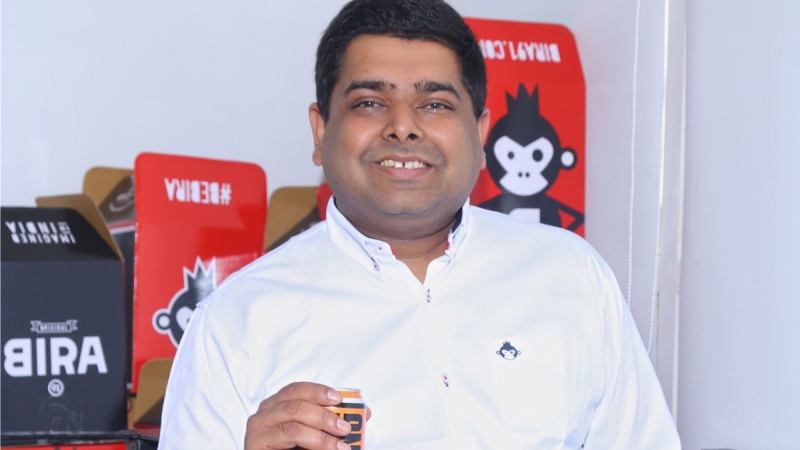
After graduating from college in 2002, Ankur Jain set up his first business in 2003. “I was fortunate enough to find a buyer. I sold it and came back to India four years later,” he said. In 2007, he took up a job at Reliance Retail and spearheaded the roll out of Reliance Fresh. But entrepreneur by design, within two years, he launched his beer distribution company, which was bootstrapped at the time.
Sharing on the same, he says, “We started importing 20-30 variants of beer which were not there in India. The idea was to figure out which variant is preferred by the Indian consumers. Eventually, we understood that younger generation likes the lighter flavors and wheat beer. As the prices of the imported beers are on the higher sides, we were only selling about 200 – 300 bottles per variant each month.” He found the gap in the market to fight the big and established brands. After raising funding in 2014, he launched his own range of craft beer under the name Bira.
On the brand becoming an instant hit with the youth owing to its branding and taste, Jain says, “Owing to the fact that we are a young team and not a legacy of a brand of 200 or 300 years, we had a blank slate and it acted as an advantage for us as we could do what we wanted to. We chose to do something which was unapologetic and what we felt was right. And that helped us click!” This also meant that while going from point A to point B they made mistakes, learnt, started again and eventually got there. Over the course of time, it set up two breweries, one in Indore and the other in Nagpur.
Today, the venture is backed by Sequoia Capital and Angel investors, including Snapdeal Co-founders, Kunal Bahl and Rohit Bansal, and Zomato’s Deepinder Goyal. Bira has also partnered with Zomato to help customers find out where all Bira is available. Though everyday is a new learning, Ankur still counts the days when they were out of stock for about a quarter and didn’t anticipate the demand well. He shares, “That was our first summer and we were transitioning to production in India and some licenses got delayed, so we had a lot of catching up to do.”
Though the last quarter has seen a good growth with revenue, as per him, “For gross revenues, we are at about Rs 23-24 crore per month.” This quarter, Ankur is aiming to distribute Bira in New York, New Jersey and Boston. Apart from India and US, the other focus market is Asian countries.
(This article was first published in the August issue of Entrepreneur Magazine. To subscribe, click here)
After graduating from college in 2002, Ankur Jain set up his first business in 2003. “I was fortunate enough to find a buyer. I sold it and came back to India four years later,” he said. In 2007, he took up a job at Reliance Retail and spearheaded the roll out of Reliance Fresh. But entrepreneur by design, within two years, he launched his beer distribution company, which was bootstrapped at the time.
Sharing on the same, he says, “We started importing 20-30 variants of beer which were not there in India. The idea was to figure out which variant is preferred by the Indian consumers. Eventually, we understood that younger generation likes the lighter flavors and wheat beer. As the prices of the imported beers are on the higher sides, we were only selling about 200 – 300 bottles per variant each month.” He found the gap in the market to fight the big and established brands. After raising funding in 2014, he launched his own range of craft beer under the name Bira.
On the brand becoming an instant hit with the youth owing to its branding and taste, Jain says, “Owing to the fact that we are a young team and not a legacy of a brand of 200 or 300 years, we had a blank slate and it acted as an advantage for us as we could do what we wanted to. We chose to do something which was unapologetic and what we felt was right. And that helped us click!” This also meant that while going from point A to point B they made mistakes, learnt, started again and eventually got there. Over the course of time, it set up two breweries, one in Indore and the other in Nagpur.

Punita Sabharwal • Managing Editor, Entrepreneur India
Entrepreneur Staff
Punita Sabharwal is the Managing Editor of Entrepreneur India.