Why India’s Next Economic Leap Depends on Smarter Venture Capital and Active Stewardship
Suchindra Kanakanapalya, General Partner at Eagle10 Ventures, views this moment as a critical transition in India’s private markets, where the next phase of value creation will depend less on the volume of capital deployed and more on how effectively that capital is translated into long-term enterprise-building capacity.
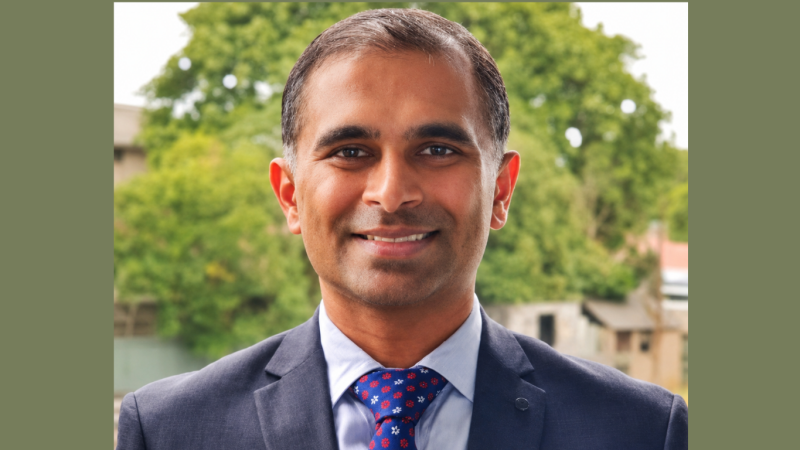
Suchindra Kanakanapalya
Opinions expressed by Entrepreneur contributors are their own.
You're reading Entrepreneur India, an international franchise of Entrepreneur Media.
The financial ecosystem in India is entering an inflection point. Venture capital, startup formation, and institutional capital flows continue to expand rapidly, supported by strong early-stage innovation and a deepening pool of founders across technology and services sectors. This expansion reflects a broader maturation of India’s innovation landscape, particularly in deeptech, AI, and digitally enabled business models. However, ecosystem outcomes are increasingly shaped by structural constraints beyond capital availability, including the depth of scaling infrastructure, concentration of funding in major hubs, and the uneven transition of startups from early traction to sustainable scale.
Suchindra Kanakanapalya, General Partner at Eagle10 Ventures, views this moment as a critical transition in India’s private markets, where the next phase of value creation will depend less on the volume of capital deployed and more on how effectively that capital is translated into long-term enterprise-building capacity.
“India is at an inflection point where there is sufficient interest in early-stage investments,” Kanakanapalya says. “But the real gap is what happens after that, when companies need to scale into profitable, sustainable businesses.”
He observes that the early-stage ecosystem in India is relatively well supported, with incubators, angel networks, and institutional participation driving strong formation rates. However, this momentum does not always translate into durable scale. According to him, the structural gap emerges at the Series A and expansion stages, where companies require larger capital commitments, deeper operational support, and more experienced strategic guidance.
“There is not sufficient, sizable investor presence at the stage where companies actually need to scale and multiply,” he explains. “That is the point where businesses either become globally competitive or plateau.”
Kanakanapalya frames this challenge within the broader context of India’s economic structure.
With a population of over 1.4 billion and a median age under 30, India is undergoing a significant demographic transition, with a large and expanding working-age population that has been shown to contribute meaningfully to economic growth. This positions India among the most structurally youthful large economies in the world in terms of its demographic profile. At the same time, India’s economic structure is characterized by pronounced heterogeneity in income and consumption patterns, with clear differences in purchasing power and behavior across population segments, reflecting a highly stratified and unevenly distributed market economy.
“India is not a single market,” Kanakanapalya says. “It is multiple economies operating in parallel, each with different expectations, different price points, and different business models.”
This fragmentation, he argues, creates both opportunity and complexity for founders. Companies must design for scale across heterogeneous customer bases while maintaining efficiency and clarity in execution. In his view, capital providers must understand this complexity deeply rather than apply uniform investment logic across sectors and stages.
He believes one of the most persistent misconceptions in venture capital is the assumption that funding alone determines outcomes. In reality, he notes, many startups struggle not at the point of ideation or early traction, but during scaling phases where execution becomes multidimensional and capital requirements increase significantly.
“What is happening is there is sufficient innovation and incubation,” he says. “But there is not enough sustained investor involvement when companies need to move from early traction to real scale.”
Kanakanapalya believes he has developed an investment approach that directly addresses this gap. He calls it a ‘hands-on-shoulder advisory’ model, where venture capital extends beyond financial backing into active operational and strategic engagement.
“Hands-on shoulder advisory means I do not just invest and observe,” he says. “I work closely with the company, understand where they are, and bring in the right expertise to help them move faster and with clarity.”
This model relies on a curated network of senior operators, legal experts, CFOs, and executives with experience in large-scale transactions and venture building. The objective is to provide founders with immediate access to capabilities that would otherwise take years to assemble independently.
“I bring people, technology, and validation into the same room,” he explains. “If there is alignment, founders can compress years of learning into months of execution.”
Kanakanapalya also places strong emphasis on governance as a core pillar of venture investing rather than an administrative requirement. His certification as an independent director under Indian regulatory frameworks enables him to serve on boards of listed and unlisted companies, reinforcing a governance-first approach to company building.
“Founders need investors who share principles, belief systems, and accountability frameworks,” he says. “Governance is not something that comes later. It has to evolve with the company from the beginning.”
He believes this becomes especially important as companies prepare for institutional scale, where ESG standards, board structures, and decision accountability become critical to long-term sustainability.
Artificial intelligence, in his view, represents one of the most significant opportunities in India’s next innovation cycle, particularly across deep tech and industrial applications. However, he cautions against viewing it as a trend rather than a structural shift.
“There is a lot to be done in deep tech and climate tech,” he says. “These are high-value sectors that can elevate engineering capability and fundamentally change the structure of industries.”
He draws parallels with economies such as South Korea, Japan, and Taiwan, which built global competitiveness through sustained investment in advanced technology ecosystems. India, he argues, is positioned to follow a similar path if capital is deployed with long-term conviction rather than short-term cycles.
He also highlights a broader systemic challenge in how domestic capital is allocated. While India has a strong base of savings and mutual fund participation, relatively little of this capital flows into breakthrough innovation.
“India invests heavily in traditional instruments,” he says. “But very little is directed toward innovation that can redefine industries.”
For Kanakanapalya, the next phase of India’s economic evolution will depend on aligning capital, capability, and conviction. He believes venture capital firms will need to evolve from financial intermediaries into long-term partners in company building, capable of supporting founders through complexity rather than only during entry points.
“The future of venture capital is not just about funding companies,” he says. “It is about standing with them through every stage of building something that can endure and compete globally.”
In a rapidly maturing ecosystem, he believes the differentiator will no longer be access to capital, but the quality of partnership behind it. “Capital is abundant,” Kanakanapalya says. “What is scarce is the commitment to build companies that last.”
The financial ecosystem in India is entering an inflection point. Venture capital, startup formation, and institutional capital flows continue to expand rapidly, supported by strong early-stage innovation and a deepening pool of founders across technology and services sectors. This expansion reflects a broader maturation of India’s innovation landscape, particularly in deeptech, AI, and digitally enabled business models. However, ecosystem outcomes are increasingly shaped by structural constraints beyond capital availability, including the depth of scaling infrastructure, concentration of funding in major hubs, and the uneven transition of startups from early traction to sustainable scale.
Suchindra Kanakanapalya, General Partner at Eagle10 Ventures, views this moment as a critical transition in India’s private markets, where the next phase of value creation will depend less on the volume of capital deployed and more on how effectively that capital is translated into long-term enterprise-building capacity.
“India is at an inflection point where there is sufficient interest in early-stage investments,” Kanakanapalya says. “But the real gap is what happens after that, when companies need to scale into profitable, sustainable businesses.”
Writes on private capital, deal structures, and the strategic thinking behind mid-market investments.