US President Donald Trump Concludes Two-day China Visit With Little Breakthroughs
No major deals on trade were announced during the much-hyped visit.
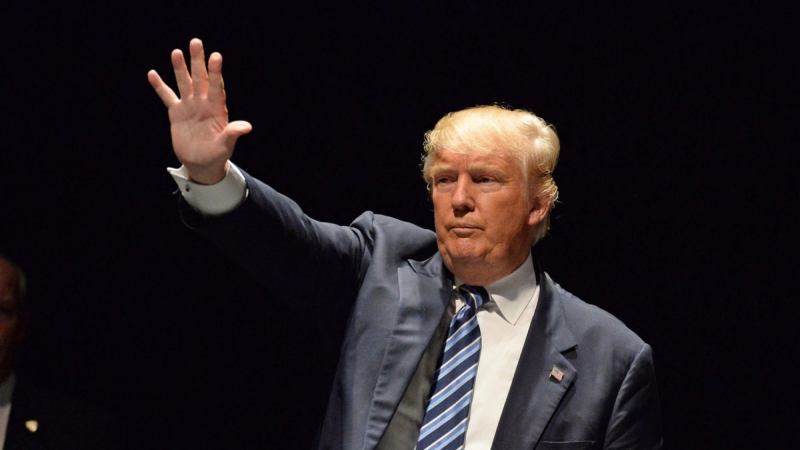
Gino Santa Maria | Shutterstock
You're reading Entrepreneur India, an international franchise of Entrepreneur Media.
The US and China are making fresh attempts to melt ice as the relations between the two nations have remained strained for a while.
On Friday, US President Donald Trump concluded his much-hyped two-day visit to China where he met his Chinese counterpart Xi Jinping to discuss a variety of issues. Though, reports say not much of a breakthrough [read a deal] has come from the trip. It is also important to note that the visit has come at a tumultuous time wherein a prolonged crisis in the Middle East is impacting economies worldwide.
According to reports, Trump said China had promised to purchase US oil, 200 Boeing jets, and some agriculture products, among other things. China, however, has not officially commented on these deals. A Chinese spokesperson told BBC that the two sides had reached “important consensus.”
“The essence of China-U.S. economic and trade relations is mutual benefit and win-win cooperation,” the spokesperson said in another response.
Reports suggest that the US and China did discuss trade but the conversation also hovered around Iran, Taiwan, and “a lot of other things”, according to Trump. They also “settled a lot of different problems that other people wouldn’t have been able to solve”.
As mentioned above, the US and China ties have gone through a tense phase for a while. The two countries were locked in a trade war in the first term of Trump which included several bans on Chinese companies. In the second term, we saw the two nations imposing tariffs on each other.
That said, India must be watching the visit and its outcomes closely. It’s worth noting that the US is seen getting closer to Pakistan lately. Moreover, India’s relationship with China has also undergone a test since the Galwan conflict in 2020.
Despite Trump’s comments on India and its economy, the two countries were able to strike an agreement on trade. The agreement brings a sustained preferential access for Indian exports in the U.S. market valued at over USD 30 trillion. The agreement has tariff rationalisation, zero-duty access across large product categories, enhanced digital and technology cooperation, and a carefully calibrated framework to safeguard India’s farmers, MSMEs and domestic industry.
“With India’s total exports to the United States standing at USD 86.35 billion in 2024, the agreement significantly enhances competitive access across key sectors including textiles, leather, gems and jewellery, agriculture, machinery, home décor, pharmaceuticals, and technology-driven industries,” the Commerce and Industry Ministry had said in a press release.
ALSO READ: Understanding India’s Leverage in the US and EU Deals, Strategic Gains, and More
It is worth noting that India in all likelihood is preparing for the economic toll that is driven by the Iran crisis. This morning, India raised petrol and diesel prices by 3 rupees, marking one of the first impacts of the crisis. Earlier, Prime Minister Narendra Modi had called for various austerity measures to conserve foreign exchange. These measures include halting gold and foreign trips for one year.
ALSO READ: Iran War Strain: India Weighs WFH, Austerity Due to Energy, Economic Toll
“Washington and Beijing struck a landmark trade deal in late 2025 — tariff cuts, supply chain cooperation, critical minerals access. This does not make China and the US friends. The rivalry on tech, Taiwan, and the Indo-Pacific continues. But it does mean India becomes slightly less urgent as a counterweight. India remains strategically valuable — demographics, market size, geography. That doesn’t disappear. But the US is now running a dual track: economic cooperation with China, security partnership with India. India should not assume Washington is fully on its side,” Strategic Affairs & Geopolitical Analyst Muhammad Rehan Rajput tells Entrepreneur India.
According to Sunil Kharbanda, Co-founder and Chief Operating Officer (COO) of Trezix, India is not at immediate risk of an oil shortage, but it is highly exposed to a sharp rise in energy costs if Middle East instability escalates and Russian supplies are disrupted.
The real concern is not just a “bidding war,” but simultaneous pressure on three fronts: Middle East supply disruptions, Reduced access to discounted Russian crude, and China increasing purchases from alternative suppliers, including US oil.
He also noted that India imports more than 80% of its crude oil requirements, making it vulnerable to global price volatility and freight disruptions. Russian crude has become a critical balancing source for India since 2022 because it offered: Discounted pricing, Supply diversification, Lower dependence on traditional Gulf suppliers, and if Russian supplies are cut off, India will likely diversify sourcing toward other markets like Iraq, Saudi Arabia, UAE, United States, Brazil, and West African producers such as Nigeria and Angola.
However, these alternative barrels will: be more expensive, face higher freight and insurance costs, increase competition among global buyers.
“China buying more American oil reduces the availability of flexible global cargoes, especially from the Atlantic Basin, increasing the possibility of aggressive spot-market pricing. Indian refiners are technically capable of processing multiple crude grades, but switching crude sources is operationally and commercially complex due to refinery compatibility, sulphur and yield variations, shipping timelines, insurance and payment risks,” he said.
India’s response will likely involve diversified sourcing strategies, diplomatic balancing across energy partners, strategic petroleum reserve utilization, long-term supply agreements, and closer monitoring of shipping corridors such as Hormuz.
“The biggest risk for India is economic rather than physical supply disruption, characterized by higher import bills, inflationary pressure, rupee depreciation, and increased logistics and manufacturing costs. This situation reinforces that energy security is now deeply linked to supply-chain resilience and global trade strategy, not just commodity procurement. Countries and enterprises with diversified sourcing, real-time trade visibility, stronger logistics planning, and intelligent risk management frameworks will navigate this volatility far more effectively.”
Rajput added: “India cut Russian crude imports under US pressure in late 2025, shifted to Gulf suppliers. Then Iran blocked the Strait of Hormuz. Gulf supplies got disrupted. Crude prices spiked 24% in five days.”
“Now India and China are in a direct bidding war for Russian oil. Saudi Arabia is quietly favouring China due to refinery investments there. India imports 87% of its crude — nearly half transits the Strait of Hormuz. That is a structural vulnerability no diplomacy can fix quickly. The US issued a temporary waiver allowing India to buy Russian oil in March 2026. But that is a short-term patch, not a solution. India must expand its strategic petroleum reserves, stop making energy commitments under diplomatic pressure, and seriously diversify suppliers — US, Africa, Canada — for the long term,” he said.
The US and China are making fresh attempts to melt ice as the relations between the two nations have remained strained for a while.
On Friday, US President Donald Trump concluded his much-hyped two-day visit to China where he met his Chinese counterpart Xi Jinping to discuss a variety of issues. Though, reports say not much of a breakthrough [read a deal] has come from the trip. It is also important to note that the visit has come at a tumultuous time wherein a prolonged crisis in the Middle East is impacting economies worldwide.
According to reports, Trump said China had promised to purchase US oil, 200 Boeing jets, and some agriculture products, among other things. China, however, has not officially commented on these deals. A Chinese spokesperson told BBC that the two sides had reached “important consensus.”

Entrepreneur Staff • Editor
Entrepreneur Staff
For more than 30 years, Entrepreneur has set the course for success for millions of... Read more