Most GCC Leaders Cite Talent Upskilling as Critical to Competitive Advantage: PwC-FICCI Survey
India’s GCCs remain confident about global leadership through 2030, but AI talent gaps and the need for large-scale workforce reskilling remain key challenges.

PWC
You're reading Entrepreneur India, an international franchise of Entrepreneur Media.
Nearly 90% of India’s Global Capability Centre (GCC) leaders are confident about retaining their global leadership position through 2030, but cite talent and skill gaps in AI and sector-specific knowledge as risks to growth, according to a new PwC India-FICCI study. The report, titled “Navigating the Skills Imperative for India’s GCCs in the AI Era”, is based on a survey of 200 senior GCC executives across eight industries.
According to the report, 72% of GCCs need to reskill or upskill more than 40% of their workforce, requiring enterprise-wide programmes rather than incremental ones. Most GCCs currently spend 3-5% of operating budgets on talent development, but 94% believe this must rise to at least 6%, with over a quarter expecting it to exceed 8%.
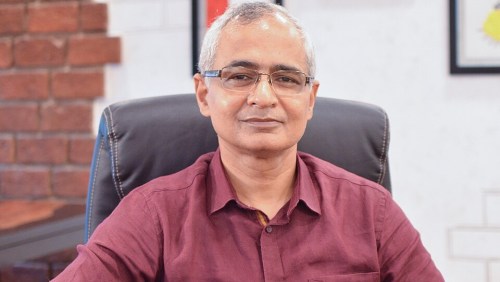
Rajesh Ojha, Partner and Leader – GCC Market Segment, PwC India, said, “GCCs are becoming enterprise nerve centres combining strategic decision-making, digital innovation, and AI-led transformation, and that success will depend on building composite skills that combine AI capabilities with domain knowledge and judgment.”
The report stated that GCCs are shifting from cost-efficient service providers to AI-native intelligence cores, with 86% of leaders expecting AI to bring substantial or transformational change to work by 2030. A mix of frontier AI capabilities and foundational competencies will define competitive advantage.
Talent supply top constraint for GCCs, 62% of leaders cite a lack of professionals combining domain expertise with tech skills as the biggest constraint. Leadership AI literacy stands at just 27% on average, and over 90% of GCCs report that 40% or fewer of their leadership team have sufficient AI literacy for strategic decisions.
Reskilling needs are highest in energy, life sciences, and healthcare, while even lower-need sectors like BFSI, TMT, and manufacturing are near 50%. New hires take an average of 8.69 months to become fully productive. On policy, 57% of leaders want AI and digital modules included in engineering and management curricula, and 51% recommend government co-funding of GCC reskilling programmes.
Nearly 90% of India’s Global Capability Centre (GCC) leaders are confident about retaining their global leadership position through 2030, but cite talent and skill gaps in AI and sector-specific knowledge as risks to growth, according to a new PwC India-FICCI study. The report, titled “Navigating the Skills Imperative for India’s GCCs in the AI Era”, is based on a survey of 200 senior GCC executives across eight industries.
According to the report, 72% of GCCs need to reskill or upskill more than 40% of their workforce, requiring enterprise-wide programmes rather than incremental ones. Most GCCs currently spend 3-5% of operating budgets on talent development, but 94% believe this must rise to at least 6%, with over a quarter expecting it to exceed 8%.
Rajesh Ojha, Partner and Leader – GCC Market Segment, PwC India, said, “GCCs are becoming enterprise nerve centres combining strategic decision-making, digital innovation, and AI-led transformation, and that success will depend on building composite skills that combine AI capabilities with domain knowledge and judgment.”

Entrepreneur Staff • Editor
Entrepreneur Staff
For more than 30 years, Entrepreneur has set the course for success for millions of... Read more