India Investment Forum 2026: From Family Office Capital to Public Markets
Entrepreneur India Investment Forum 2026 examined how founders can choose the right funding path from startup to IPO.
India Investment Forum 2026
You're reading Entrepreneur India, an international franchise of Entrepreneur Media.
As India’s startup ecosystem matures, founders are no longer limited to a single funding path. From family office capital and venture funds to SME IPOs and public markets, entrepreneurs today have more financing options than ever before. But with greater access to capital comes a more important question, which source of capital is right for which stage of growth?
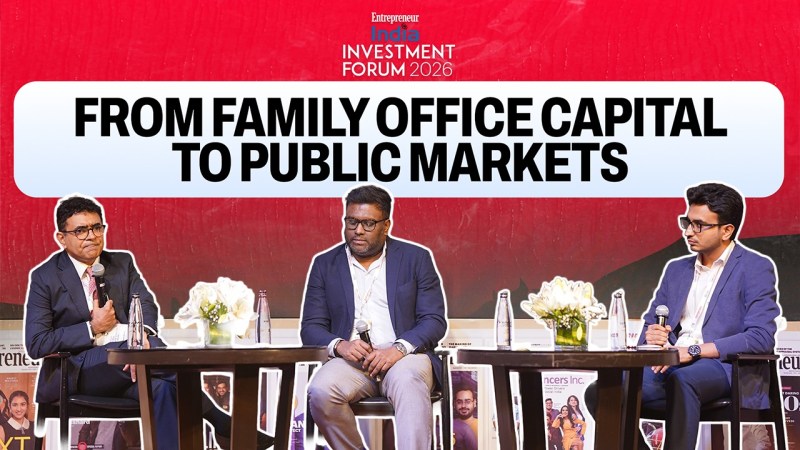
This formed the core of the discussion at Entrepreneur India Investment Forum 2026, held at The Westin Mumbai Garden City, Mumbai, where the panel “From Family Office Capital to Public Markets” explored how family offices are reshaping private investing, whether founders should bootstrap or raise venture capital, and what it takes to build businesses ready for the public markets.
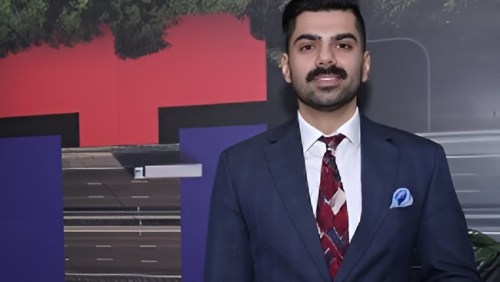
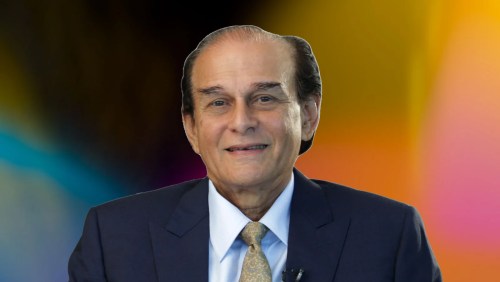
Moderated by Krushant Pandya, Vice President – Investments, Blacksoil, the session featured Akash Hariani, JMD, Motilal Oswal Private Wealth, and Arnab Mitra, Chairman & Managing. Director Liqvd Digital India Limited bringing together both the investor’s and entrepreneur’s perspectives.
Opening the discussion, Arnab says, the biggest catalyst has been India’s own economic transformation. “The biggest driver of this change is that India has changed,” he said, recalling how investment cheque sizes have expanded dramatically over the last two decades alongside a sharp rise in wealth creation across the country. More importantly, the avenues for deploying capital have widened.
“Earlier, the avenues of investments were real estate, listed equities and their own businesses. Today, private companies are driving far more value. By the time they reach the listed markets, a lot of the value creation has already happened,” Akash said, pointing to companies such as Nykaa, Policybazaar and Lenskart as examples that demonstrated the wealth created in private markets.
He added that the rise of next-generation business leaders, greater access to experienced PE and VC fund managers, and the institutionalization of wealth management have collectively made allocations to alternative assets a strategic decision rather than an opportunistic one. “It’s not a cyclical change; it’s a structural change,” he remarked.
Pandya then addressed a question many family offices face today, whether they should invest directly in startups or participate through venture capital and private equity funds. Upon which Akash advised first-time investors to begin with experienced fund managers.
“People only see the winners. Behind every one success, there are 25 companies that have failed,” he said, explaining that sourcing quality deal flow, conducting due diligence, ensuring governance and supporting companies through multiple funding rounds require specialized expertise.
Instead, he suggested that family offices begin as limited partners in established funds and gradually explore co-investment opportunities alongside experienced managers. “If anybody is starting up, start by being an LP and then progress to it,” he said.
Turning to the entrepreneur’s perspective, Pandya asked Arnab Mitra why Liquid Asia consciously chose to remain bootstrapped for over a decade instead of taking the venture capital route before filing for an SME IPO.
“We wanted to build a business that does not require the money before we even accept any money,” he said. While he acknowledged the importance of venture capital in the ecosystem, he believes India still needs more patient investors. “I’m still to see patient money in this market. I’m still to see VCs who don’t have herd mentality and are really patient when it comes to investing in businesses that truly require capital,” he said.
Drawing a comparison with Silicon Valley, Mitra added, “People keep saying India doesn’t have the ability to build the OpenAIs and Googles of the world. I’m saying we don’t have the VCs who can even fund an OpenAI from day one.”
Using the National Stock Exchange’s long wait for liquidity as an example, Pandya said investors who remained patient ultimately witnessed extraordinary wealth creation. “Private investments are now becoming part of a core portfolio,” he said, adding that wealth managers today deliberately allocate a portion of client portfolios to long-duration alternative assets while ensuring the majority remains liquid.
According to him, the rapid increase in wealth creation has also improved investors’ ability to stay invested through longer holding periods.
The discussion then shifted back to founders on whether bootstrapping remains realistic in an AI-driven world where competitors can scale rapidly with venture funding.
Mitra responded that there is no universally correct funding model. “Every model is correct as long as it gives good returns to investors,” he said. However, he offered advice that challenged today’s fundraising culture.
“For the first two to three years, you shouldn’t pick up anybody’s money. Build things the hard way and see whether you genuinely have a business,” he said, arguing that entrepreneurs should first prove their minimum viable product, validate unit economics and learn financial discipline before pursuing external capital.
“Nothing teaches you better than your own money because you’re going to count that more carefully than anybody else’s.”
“Don’t invest because somebody says private markets generate 20 percent returns. Invest into companies where you believe in the founder, believe in the sector and believe it represents the next phase of growth for India,” Akash said, citing the firm’s conviction-led investments in companies such as Zepto, Swiggy and Eternal (formerly Zomato).
As the conversation moved towards public markets, Pandya asked Mitra about Liquid Asia’s decision to pursue an SME IPO after remaining bootstrapped for over 13 years.
“Our business is now ready to become answerable,” he said, adding that public capital comes with accountability and founders must be prepared to deploy investor money solely towards growth.
While describing the IPO process as demanding, he advised founders not to rush into public markets. “Till you absolutely want to ride that leopard, don’t do it,” he remarked, stressing that entrepreneurs should first build businesses capable of handling the scrutiny and responsibilities that accompany public capital.
Closing the discussion, Pandya asked Akash how family offices now evaluate private equity and venture capital funds amid changing market conditions and increasing emphasis on profitability.
Upon which Akash said, “The biggest success mantra is choosing the right manager,” he said, noting that India’s private capital ecosystem has matured significantly, producing several fund managers with proven investment track records.
The discussion concluded with a shared message i.e., whether capital comes from family offices, venture funds or public markets, long-term success ultimately depends on disciplined founders, patient investors and businesses built on strong fundamentals rather than funding alone.
As India’s startup ecosystem matures, founders are no longer limited to a single funding path. From family office capital and venture funds to SME IPOs and public markets, entrepreneurs today have more financing options than ever before. But with greater access to capital comes a more important question, which source of capital is right for which stage of growth?
This formed the core of the discussion at Entrepreneur India Investment Forum 2026, held at The Westin Mumbai Garden City, Mumbai, where the panel “From Family Office Capital to Public Markets” explored how family offices are reshaping private investing, whether founders should bootstrap or raise venture capital, and what it takes to build businesses ready for the public markets.
Moderated by Krushant Pandya, Vice President – Investments, Blacksoil, the session featured Akash Hariani, JMD, Motilal Oswal Private Wealth, and Arnab Mitra, Chairman & Managing. Director Liqvd Digital India Limited bringing together both the investor’s and entrepreneur’s perspectives.

Entrepreneur Staff • Editor
Entrepreneur Staff
For more than 30 years, Entrepreneur has set the course for success for millions of... Read more