Entrepreneur 2026: HFCL’s Mahendra Nahata Calls for Infra, Data Centre Expansion, and R&D Investment
Highlighting the rapid growth of technology, especially AI, Nahata called for more investment in research and development and innovation to keep pace.
.
You're reading Entrepreneur India, an international franchise of Entrepreneur Media.
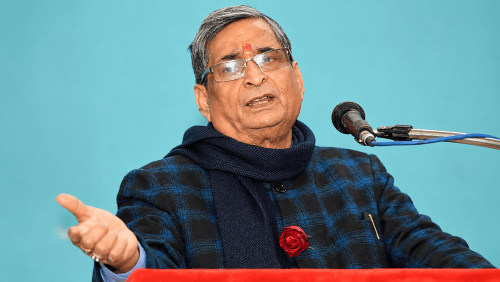
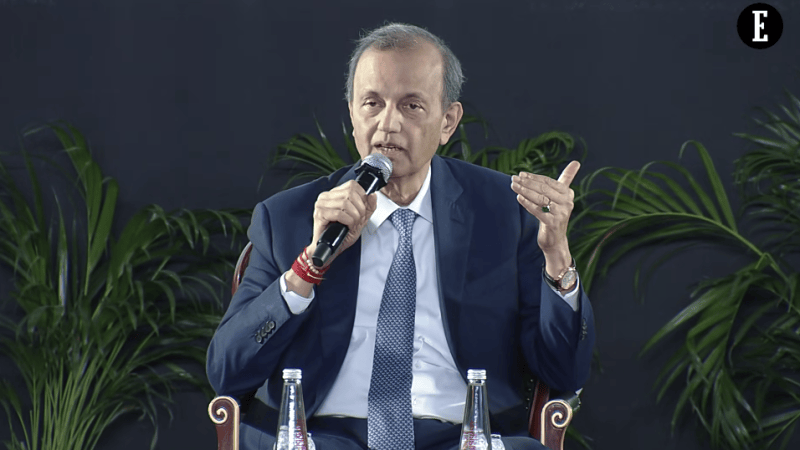
Mahendra Nahata, Founder of HFCL Limited, says India needs to build more infrastructure and more data centres to keep data safe as well as leverage the massive data flow in the country.
Speaking with Sachin Marya, Editorial Director, Entrepreneur India & APAC, at the recently held Entrepreneur 2026 summit in New Delhi, Nahata said India accounts for a sizable data traffic while infrastructure remains much smaller in proportion. Considering the need for more AI data centres in the near future, according to Nahata, India needs to improve power generation capacity, which could also become a new avenue for Indian companies.
Highlighting the rapid growth of technology, especially AI, Nahata called for more investment in research and development and innovation to keep pace.
“… technologies are changing fast. And it’s important for entrepreneurs to keep pace with technology. Unless they keep pace with technology, they would be left behind. And there is the need to invest in R&D, in innovation, so that we can remain ahead in terms of our business, in terms of technology, so that not only India is our market, but the world becomes our market. That should be the mantra for success,” he said.
He also highlighted the newer technologies that are coming up for data centres wherein there’s lesser consumption of water.
“… these servers can operate at a lower temperature—either they’re water-cooled or they’re liquid-cooled, but with less water… servers which can even work at more than 40°C of temperature. So these are the new technologies emerging out of this data center revolution, I would say,” he said.
On the next possible growth opportunities, Nahata cited the example of Nvidia’s exponential growth owing to AI-led demand. Similarly, there’s a growing demand for more fibers, a key focus area for HFCL.
That said, the broader industry continues to face severe disruption from geopolitical tensions, including trade conflict-driven tariffs and severed supply chains.
To build resilience, Nahata called for establishing a sustainable supply chain , secured suppliers, long-term associations, and alternatives.
He further said: “… backward integration doesn’t mean that you do everything yourself. You can divide in the A-B-C kind of analysis: what is ‘A’ you can do, and what is ‘B’ you don’t want to do, or ‘C’ that you absolutely don’t want to do.
But within that, of course, when you talk of electronics, what can be the backward integration? Because, you know, semiconductors are not in India. You can’t do electronics equipment manufacturing, you can’t be integrated backwardly because you have to buy from somebody…” he continued.
On defence electronics, he stressed the need for sovereignty.
“You may talk about manufacturing aircraft… fighter aircraft, for example. But if you don’t have an engine, then even manufacturing aircraft where 50% of the cost is the engine, what can you do? You don’t have any sovereignty. Within the engine, you need so many parts which are to be manufactured in India; right now, we are importing them. Even a fuselage of an aircraft, talking of defense, needs composites. Well, composite sheets are not available in India; you have to import from outside,” he said, while urging policymakers to address such gaps in the industry.
Nahata, however, added that India can also emerge as an exporter of defense equipment.
Without divulging much details, he said that HFCL has designed some of the equipment which internationally only a few companies have designed.
“But what the defense forces look for from any supplier: credibility, technology, interoperability, supply assurance, lifecycle management, apart from design. If we can ensure these things… the current geopolitical environment is such that every country is trying to prepare its defenses stronger than what they were. NATO countries have increased their defense from 2% to 5%. So there are a lot of opportunities for defense companies. Apart from the equipment availability, if we can bring in these ingredients I described, India can emerge as a big supplier for defense equipment also,” he said.
Watch the complete fireside chat below:
ALSO follow our other coverage from Entrepreneur Summit 2026
Uno Minda Shares 6 Leadership Lessons for Indian Entrepreneurs
Entrepreneur 2026: ‘The IPO is Just the Beginning’
Entrepreneur 2026: Swiggy’s Rohit Kapoor on Building for Next Gen Consumers in India
Mahendra Nahata, Founder of HFCL Limited, says India needs to build more infrastructure and more data centres to keep data safe as well as leverage the massive data flow in the country.
Speaking with Sachin Marya, Editorial Director, Entrepreneur India & APAC, at the recently held Entrepreneur 2026 summit in New Delhi, Nahata said India accounts for a sizable data traffic while infrastructure remains much smaller in proportion. Considering the need for more AI data centres in the near future, according to Nahata, India needs to improve power generation capacity, which could also become a new avenue for Indian companies.
Highlighting the rapid growth of technology, especially AI, Nahata called for more investment in research and development and innovation to keep pace.

Entrepreneur Staff • Editor
Entrepreneur Staff
For more than 30 years, Entrepreneur has set the course for success for millions of... Read more